
Steel grade
1.4016
55 items in stock
Products in this grade
- 1.4016
Stainless steel acid-resistant sheet 0.4 X 1000 X 2000mm BA in grade 1.4016
in stock129,62 € (105,38 € excl. VAT)Add to basket - 1.4016
Stainless steel acid-resistant sheet 0.4 X 1000 X 2000mm BA szczotkowana in grade 1.4016
in stock140,83 € (114,50 € excl. VAT)Add to basket - 1.4016
Stainless steel acid-resistant sheet 0.5 X 1000 X 2000mm BA in grade 1.4016
in stock140,04 € (113,85 € excl. VAT)Add to basket - 1.4016
Stainless steel acid-resistant sheet 0.5 X 1250 X 2500mm BA in grade 1.4016
in stock169,93 € (138,15 € excl. VAT)Add to basket - 1.4016
Stainless steel acid-resistant sheet 0.6 X 1000 X 2000mm BA 400/szcz. in grade 1.4016
in stock157,68 € (128,20 € excl. VAT)Add to basket - 1.4016
Stainless steel acid-resistant sheet 0.6 X 1000 X 2000mm BA in grade 1.4016
in stock150,28 € (122,18 € excl. VAT)Add to basket - 1.4016
Stainless steel acid-resistant sheet 0.6 X 1250 X 2500mm 2B in grade 1.4016
in stock185,93 € (151,16 € excl. VAT)Add to basket - 1.4016
Stainless steel acid-resistant sheet 0.6 X 1250 X 2500mm BA in grade 1.4016
in stock185,93 € (151,16 € excl. VAT)Add to basket - 1.4016
Stainless steel acid-resistant sheet 0.7 X 1250 X 2500mm BA in grade 1.4016
in stock199,45 € (162,15 € excl. VAT)Add to basket - 1.4016
Stainless steel acid-resistant sheet 0.8 X 1000 X 2000mm 2B 400/szcz. in grade 1.4016
in stock187,50 € (152,44 € excl. VAT)Add to basket - 1.4016
Stainless steel acid-resistant sheet 0.8 X 1000 X 2000mm 2B in grade 1.4016
in stock163,31 € (132,77 € excl. VAT)Add to basket - 1.4016
Stainless steel acid-resistant sheet 0.8 X 1000 X 2000mm BA in grade 1.4016
in stock165,80 € (134,80 € excl. VAT)Add to basket - 1.4016
Stainless steel acid-resistant sheet 1 X 1000 X 2000mm 2B in grade 1.4016
in stock181,37 € (147,46 € excl. VAT)Add to basket - 1.4016
Stainless steel acid-resistant sheet 1 X 1000 X 2000mm BA in grade 1.4016
in stock184,36 € (149,89 € excl. VAT)Add to basket
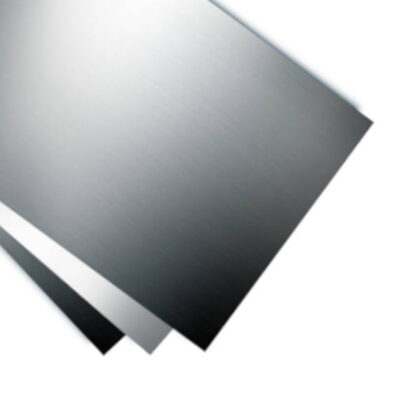
Steel 1.4016 – material profile
Equivalent designations
- X6Cr17
- H17
- AISI 430
- UNS S43000
The stainless steel designated 1.4016, X6Cr17, H17, AISI 430, UNS S43000 belongs to the group of ferritic steels – materials that in metallurgy serve as a “practical compromise” between corrosion resistance and affordability. In this article I present the definition and distinguishing features of ferritic and superferritic steels, analyse the chemical composition and the influence of individual elements, describe production and processing, indicate mechanical properties, discuss typical applications, compare these grades with other classes of stainless steels, explain corrosion mechanisms and protection measures, outline applicable standards and give practical welding guidelines and technological trends. The text combines historical background with practical advice to give a complete picture of the role played by alloys of type 1.4016 / AISI 430 in industry.
Characteristics of ferritic and superferritic stainless steels
Definition and distinguishing features of ferritic steels
Ferritic steels are a group of stainless steels whose microstructure at room temperature is dominated by ferrite (body-centred cubic – BCC). Their main distinguishing feature is a high chromium content (typically 10–30%), together with low carbon and nearly zero nickel content. Thanks to this, ferritics are less expensive than austenitic stainless steels (which contain significant nickel) and exhibit magnetism, which sets them apart from austenitics.
Main characteristics of ferritic steels:
- resistance to oxidation and corrosion in moderate conditions,
- good thermal conductivity and lower thermal expansion than austenitics,
- inability to be hardened by heat treatment (hardened by cold work instead),
- magnetic behaviour,
- limited impact toughness at low temperatures and susceptibility to thermal embrittlement,
- relatively good formability and surface finish.
Historically, the development of ferritic steels was linked to the search for cheaper alternatives to nickel-containing austenitic steels, especially in applications requiring good oxidation resistance and an aesthetic finish but not necessarily the highest performance in aggressive environments.
Features of superferritic steels – what sets them apart?
Superferritic steels evolved as an enhanced version of ferritics, designed to significantly increase resistance to pitting and crevice corrosion in chloride-containing environments. They are characterised primarily by:
- elevated chromium content (often >20%),
- the presence of molybdenum and/or nitrogen, which improve resistance to localised corrosion,
- low carbon content and additions of stabilisers (e.g. niobium, titanium) that limit the formation of chromium carbides,
- improved homogeneity of the microstructure and control of sigma phase during production.
Superferritics combine the benefits of ferritics (lower cost compared with austenitics, absence of nickel) with corrosion resistance approaching that of some austenitic grades, opening broad applications in chemical and marine installations.
Chemical composition and properties of alloys 1.4016 X6Cr17 H17 and AISI 430 UNS S43000
1.4016 and X6Cr17 are names referring essentially to the same class of steel – a stabilised ferritic grade with approximately 17% chromium. AISI 430 and UNS S43000 are equivalent classifications used in the American market. The designation H17 is sometimes used in certain countries as an additional trade or historical label.
Typical basic composition ranges (indicative values; specific specifications given by the manufacturer’s standard):
- Chromium (Cr): ~16–18% – the main element imparting corrosion resistance and forming the passive layer.
- Carbon (C): ~0.02–0.08% (for X6Cr17 nominally 0.06%) – low content prevents excessive carbide formation that could lead to intergranular corrosion.
- Silicon (Si): ≤1% – affects casting properties and oxidation resistance.
- Manganese (Mn): ≤1% – improves strength and machinability.
- Phosphorus (P): ≤0.04% – controlled to maintain toughness.
- Sulfur (S): ≤0.03% – improves machinability but reduces corrosion resistance.
- Iron (Fe): balance of the composition.
By comparison AISI 430 often has somewhat looser carbon limits (e.g. up to 0.12% in some specifications), which affects hardness and machinability.
Principal elements and their roles in the alloy
- Chromium (Cr): key to forming a thin, adherent oxide layer – surface passivation. Higher chromium increases resistance to oxidation and certain forms of corrosion.
- Carbon (C): increases strength, but in excess encourages precipitation of chromium carbides during welding or prolonged exposure to 400–900°C, which can lead to intergranular corrosion.
- Molybdenum (Mo) (present in superferritics): improves resistance to crevice and pitting corrosion in chloride environments.
- Nitrogen (N): strengthens the matrix and improves corrosion resistance, though used less in ferritics than in austenitics.
- Niobium (Nb), titanium (Ti): used as carbon stabilisers, forming stable carbides and preventing chromium carbide precipitation.
- Sulfur (S): improves machinability but reduces corrosion resistance and surface finish.
Influence of chromium, carbon and other additions on properties
- Increasing chromium significantly improves general corrosion and oxidation resistance, but above certain levels (especially with molybdenum present) the risk of embrittlement related to formation of intermetallic phases (e.g. sigma phase) rises.
- Carbon in small amounts increases strength, but excess carbon and exposure to sensitising temperatures lead to chromium carbide precipitation at grain boundaries and weakening of the passive layer.
- Molybdenum and nitrogen markedly increase resistance to crevice and pitting corrosion; they are therefore key in superferritics.
- Stabilisers (Nb, Ti) prevent chromium carbide precipitation, which is important for welding and long-term exposure at intermediate temperatures.
Comparison of ferritic and superferritic compositions
- Ferritic (e.g. 1.4016/X6Cr17/AISI 430): Cr ~16–18%, low C, no or very little Ni, no Mo or only trace amounts.
- Superferritic: Cr >20%, Mo additions (often 1–3%), controlled N, Nb/Ti stabilisers, very low C. Such compositions guarantee much better resistance to chlorides and higher durability in aggressive environments.
The difference can be likened to rainwear: an ordinary ferritic jacket suffices for light rain, a superferritic one is a membrane for heavy downpours and storms.
Production process and processing of ferritic steels
Production of ferritic steels, including 1.4016, uses modern alloying and refining methods to achieve a homogeneous structure and minimise undesirable impurities.
Manufacturing methods for 1.4016 and their significance for quality
Main production stages:
- Melting: most commonly in electric arc furnaces (EAF) from scrap steel, with additions of primary metal and alloying elements.
- Refining: processes such as AOD (Argon Oxygen Decarburisation) or VOD are used to allow precise control of carbon content and removal of gaseous impurities.
- Composition control: addition of alloys (Cr, Mo, Nb etc.) by precise dosing, often supported by spectrographic analysis of the microstructure.
- Casting: usually continuous casting of slabs or plates; cooling control prevents element segregation.
- Hot and cold rolling: forming of plates, strips and sheets; cold rolling increases strength and improves surface finish.
- Annealing and stress-relieving: heat treatments to remove internal stresses and set the microstructure; parameters depend on the application.
Steel quality depends on control of each of these phases. Even small deviations in carbon content or sulphur impurities can affect weldability, corrosion resistance and mechanical properties.
Heat treatment and mechanical processing techniques
- Solution annealing (solubilising): aimed at homogenising the structure and removing stresses, typically carried out at temperatures where ferrite is stable. Typical annealing temperatures for ferritics lie in the 700–900°C range, but exact parameters depend on composition and requirements.
- Cooling: ferritics do not undergo an austenitic transformation and are not hardened by rapid cooling; after annealing they are usually cooled in a controlled manner to avoid the formation of undesirable phases.
- Mechanical processing: rolling, bending, pressing – ferritics respond well to cold forming, and hardness may be increased by cold work. Machining is easier with elevated sulphur for improved machinability, but at the cost of corrosion resistance.
- Surface finishes: polishing, passivation (nitric acid), electropolishing – improve appearance and corrosion properties.
These processes determine the final quality of the material: uniform composition and microstructure, which directly influence durability and suitability for engineering applications.
Mechanical and physical properties important for industrial applications
Tensile strength and impact toughness
Ferritic steels, including 1.4016, are characterised by moderate tensile strength and good ductility at ambient temperatures. Typical mechanical parameters (indicative):
- Tensile strength Rm: ~350–550 MPa (depending on delivery condition and processing).
- Yield strength Re: ~200–350 MPa.
- Elongation at break A5: usually above 15–20% for the cold-rolled and annealed condition.
Toughness of ferritic steels decreases with falling temperature; at low temperatures they may show a tendency to brittle fracture. Therefore, for low-temperature applications special variants or other steel grades are selected.
In practice ferritics are often strengthened by cold working rather than heat treatment.
Corrosion resistance and environmental factors
The corrosion resistance of 1.4016/AISI 430 is good in atmospheric environments, when exposed to water vapour, acid rain and in fresh and mildly contaminated waters. However they perform poorly in chloride-containing environments (e.g. seawater, de-icing fluids), where there is a risk of pitting and crevice corrosion.
Factors affecting resistance:
- surface quality (a smooth, passivated surface increases resistance),
- presence of scratches and crevices (promote initiation of crevice corrosion),
- concentration and type of ions (chlorides are the most aggressive),
- temperature (higher temperature accelerates corrosion processes).
Superferritics, equipped with Mo and higher Cr, push these limits and are used where standard AISI 430 fails.
Magnetic properties of ferritic steels
One of the distinguishing features of ferritics is magnetism – a result of the BCC ferrite structure. This allows applications in components where magnetic properties are desirable, e.g. motor parts, magnetic housings or sensors. Conversely, in applications where magnetism is undesirable (e.g. certain medical or precision measuring devices), ferritic steels will not be suitable.
Magnetism also affects processing methods, e.g. in non-destructive testing (eddy current), where the presence of a magnetic field modulates the response.
Practical applications of ferritic and superferritic stainless steels
Ferritic and superferritic stainless steels have found use where economy, aesthetics and moderate corrosion resistance matter.
Automotive and mechanical engineering
- Exterior trim: decorative strips, grille surrounds, scuff plates – where aesthetics and resistance to atmospheric conditions are required.
- Exhaust systems (within certain temperature ranges and exhaust compositions) – where there is no excessive exposure to chloride-rich or aggressive environments.
- Machine parts and housings where magnetic properties or good thermal conductivity are required.
Household appliances and domestic fittings
- Panels and housings for cookers, ovens, dishwashers and other white goods – due to good formability and aesthetic surface finish.
- Sinks, taps and internal fittings with moderate water exposure – in domestic conditions AISI 430 performs well.
- Interior details such as door panels, trim strips and appliance fronts.
Other industries and specialised applications
- Interior architecture: decorative elements, handrails, internal cladding.
- Food industry: packaging line equipment, where conditions are not extremely aggressive.
- Energy industry: guards and housings that require oxidation resistance at moderate temperatures.
- Chemical industry (superferritics): heat exchangers, pipelines and valves in installations of moderate aggressiveness, where using austenitics would be cost-prohibitive.
Real-life example: a kitchen sink made from AISI 430 will look good and last well in average domestic conditions, but in a seaside location it will require refurbishment sooner than a sink made from a higher-grade superferritic or a molybdenum-bearing austenitic steel.
Comparison of 1.4016 X6Cr17 H17 AISI 430 UNS S43000 with other stainless steel grades
Differences compared with austenitic steels
- Composition: austenitics contain 16–26% Cr and 6–22% Ni, which gives greater corrosion resistance and better toughness at low temperatures. Ferritics do not contain significant Ni.
- Mechanical properties: austenitics have better ductility and toughness; ferritics are more brittle at low temperatures.
- Heat treatment: austenitics are not hardened by heat treatment, similarly to ferritics, but there are significant differences in response to cold work.
- Cost: ferritics are cheaper due to lack of nickel; hence they are used where economic benefits outweigh the need for extreme corrosion resistance.
Advantages and limitations compared with martensitic steels
Martensitic steels (e.g. 420) can achieve high hardness through heat treatment and are used, for example, in knives or tools. Compared with them:
- Ferritics have better corrosion resistance and formability, but lower maximum hardness.
- Martensitics are hardenable; ferritics are not.
- Martensitics may be used where hardness and wear resistance are priorities; ferritics where corrosion resistance and aesthetics matter.
Choice of grade results from a compromise between corrosion resistance, mechanical requirements and cost.
Corrosion resistance – mechanisms and extent of protection
Understanding corrosion mechanisms is crucial when designing and operating installations using ferritic steels.
Typical corrosive environments for ferritic steels
- Atmospheric environments: urban, industrial – they behave well if the surface is passivated.
- Fresh and mildly polluted waters: applications in sanitary installations and white goods.
- Chloride-containing environments (seawater, de-icing agents, many industrial processes): risk of pitting and crevice corrosion – conventional ferritics (e.g. 1.4016) are limited here.
- Elevated temperatures: at high temperatures oxidation processes develop; high chromium increases resistance, but excess can provoke formation of brittle phases.
Superferritics extend application range into more aggressive environments thanks to Mo additions and appropriate composition.
Measures to increase corrosion resistance
- Chemical passivation: baths in nitric acid solutions or passivating mixtures – remove surface contaminants and strengthen the oxide layer.
- Electropolishing: smooths the surface, reduces micro-pits and improves resistance to localised corrosion.
- Use of stabilisers in the composition (Nb, Ti): prevents chromium carbide precipitation during welding.
- Careful design and assembly: avoiding crevices, minimising stagnation zones, ensuring drainage.
- Protective coatings: where chemical processes are very aggressive, polymeric or metallic coatings are used to increase resistance.
In practice, correct grade selection and procedures for passivation and surface treatment determine component longevity.
Standards and certificates concerning ferritic stainless steels 1.4016 and related grades
European and American standards (EN, AISI, UNS)
- EN 10088 – series of European standards concerning stainless steels. Designations such as 1.4016 come from the EN numbering system.
- X6Cr17 – traditional chemical designation consistent with German/international practice, where the number after the letter X indicates carbon content (0.06%).
- AISI 430 – American designation for this common ferritic. UNS S43000 is the number in the Unified Numbering System.
- ASTM: standards concerning mechanical testing, corrosion testing and material specifications often reference specific grades.
Documentation should reference the standard appropriate to the application: welding requirements, supply of plates and pipes, corrosion tests.
Recommendations for quality and control
- Chemical analysis: spectrographic verification of basic element contents.
- Mechanical testing: tensile, hardness, impact (Charpy) tests where required.
- Microstructural control: examination for intermetallic phases and inclusions.
- Corrosion resistance tests: salt spray, pitting and crevice tests (e.g. PRA/Pitting Resistance), intergranular corrosion tests (for welded joints).
- Supply certificates: compliance with EN/AISI/UNS, material test certificates (MTC) – important for deliveries to the food and pharmaceutical industries.
Thorough quality control ensures the material meets the required operational parameters, which is critical where failures carry high cost.
Guidelines for processing and welding 1.4016 steels and their effect on final properties
Ferritic steels have specific welding and processing requirements, adherence to which minimises the risk of property degradation.
Specifics of welding ferritic steels
- Weldability: generally good, but requires control of heat input during the process. Excessive heating of the heat-affected zone (HAZ) can lead to grain growth and reduced toughness.
- Filler metals: use appropriate wires/fillers dedicated to ferritics; sometimes fillers with nickel are recommended to improve resistance, but they alter magnetic properties and can create zones of differing composition.
- Pre- and post-heat: usually not necessary, but in certain applications controlled heating and slow cooling are recommended to avoid stresses and cold cracking.
- Avoiding sensitisation: use of stabilisers (Nb, Ti) in the alloy and procedures that limit time spent in the 400–900°C range minimise chromium carbide precipitation.
In practice welding ferritics requires procedures defined in manufacturer specifications and qualification tests.
Problems and methods to minimise residual stresses
- Residual stresses arise from uneven heating and cooling; they cause distortion and potential cracking.
- Reduction methods: control of heat input, use of spot welding instead of long continuous seams, segmenting welds, adopting appropriate welding sequences, and where necessary – stress-relief annealing after welding.
- Mechanical techniques: final machining (e.g. smoothing, controlled plastic deformation) to reduce surface stresses.
Good welding practice has a direct impact on the durability and corrosion resistance of welded structures.
Trends and innovations in ferritic and superferritic stainless steels
The world of stainless steels does not stand still. Innovations aim to improve properties while lowering costs and environmental impact.
New production technologies and composition modifications
- Nickel substitution: rising nickel prices and availability issues favour development of ferritics and superferritics as economical alternatives.
- Microalloying and stabilisation: increased use of Nb, Ti and controlled nitrogen to improve strength and corrosion stability.
- Optimisation of AOD/VOD processes: better control of impurities and dissolved gases, improving surface quality and compositional uniformity.
- Low-carbon-footprint heat technologies: scrap recycling, optimisation of energy use in EAFs and greater use of renewable energy in steelmaking.
Prospects for applications in modern industry
- Replacing austenitics where nickel use can be limited, especially in high-volume industries.
- Development of superferritics for marine, offshore and chemical industry applications where a combination of chloride resistance and low cost is valued.
- Research into using ferritics in additive manufacturing (3D printing): controlling microstructure and avoiding undesirable phases are challenges, but material savings and topological design potential are significant.
- Eco-friendly surface treatment processes: alternatives to traditional acid passivation, e.g. electrochemical passivation with low impact.
These trends indicate that ferritics and superferritics will play an increasing role where a compromise between cost, weight and corrosion resistance is sought.
Summary of key information about alloys 1.4016 X6Cr17 H17 AISI 430 UNS S43000 and their role in industry
Steel 1.4016 (X6Cr17, AISI 430, UNS S43000) is a representative of the ferritic stainless steels – a material valued for economy, aesthetic finish and decent corrosion resistance in moderate conditions. Its strength lies in a simple composition (high chromium, low carbon, no nickel), which translates into lower production and operating costs. In practice it performs well in the automotive industry, white goods, machinery construction and interior architecture.
Limitations arise from lower resistance to chlorides, susceptibility to embrittlement at low temperatures and specific welding requirements. Where increased resistance to pitting and crevice corrosion is needed, superferritics are developed – modified ferritics with higher Cr, Mo additions and stabilisers that combine the favourable features of ferritics with greater durability in harsh environments.
Good production practices (AOD, composition control), processing (annealing, cold work) and surface treatments (passivation, electropolishing) determine the final quality of components. EN, AISI and UNS standards facilitate identification and specification of materials. Looking ahead, low-nickel ferritics and superferritics will gain importance, particularly in view of economic requirements and reducing the environmental footprint of steel production.