
Steel grade
1.4057
12 items in stock
Products in this grade
- 1.4057, 431
Stainless steel round bar Diameter 10mm in grade 1.4057 / 431
in stock10,27 € (8,35 € excl. VAT) - 1.4057, 431
Stainless steel round bar Diameter 16mm in grade 1.4057 / 431
in stock10,18 € (8,28 € excl. VAT) - 1.4057, 431
Stainless steel round bar Diameter 25mm in grade 1.4057 / 431
in stock11,04 € (8,98 € excl. VAT) - 1.4057, 431
Stainless steel round bar Diameter 30mm in grade 1.4057 / 431
in stock14,52 € (11,80 € excl. VAT) - 1.4057, 431
Stainless steel round bar Diameter 40mm in grade 1.4057 / 431
in stock12,75 € (10,37 € excl. VAT) - 1.4057, 431
Stainless steel round bar Diameter 50mm in grade 1.4057 / 431
in stock20,07 € (16,32 € excl. VAT) - 1.4057, 431
Stainless steel round bar Diameter 20mm in grade 1.4057 / 431
in stock11,29 € (9,18 € excl. VAT) - 1.4057, 431
Stainless steel round bar Diameter 75mm in grade 1.4057 / 431
in stock82,84 € (67,35 € excl. VAT) - 1.4057, 431
Stainless steel round bar Diameter 80mm in grade 1.4057 / 431
in stock95,59 € (77,72 € excl. VAT) - 1.4057, 431
Stainless steel round bar Diameter 12mm in grade 1.4057 / 431
in deliveryPrice range: 1,15 € through 17,20 €Ask about delivery
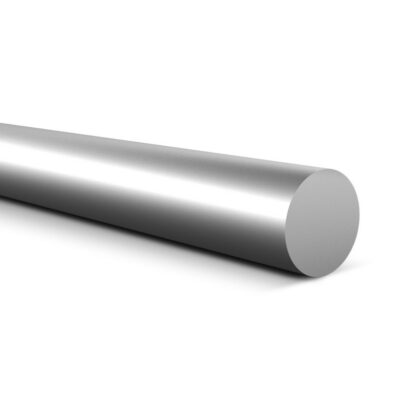
Steel 1.4057 – material profile
Equivalent designations
- X17CrNi16-2
- 2H17N2
- H17N2A
- Z15CN17-03
- 1.4044
Characteristics of martensitic and precipitation‑strengthened stainless steels
Definition and basic features of martensitic steels
Martensitic steels are a group of stainless steels whose microstructure after heat treatment is formed by martensite – a hard, supersaturated phase of iron carbide produced by rapid cooling of austenite. Their essential feature is the possibility of obtaining high hardness and strength by hardening, while retaining moderate corrosion resistance thanks to chromium content typically in the 11–18% range. In practice martensite represents a compromise between corrosion resistance (worse than in austenitic steels) and significantly better mechanical properties after heat treatment.
Basic features:
- Ability to be hardened and to achieve high hardness (e.g. 40–60 HRC depending on composition and treatment).
- Chromium content providing resistance to general corrosion and surface passivation in moderate environments.
- Lower ductility and impact toughness in the highly hardened state compared with austenitic steels.
- Possibility of welding and machining requiring appropriate procedures and control of stresses and microstructure.
Metaphor: martensitic steel is an armour which, after hardening, becomes very hard but also more brittle unless appropriate “give” is provided by tempering.
Specifics of precipitation‑strengthened steels
Precipitation‑strengthened steels (more precisely: precipitation‑hardened stainless alloys) use the phenomenon of precipitation of fine particles of a second phase (e.g. Ni, Al, Ti, Nb, Mo compounds) from the solid solution during ageing (a thermal process) to increase strength without significantly degrading ductility or toughness. Unlike simple martensitic hardening, precipitation strengthening allows optimisation of the combination of mechanical properties and corrosion resistance.
Characteristic features:
- Enable very high strength while maintaining better ductility than extremely hardened martensites.
- Many grades are designed to combine corrosion resistance with high strength (useful in turbines, springs, surgical tools).
- The ageing process must be controlled – temperature and time determine precipitate size and distribution, and thus final properties.
Differences between martensitic and austenitic steels
Comparison of the two main families of stainless steels:
- Microstructure: austenitic – austenite microstructure (fcc), insoluble carbides limit hardenability; martensitic – martensite (bct) after hardening.
- Corrosion resistance: austenitic (e.g. 1.4301, 1.4404) feature high resistance to general and local corrosion in many environments; martensitic steels have moderate resistance, dependent on Cr content and additions.
- Mechanical properties: martensitic steels achieve higher hardness and strength after hardening; austenitic steels are more ductile and require other strengthening methods (e.g. cold working, precipitation strengthening).
- Machinability: martensitic steels are more difficult to weld and machine in the hardened state; austenitic steels are easier for forming and welding.
- Applications: martensitic – parts requiring hardness (knives, springs, bearings, pistons); austenitic – structures exposed to corrosion, food and medical installations.
These differences determine material selection depending on priorities: hardness and wear resistance versus corrosion resistance and ductility.
Overview of grades: 1.4057, X17CrNi16-2, 2H17N2, H17N2A, Z15CN17-03 and 1.4044
Description and applications of 1.4057 (X17CrNi16-2)
Steel designated 1.4057 according to EN (equivalent to X17CrNi16-2) is a martensitic grade with a significant addition of nickel and chromium. The designation X17CrNi16-2 indicates approximately: about 17% Cr and ~2% Ni, with relatively low carbon content, although exact values depend on the manufacturer’s specification.
Properties:
- Good hardenability and ability to reach moderate hardness while retaining some ductility.
- Increased resistance to atmospheric and chemical corrosion compared with simple martensitic steels due to the nickel addition.
- Good structural stability under moderate dynamic loading.
Applications:
- Machine components requiring a combination of strength and corrosion resistance, e.g. pump parts, valves and some chemical industry components.
- Components where wear resistance is needed along with exposure to moisture or mild corrosive environments.
- Alloyed versions may be used for manufacture of tools and knives with extended durability.
Practical example: a pump shaft operating in a brackish water installation where greater corrosion resistance is required than in typical martensitic steels.
Characteristics and properties of 2H17N2 and H17N2A
Designations 2H17N2 and H17N2A are often found in material catalogs of Central and Eastern European countries and reflect variants of martensitic steels with chromium and nickel content and controlled carbon levels.
Common features:
- Chromium content close to 16–17% and nickel around 1–2%, providing a combination of corrosion resistance and improved hardenability.
- Intended for heat treatment (hardening, tempering) to achieve the desired hardness and strength.
- Popular in the engineering and power industries as material for load-bearing parts, valve stems, shafts and axles of small and medium machines.
Differences between 2H17N2 and H17N2A may concern minor composition modifications and quality requirements that affect exact mechanical parameters, corrosion resistance, and behaviour during welding and heat treatment.
Specifics of Z15CN17-03 and 1.4044
Z15CN17-03 and 1.4044 are further variants of martensitic stainless steels, differing in carbon, chromium and alloying additions.
Z15CN17-03:
- The designation resembles formats used in domestic industry, where “Z” may suggest use for reinforcement or replacement parts, and the numbers and letters convey information about composition: about 15% Cr, with C and N content controlled.
- Characterised by good hardenability and wear resistance, can be used in tooling parts and machine elements exposed to friction.
- Thanks to a balanced composition it has decent corrosion resistance while maintaining high hardness after treatment.
1.4044:
- Grade 1.4044 is a martensitic steel with a specific composition, often used where higher hardness and wear resistance are required than in standard martensites.
- It may have slightly higher carbon content than some other grades, which promotes achieving higher hardness after hardening.
- Used in tools, pins, pistons and elements of mechanical systems where wear resistance is a priority.
All these grades share a common denominator: they are designed to combine corrosion resistance (within limits) with high mechanical properties after appropriate heat treatment.
Chemical composition and influence of elements on steel properties
Role of carbon and chromium in martensitic steel
Carbon:
- Key to forming martensite; higher carbon content increases hardness and strength after hardening, but reduces ductility and impact toughness.
- Affects hardenability and the ability to achieve higher hardness deep into a section.
- Excess carbon can, however, worsen corrosion resistance, as it promotes formation of chromium carbides at grain boundaries, leading to the formation of depleted zones (sensitisation) and local weakening of the passive layer.
Chromium:
- The foundation of corrosion resistance – above ~11% Cr a passive layer of chromium oxides forms to protect the surface.
- The higher the Cr content, the better the resistance to general corrosion; however, with too high Cr and low Ni there can be hardenability challenges and a tendency to brittleness.
- Chromium also affects hardness and wear resistance; combined with carbon it forms chromium carbides which increase surface hardness.
The balance between C and Cr is critical: the optimal carbon gives the needed hardness but requires sufficient chromium and often additions such as nickel, molybdenum or niobium to prevent brittleness and deterioration of corrosion resistance.
Importance of nickel and molybdenum in precipitation strengthening
Nickel:
- An austenite stabiliser at higher contents, it improves ductility and toughness.
- In martensitic steels nickel is used moderately: it helps achieve better corrosion resistance and increases hardenability.
- In precipitation‑hardened alloys nickel is often a key component forming the solid solution from which hardening particles precipitate during ageing.
Molybdenum:
- Improves resistance to corrosion in chloride environments, increases strength at high temperatures and improves hardness.
- In smaller amounts molybdenum increases creep and stress‑resistance; in precipitation strengthening it can affect precipitate stability.
Precipitation additions (e.g. Al, Ti, Nb, Cu):
- Used to control the formation of fine precipitates which hinder dislocation motion and thereby significantly increase strength.
- Their role is often twofold: improving mechanical behaviour while minimally affecting corrosion resistance.
Other alloying additions and their functions
- Sodium (Si): improves oxidation resistance and raises high‑temperature strength; excess may complicate welding.
- Manganese (Mn): ties up sulphur, improves hardenability; in excess it may reduce corrosion resistance.
- Vanadium (V): forms carbides and nitrides, increasing hardness and wear resistance.
- Nitrogen (N): improves strength and corrosion resistance in some systems; in combination with cobalt or copper is used to stabilise structure.
- Sulfur (S) and phosphorus (P): usually minimised because they worsen ductility and corrosion resistance; controlled allowable amounts facilitate machining.
Understanding interactions between elements is key when designing a steel grade: there is no universal composition; every addition has its costs and benefits, and the technological process must be matched to the intended application.
Production process and heat treatment of martensitic and precipitation‑strengthened steels
The hardening process and its effects
Hardening of martensitic steels involves heating the material to the austenitic phase (temperature depends on composition, usually 900–1050°C), and then rapid cooling (quench medium: oil, water, air or special media). The aim is transformation of austenite into martensite, which drastically increases hardness and strength.
Effects of hardening:
- Increase in hardness and strength: formation of hard martensitic phase.
- Increase in internal stresses and risk of cracking: tempering is necessary.
- Reduction of ductility and toughness in the as‑quenched state.
Adjustment of parameters:
- Hardening temperature must be chosen according to composition; excessive overheating leads to grain growth and deterioration of mechanical properties.
- Cooling rate determines completeness of transformation; in large sections retained austenite areas may remain, which can be beneficial or detrimental depending on requirements.
- Preliminary and final heat treatments (e.g. recrystallisation, stress‑relief) help control microstructure.
Precipitation ageing – purpose and methods
Precipitation ageing is a thermal process used in precipitation‑strengthened steels: after solution treatment to the austenitising temperature and often after quenching the material is heated at a lower temperature (usually 400–700°C) for a specified time to enable precipitation of fine, dispersed second‑phase particles which harden the material.
Objectives:
- Increase strength and yield stress without excessive loss of ductility.
- Achieve uniform distribution of precipitates with controlled size and density.
- Improve fatigue resistance by inhibiting dislocation movement.
Methods:
- Short ageing at higher temperature linked with rapid diffusion (rapid precipitation).
- Long ageing at lower temperature to obtain smaller, more densely distributed particles.
- Hybrid processes combining several stages to optimise properties.
Importance of annealing and tempering
Annealing: used to soften steel before plastic forming or machining, reduce internal stresses and homogenise the structure. For martensitic steels normalising or recrystallisation anneals are often used before final hardening.
Tempering: a key stage after hardening, intended to reduce internal stresses and improve toughness. Tempering leads to partial transformation of martensite into a less brittle structure and permits control of final hardness.
Parameters:
- Tempering temperature and time define resulting hardness and toughness; higher temperature gives greater ductility and lower hardness.
- In precipitation‑strengthened steels tempering must be coordinated with ageing steps so as not to destroy desired precipitates.
A well‑planned heat treatment is like a score for an instrument – each key press (temperature, time) affects the final sound (mechanical properties).
Mechanical properties and resistance to corrosion and wear
Tensile strength and hardness
Martensitic and precipitation‑strengthened steels typically feature:
- High yield strength and tensile strength after appropriate heat treatment.
- Ability to reach hardness in the tens of HRC, depending on composition and treatment.
- In precipitation‑strengthened steels strength can be very high while maintaining reasonable ductility, which favourably affects fatigue resistance.
Typical parameters (indicative):
- Tensile strength: from 600 MPa to over 1200 MPa depending on grade and treatment.
- Hardness: from approx. 200 HB in the softened state to 60 HRC in the hardened state.
Practical significance: for parts exposed to intensive abrasion or high mechanical loads, selection of grade and heat treatment processes determines durability and reliability.
Corrosion resistance in various environments
Martensitic stainless steels offer moderate corrosion resistance:
- Good resistance to atmospheric corrosion and fresh water with appropriate Cr and possible Ni and Mo additions.
- Weaker resistance to local forms of corrosion, such as pitting and crevice corrosion in chloride environments, compared with austenitic steels.
- Resistance improves with passivation, composition regulation and controlled surface treatment (e.g. electropolishing).
Particularly aggressive environments:
- Chloride‑containing environments (marine, saline), where risk of local corrosion is greatest.
- Acidic environments with low pH can accelerate general corrosion.
- High temperatures may affect the stability of the passive layer and promote stress corrosion cracking.
Practical recommendation: for applications in chloride environments consider special grades with molybdenum additions or austenitic duplex alternatives.
Wear and fatigue resistance
- Abrasion: high hardness achieved by hardening or precipitation strengthening significantly improves resistance to abrasive wear. The presence of hard carbides and fine precipitates hinders abrasion.
- Fatigue: fatigue resistance depends on the combination of hardness, toughness and surface defect presence. Precipitation‑strengthened steels can offer better fatigue resistance than very hard but brittle martensites, because they retain higher ductility.
- Influencing factors: microstructure, surface condition, presence of residual stresses and quality of heat treatment and machining.
Designing parts: for fatigue‑loaded components it is important to eliminate stress concentrators (radius transitions, smooth finishes) and select the right combination of hardness and toughness.
Applications of martensitic and precipitation‑strengthened stainless steels in industry
Petrochemical and power industries
- Pump components, valves and fittings: where a combination of mechanical strength and corrosion resistance in complex media is required. Steels with Ni and Mo additions are preferred in more aggressive environments.
- Turbomachinery and rotors: components exposed to wear and dynamic loads, where precipitation strengthening enables high strength while maintaining dimensional stability.
- Boiler and heat exchanger components where use of austenitic steels is limited due to cost or mechanical requirements.
Tooling and machine parts production
- Knives, pistons, pins, bearings and forming tools: martensitic steel allows achieving required hardness and wear resistance.
- Components operating in sliding contact: thanks to the combination of hardness and corrosion resistance, used as parts in industrial machines, e.g. in woodworking, paper or plastics industries.
- High‑strength springs: especially where spring stability is expected in moderately corrosive environments.
Medical and food sectors
- Medical sector: precipitation‑strengthened steels are used in implants and surgical instruments, especially when high strength and biocompatibility are both required. Careful selection of grade and passivation procedures is crucial for safety.
- Food industry: used where mechanical loads and hygiene are required; selection depends on the process environment (organic acids, chlorine cleaning). In many cases austenitic steels are preferred, but martensitics can be used in heavily wear‑exposed parts.
Real‑life example: in a food processing plant a cutting knife made of 1.4044 will retain its edge longer than a standard austenitic steel, provided corrosion control and hygiene are properly managed.
Quality control methods and testing of martensitic steels
Microstructure and chemical composition analysis
- Spectrometry (OES, XRF): basic techniques to determine chemical composition with high precision; necessary to confirm conformity with standards.
- Optical metallography and SEM: analysis of microstructure, grain size, distribution of carbides and precipitates; detection of microstructural defects such as segregations or intergranular cracks.
- Phase analysis (XRD): identification of phases and degree of austenite to martensite transformation; important for controlling hardening and ageing processes.
Mechanical and hardness tests
- Tensile tests: determination of yield strength, tensile strength and elongation – key mechanical parameters.
- Impact tests (Charpy): assessment of impact resistance and brittleness in different heat treatment states.
- Hardness measurement (Rockwell, Vickers, Brinell): control of the effects of hardening, tempering and ageing; hardness correlates with strength and wear resistance.
Corrosion resistance assessment
- Salt spray tests (e.g. NSS, salt spray): accelerated tests aimed at comparing surface resistance of materials.
- Crevice and pitting tests (ASTM G48 or other standards): important for assessing risk of local corrosion in chloride environments.
- Electrochemical methods (polarography, potential measurements), assessment of corrosion rate and passive behaviour.
Quality control should cover the entire production cycle: from raw material through thermal processes to the finished component to ensure repeatability of properties and operational safety.
Comparison of 1.4057 and 1.4044 with other stainless steels
Advantages and limitations relative to austenitic steels
Advantages:
- Higher hardness and better wear resistance after appropriate heat treatment.
- Possibility to design high‑strength components with relatively simple heat treatment processes.
- Lower material costs in some cases, particularly when nickel content is controlled.
Limitations:
- Lower overall corrosion resistance, particularly in chloride environments.
- Difficulties in welding and higher risk of cracking if procedures are incorrect.
- Lower ductility and toughness in very hard states.
For an engineer the choice between 1.4057/1.4044 and austenitic steels is a compromise decision: martensitics are chosen when wear resistance and hardness are priorities, and austenitics when chemical resistance and ductility are critical.
Alternative grades and their properties
- Duplex steels: combine austenite and ferrite phases, offering good corrosion resistance and higher strength; often used instead of martensitics where better resistance to stress corrosion cracking is needed.
- Precipitation‑hardened austenitic steels (e.g. 17‑4PH): provide properties similar to martensitics with better corrosion resistance; used in medicine and aviation.
- Special steels with molybdenum and nickel additions: designed for chloride environments where ordinary martensitics would fail.
Choice of alternative depends on service environment, mechanical requirements and life‑cycle costs of the component.
Practical recommendations for processing and operation of martensitic steels
Welding recommendations
- Preparation: careful cleaning and appropriate selection of filler material. In many cases fillers with Ni and Cr content close to the base material are used.
- Technique: minimise heat input (use short cycles, low welding currents) and avoid long, heavily heating operations.
- Follow‑up: control of stresses and tempering after welding is necessary – local tempering is often required to restore toughness and reduce brittleness of the heat‑affected zone.
- Free cooling: in some applications staged cooling and use of protective measures against very rapid cooling are recommended, as sudden quenching can induce cracking.
Maintenance and corrosion prevention
- Surface passivation: regular cleaning and passivation (e.g. nitric acid or other procedures) to maintain the protective oxide layer.
- Surface protection: coatings, platings such as chrome plating or ceramic coatings can extend service life of parts exposed to wear and chemical attack.
- Monitoring: periodic inspections at critical locations (crevices, welds, sliding surfaces) to detect signs of local corrosion or fatigue cracks.
- Operating conditions: minimise exposure to chlorides, aggressive acids and high temperatures; use corrosion inhibitors in circulating fluids.
Common operational errors and problems
- Inappropriate heat treatments resulting in excessive brittleness or insufficient hardness.
- Incorrect welding leading to cracks in the heat‑affected zone.
- Neglect of passive layer maintenance – leading to local corrosion and rapid wear.
- Too aggressive environments (chlorides, high pH or high temperatures) without appropriate material selection or protection – rapid degradation.
Avoiding these errors requires engineering knowledge, precise technological procedures and regular operational supervision.
Development trends and new technologies in martensitic and precipitation‑strengthened steels
Modern alloying and processing methods
- Precise alloying using computer modelling: designing composition taking into account production effects (segregation, precipitates).
- Microalloying: adding small amounts of elements (Nb, Ti, V) to form controlled carbides/nitrides improving properties.
- Advanced heat treatment techniques: induction hardening with precise zone control, thermal spraying and local processes enabling differing properties in different parts of a component.
- Digitisation of processes (Industry 4.0): real‑time monitoring of thermal parameters, process data analysis and automatic process correction.
Prospects for applications in new industries
- Renewable energy: components of wind turbines and energy storage systems requiring a combination of mechanical strength and weather resistance.
- Automotive and aerospace: lightweight, strong components where precipitation strengthening can replace heavier or more expensive alloys.
- Precision medicine: implants with long service life and high strength, with controlled surface and biocompatibility.
- 3D printing and additive manufacturing: the possibility of creating complex geometries from martensitic and precipitation‑strengthened materials while tailoring microstructure through control of the printing process and subsequent heat treatment.
New technologies continue to push the limits of these materials, enabling applications previously reserved for more expensive alloys.
Summary of the most important information about 1.4057 and related grades
- Steels 1.4057 (X17CrNi16-2), 2H17N2, H17N2A, Z15CN17-03 and 1.4044 belong to the group of martensitic and precipitation‑strengthened stainless steels, combining the ability to be hardened with moderate corrosion resistance.
- Key elements: chromium for passivation, carbon for hardness, nickel and molybdenum for improved resistance and mechanical properties; alloying additions shape the nature of precipitates and wear resistance.
- Heat treatment (hardening, tempering, ageing) determines final properties; precise process control is essential.
- Applications include engineering, petrochemical, tooling and selected medical and food uses where hardness and strength are required with reasonable corrosion resistance.
- Main limitations are lower resistance to chlorides and challenges related to welding and stress control.
- Modern alloying methods, heat treatment and digital process supervision expand the capabilities of these materials and open new fields of application.