
Steel grade
303
10 items in stock
Products in this grade
- 1.4305, 303
Stainless steel round bar Diameter 12mm in grade 1.4305 / 303
in stock10,84 € (8,81 € excl. VAT) - 1.4305, 303
Stainless steel round bar Diameter 20mm in grade 1.4305 / 303
in stock10,88 € (8,85 € excl. VAT) - 1.4305, 303
Stainless steel round bar Diameter 25mm in grade 1.4305 / 303
in stock13,50 € (10,98 € excl. VAT) - 1.4305, 303
Stainless steel round bar Diameter 40mm in grade 1.4305 / 303
in stock17,21 € (13,99 € excl. VAT) - 1.4305, 303
Stainless steel round bar Diameter 10,5mm in grade 1.4305 / 303
in stock11,12 € (9,04 € excl. VAT) - 1.4305, 303
Stainless steel round bar Diameter 30mm in grade 1.4305 / 303
in stock19,60 € (15,93 € excl. VAT) - 1.4305, 303
Stainless steel round bar Diameter 34,5mm in grade 1.4305 / 303
in stock12,63 € (10,27 € excl. VAT) - 1.4305, 303
Stainless steel round bar Diameter 16mm in grade 1.4305 / 303
in deliveryPrice range: 2,75 € through 41,23 €Ask about delivery
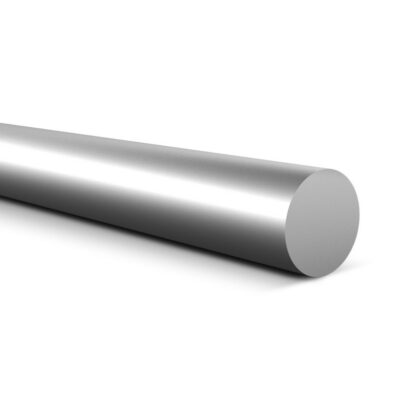
Steel 303 – material profile
Equivalent designations
- 1.4305 10
- X8CrNiS18-9
Steel 1.4305, known under the designations X8CrNiS18-9 and AISI 303, is a representative of austenitic stainless steels engineered for improved machinability. Its history and development form part of a long process of refining stainless steels that began in the early 20th century. Through deliberate modifications of chemical composition, a grade was created that combines the standard chemical resistance of austenitic steels with exceptional ease of mechanical machining. In engineering practice this steel is often chosen where complex machine parts with smooth surfaces are required, produced quickly and with limited machining costs.
The article below explains the definition and classification of acid-resistant austenitic steels, analyses the chemical composition of 1.4305, describes production and processing, assesses corrosion resistance and strength parameters, compares it with other popular grades, and presents guidance on storage and operation. The text is supplemented with historical context and practical metaphors that help understand why 1.4305 has found a permanent place in modern industry.
Unique properties of steel 1.4305 X8CrNiS18-9 AISI 303
Definition and classification of acid-resistant austenitic steels
Austenitic steels are a group of iron alloys whose equilibrium microstructure at low and moderate temperatures is formed by the austenite (γ) phase – a face-centred cubic (FCC) crystal lattice. They are characterised by high chromium and nickel contents, which result in good corrosion resistance and structural stability. The term “acid-resistant” refers to the ability to form and maintain a thin, self-healing chromium oxide layer (Cr2O3) – a “passive film” – which protects the steel from corrosive agents.
The designation 1.4305 (per EN) and X8CrNiS18-9 (per the German DIN classification) corresponds to American AISI 303. The symbols contain key information: “18-9” indicates the approximate chromium (about 18%) and nickel (about 9%) contents, and the letter “S” signals the presence of sulphur as an alloying addition. Sulphur is added in a controlled manner to improve machinability by forming sulphide inclusions that facilitate chip breaking.
Historically, the 18/8 austenitic steel (often marked 1.4301/304) became the basis for wide use of stainless steels. However, as machining of machines and tools developed, demand arose for grades easier to machine. Steel 303 was created as a response – designed to tolerate mass machining on lathes and milling machines while retaining acceptable corrosion resistance.
Basic physicochemical and mechanical features
Steel 1.4305 is fully austenitic in the equilibrium state, which translates into good ductility and high toughness at ambient temperature. Key physicochemical features:
- Good resistance to oxidising environments and many inorganic acids at moderate concentrations.
- Markedly improved machinability due to controlled sulphur content, meaning lower cutting forces, better chip formation and higher tool efficiency.
- Lower resistance to chloride ions compared with “clean” 18/8 austenitic grades (e.g. 1.4301) and steels with molybdenum additions (e.g. 1.4401/316).
- Cannot be hardened by heat treatment; strengthening is only possible by plastic deformation (cold working).
In terms of mechanical properties, typical values for the annealed material may include: tensile strength in the range of about 500–700 MPa, yield strength R0.2 on the order of 200–350 MPa and elongation at break of 30–50%. These values depend on the specific material condition, heat treatment and degree of plastic deformation; the ranges given are indicative and should be verified against supplier documentation.
Chemical composition of steel 1.4305 X8CrNiS18-9: analysis of alloying elements
The chemical composition of 1.4305 is characterised by a balanced combination of chromium and nickel percentages and a controlled sulphur addition, which determines the specific properties of this grade. Typical component ranges (indicative values, varying with standard and manufacturer):
- Chromium (Cr): ~17.0–19.0%
- Nickel (Ni): ~8.0–10.0%
- Carbon (C): ≤ 0.15% (often ≤ 0.08–0.10% to limit carbides)
- Silicon (Si): ≤ 1%
- Manganese (Mn): ≤ 2%
- Phosphorus (P): ≤ 0.045–0.15% (controlled to limit embrittlement)
- Sulphur (S): typically 0.07–0.35% – characteristic additive in AISI 303
- Iron (Fe): balance
These ranges should be treated as approximate; specifications per EN, ASTM or the supplier provide precise values.
The role of chromium and nickel in steel properties
Chromium and nickel are the pillars of austenitic steel properties:
- Chromium (Cr): its presence above about 10.5% enables formation of a stable, continuous chromium oxide layer on the steel surface, which is the basis of passivation and corrosion resistance. Higher chromium content improves protection in oxidising environments, but chromium alone is insufficient to maintain an austenitic structure across a wide temperature range.
- Nickel (Ni): stabilises the austenitic structure, lowers the martensitic transformation temperature and enhances ductility and toughness. In practice nickel makes the steel non-magnetic and easier to form plastically at low temperatures.
The combined action of Cr and Ni therefore provides a compromise between chemical resistance and mechanical properties, necessary in industrial applications.
Importance of sulphur and other additions in AISI 303
Sulphur introduced into 1.4305 serves as a “machinability aid”. By forming sulphide inclusions (mainly MnS), it causes the chip produced during cutting to break more easily and be removed as shorter fragments. This effect translates into:
- Reduced cutting forces and extended tool life compared with 304/1.4301.
- Better surface quality of machined parts and the possibility of using higher cutting speeds.
However, sulphur brings consequences:
- Reduced corrosion resistance, particularly in chloride-containing environments and seawater, where inclusions become initiation points for corrosion.
- Deteriorated weldability; inclusions may promote hot cracking and weaken weld continuity.
- Slightly worse impact properties and local reduction in ductility under dynamic loading.
Additions such as silicon and manganese are used in standard amounts to improve strength and to help remove oxygen and sulphur during melting. Phosphorus and carbon are controlled at low levels to prevent embrittlement and carbide precipitation that could reduce resistance to intergranular corrosion.
Production process and processing of acid-resistant steel 1.4305
Production of austenitic stainless steels, including 1.4305, combines classic metallurgical stages with additional procedures for controlling cleanliness and chemical composition. Modern technologies enable precise formation of microstructure and monitoring of sulphur and other impurities.
Melting technologies and quality control
A typical production process includes:
- Melting in an electric arc furnace (EAF) or in a blast-furnace-based system followed by further treatment in converters and ladles. EAF is preferred for stainless steels because it allows precise dosing of additions and recycling of steel.
- Additional refining processes: vacuum degassing (VD/VOD), ladle refining using fluxes and desulphurisation and denitrification to ensure control over S, P and other imperfections.
- Precise dosing of alloying elements – chromium and nickel – and control of sulphur content to achieve the desired machinability without excessive compromise in corrosion resistance.
- Hot rolling and cold rolling depending on the end product (bars, plates, tubes). Plastic working affects final mechanical properties and surface structure.
Quality control includes:
- Chemical analyses (spectrometry) confirming composition conformity with standards.
- Mechanical tests: tensile tests, hardness, toughness.
- Corrosion tests: pitting and intergranular corrosion resistance tests.
- Microstructural and inclusion inspection by metallographic methods.
Optimisation of rolling and annealing processes
Hot rolling shapes the primary structure and removes inhomogeneities, and subsequent finishing cold operations improve surface roughness and mechanical properties through strain hardening. For 1.4305 the following stages are important:
- Annealing (stress-relief/solution annealing) after intensive cold rolling to restore the austenitic structure and reduce internal stresses. The typical annealing temperature range is 1000–1100°C, followed by rapid cooling (e.g. air or water quench) to prevent carbide precipitation.
- Final processing, including grinding and polishing of surfaces, often significantly influences corrosion resistance – a smooth surface hinders adhesion of contaminants and initiation of corrosion.
Optimisation aims to minimise inclusion scale, control sulphur distribution and ensure compositional homogeneity across the batch, which is critical for service properties.
Corrosion resistance – how steel 1.4305 performs in different environments
Corrosion resistance of austenitic steels is based on the passivation mechanism. However, the presence of sulphur in 1.4305 introduces significant differences compared with “clean” austenitic 304. Mechanisms and study results in typical conditions are described below.
Protective mechanisms against corrosion in austenitic steel
Main protective mechanisms:
- Formation of a passive chromium oxide layer (Cr2O3) – a thin, adherent and self-regenerating film. This layer is the first line of defence against aggressive compounds and oxidising environments.
- Stability of austenite – a closed crystal structure with high ductility that hinders defect and crack propagation.
- Surface and processing influence – polishing and removal of contaminants increase local resistance.
For 1.4305 the problem is that sulphide inclusions form micro-anodes – small areas with different electrochemical potential than the surrounding metal. In chloride-containing environments or seawater these micro-anodes become sites for initiation of pitting and crevice corrosion.
Corrosion tests in acidic and chloride conditions
Laboratory and practical studies indicate:
- In oxidising environments, such as concentrated nitric acid or atmospheric exposure, 1.4305 retains decent resistance similar to 304. Normal passivation protects against general corrosion.
- In the presence of chloride ions (NaCl) the resistance of 1.4305 is reduced compared with 304 and is much lower than grades with molybdenum (316). In pitting tests (e.g. ASTM G48) 1.4305 shows a lower critical pitting temperature and less tolerance for chloride concentrations.
- In acidic organic environments and some mineral acids the steel shows acceptable resistance, however the presence of sulphide inclusions can cause localised attack.
- In industrial practice 1.4305 is used in moderately aggressive environments and where the priority is fast and inexpensive machining, while for marine or strongly chloride-bearing applications 316 or special duplex grades are preferred.
Laboratory tests, field trials and operating experience are essential to determine the suitability of 1.4305 for specific service conditions.
Mechanical and service properties of X8CrNiS18-9 steel
Steel 1.4305 combines austenitic characteristics with the influence of alloying additions. Below are specific parameters and their practical implications.
Tensile strength and toughness
In the annealed condition, mechanical characteristics are usually stable and predictable:
- Tensile strength (Rm): typically in the range 500–700 MPa, depending on processing and composition.
- Yield strength (R0.2): approximately 200–350 MPa.
- Elongation at break (A): 30–50%, indicating good ductility and ability to deform before fracture.
- Impact toughness (KV): high for austenitic alloys, although sulphide inclusions can locally reduce impact values at low temperatures or for unfavourable inclusion orientations.
For structures exposed to dynamic loads or impacts, grades without sulphur are a better choice; however for most standard applications 303 offers sufficient toughness.
Ductility and fatigue resistance
Austenitic steel exhibits good ductility, enabling easy forming and stamping. For 1.4305:
- Ductility is good, but sulphide inclusions can create local stress concentrators, negatively affecting fatigue performance.
- Fatigue resistance under cyclic loading is lower than that of 304/1.4301 for the same geometry and surface condition, especially if the surface is not ideally smooth.
- Processing that improves surface quality, relieves machining stresses and finishing processes (e.g. polishing) can significantly improve fatigue resistance.
In practice designers account for these limitations, using 1.4305 where the benefits of easy machining outweigh the risk of reduced fatigue resistance.
Industrial applications of AISI 303 steel – a wide scope of use
Steel 1.4305 has found applications across many sectors where precision parts are required quickly and economically. Key application areas are listed below.
Machine and equipment components operating in aggressive environments
Although 303 is not the best choice for strongly chloride-bearing environments, in many industrial installations it is used for components that:
- Are not directly exposed to continuous chloride attack.
- Require complex geometry and good surface finish after machining, e.g. bearings, bushings, pins, machine screws and nuts, shafts with complex shapes.
- Operate in low or moderate concentrations of chemicals where 303 resistance is sufficient.
Use in the food and chemical industries
Stainless steel is widely used in the food and chemical industries due to hygiene, ease of cleaning and resistance to many environments. AISI 303 is used for:
- Parts of packaging machines, elements not requiring welding, where precision and smooth surface finish are essential.
- Auxiliary tools in food production that do not have direct contact with aggressive salt solutions or strong acids.
In the chemical industry 303 is used where processes do not contain strong chlorides or corrosive stress is low.
Automotive and aerospace industries – specific applications
In automotive and aerospace sectors 1.4305 is used where precise components and ease of mass production are important:
- Connecting elements and fasteners, interior parts, components of auxiliary mechanisms.
- In aviation, due to corrosion and welding requirements, 303 is limited to parts that are not structurally critical and do not require welding.
In these sectors alternatives (e.g. 304 or 316) are often used where higher corrosion resistance or weldability is required.
Comparison of 1.4305 with other austenitic and acid-resistant steels
To understand the position of 1.4305 within the material spectrum, it is useful to compare it with the most popular grades: 1.4301 (AISI 304) and 1.4401 (AISI 316).
Differences in chemical composition and service properties
- 1.4301 (X5CrNi18-10, AISI 304): the standard “18/8” austenitic steel without sulphur addition. It features broad corrosion resistance, good weldability and versatility. Machinability is moderate, worse than 303.
- 1.4305 (X8CrNiS18-9, AISI 303): similar Cr and Ni contents to 304, but with sulphur added for better machinability. Less resistant to corrosion in chloride environments, poorer weldability.
- 1.4401 (X5CrNiMo17-12-2, AISI 316): contains molybdenum (Mo ~2–3%), which significantly increases resistance to chloride-induced corrosion and pitting. Machinability is worse than 303, but it offers the best corrosion resistance among these grades.
In practice the choice among them is a compromise: 303 speeds up and lowers machining costs, 304 offers versatility, and 316 provides protection in demanding conditions.
Advantages and limitations compared with AISI 304 and 316
Advantages of 1.4305:
- Exceptional machinability, shorter machining time, lower tool wear.
- Good corrosion resistance in moderate conditions.
- Good ductility and toughness at ambient temperature.
Limitations:
- Lower resistance to local (pitting) and crevice corrosion in chloride environments.
- Reduced weldability – not recommended for critical welded structures.
- Potential issues in medical and pharmaceutical applications where maximum cleanliness and chemical resistance are required.
The decision to use 303 should be based on analysis of the working environment, structural and economic requirements.
Processing and welding methods for X8CrNiS18-9 steel
Mechanical processing of 1.4305 is one of its greatest assets, but welding and heat treatment require caution.
Welding techniques adapted to acid-resistant steels
Welding 1.4305 is possible but not recommended where the goal is to preserve full mechanical integrity and corrosion resistance. Main recommendations:
- Preferred techniques: TIG (GTAW), MIG/MAG (GMAW) with appropriate choice of filler wire. Use of filler materials similar to 304/308L is recommended to minimise the risk of cracking.
- Low heat input and control of cooling rate help reduce stresses and limit hot cracking tendency.
- Avoid using 1.4305 as the welded material for critical components; if welding is necessary, 304 or 316 are better choices as base material/filler.
An effective approach is to produce complex parts by machining and assemble using mechanical fastenings instead of welding.
Effect of heat treatment on microstructure and mechanical properties
Like other austenitic stainless steels, 1.4305 cannot be hardened by conventional quenching. Main aspects of heat treatment:
- Annealing: restorative anneal at 1000–1100°C removes stresses and restores the austenitic microstructure. Rapid cooling prevents carbide precipitation and formation of undesirable phases.
- No possibility to increase hardness by phase transformation – strengthening only through plastic deformation (cold work).
- Excessive heating in the heat-affected zone during welding can lead to local deterioration of corrosion resistance (carbide precipitation) or intergranular cracking in the presence of impurities.
The choice of appropriate thermal parameters and processing is critical to maintaining desired service properties.
Standards and certifications for acid-resistant steel 1.4305
Regulations and standards ensure material conformity with engineering expectations and industry requirements.
International classification and quality-control standards
Key documents and standards related to 1.4305 include:
- EN 10088 – the European standard for stainless and acid-resistant steels; 1.4305 is one designation under this standard.
- DIN (German system) – X8CrNiS18-9.
- AISI/ASTM – AISI 303; equivalents in ASTM and other technical specifications.
- ISO – international standards for testing and classification of stainless steels.
Supplier quality certificates typically include chemical analysis reports (material certificate EN 10204 3.1 or 3.2), mechanical test certificates and documentation of non-destructive testing.
Requirements for the food and medical industries
Sectors with high hygiene and material safety requirements apply additional criteria:
- Compliance with hygiene standards: in the food industry attestations are often required regarding surface cleanliness, ease of disinfection and absence of compound migration.
- Approval for use by institutions (e.g. food contact certificates issued according to local and international regulations).
- In practice 1.4305 is rarely chosen for medical devices and implants, due to the presence of sulphur and corrosion risk. Instead grades such as 316L, 1.4435 or special biomedical steels are preferred.
Therefore use of 1.4305 in regulated industries requires careful analysis of requirements and possible certification.
Storage and operation guidance for AISI 303 stainless steel
Proper storage and operation are crucial to maintaining properties of 1.4305, especially given its susceptibility to localised corrosion.
Optimal storage conditions and reducing corrosion risk
Practical recommendations:
- Store in dry, well ventilated premises, away from moisture sources and aggressive chemicals.
- Avoid contact with carbon steel and other materials that may contaminate surfaces (e.g. deposition of scale, swarf).
- Use plastic or wooden spacers between sheets and bars to prevent scratching and the formation of corrosion-prone areas.
- If stored outdoors use protective films and provide appropriate condensate drainage.
Additionally, for long-term storage it is advisable to monitor humidity and perform periodic surface inspections.
Maintenance and care of components made from 1.4305
To extend service life and maintain appearance:
- Frequent washing with water and detergent removes deposits and contaminants that can initiate local corrosion.
- Avoid using metallic brushes that can cause cross-contamination (iron transfer), promoting corrosion. Nylon or semi-synthetic brushes are recommended.
- For chloride deposits – immediate cleaning and rinsing of salt spray or seawater; polishing and repassivation of the surface can restore anti-corrosion properties.
- In industrial environments maintenance also includes inspection of joints and fasteners, which can be sites of stress concentration and corrosion.
Care of the surface and prompt response to visible defects significantly improve durability of 1.4305 components.
Summary of key aspects and the role of 1.4305 X8CrNiS18-9 AISI 303 in modern industry
Steel 1.4305 (X8CrNiS18-9, AISI 303) is a material with a clearly defined profile: optimised for machinability, offering decent corrosion resistance in moderate environments but vulnerable to reduced properties in the presence of chlorides and when welded. Its place in industry results from a practical compromise – rapid production of precise parts while maintaining acceptable service life in many applications.
Key features and conclusions:
- Sulphur as a controlled addition provides excellent machinability, but at the same time limits weldability and increases susceptibility to local corrosion.
- Chromium and nickel form the basis of the austenitic, oxidation-resistant structure, making 1.4305 useful in many industrial applications.
- The choice between 303, 304 and 316 determines the compromise between machining costs and required corrosion resistance; where chlorides or welding are critical, sulphur-free grades or molybdenum-containing grades are a better choice.
- Optimisation of production processes, quality control and appropriate maintenance are the guarantee of long-lasting, trouble-free performance of parts made from 1.4305.
In the role of the “machinist” in the materials world, 1.4305 drives production of parts quickly and cheaply, but it requires designers and engineers to be aware of its limitations. A good material selection is not only finding the best alloy, but also adapting manufacturing processes and operating conditions to its specific strengths and weaknesses.