
Pipes, tubes & Hollow bars
- 1.4401, 1.4404…
Stainless steel seamless tube hollow bar DN50 Ø 60mm x 10mm in grade 1.4401 / 1.4404 / 316 / 316L
in stock255,39 € (207,63 € excl. VAT) - 1.4841, heat-resistant
Stainless steel heat-resistant seamless tube hollow bar DN50 Ø 60,3mm x 10mm in grade 1.4841
in stock776,91 € (631,63 € excl. VAT) - 1.4571, 316Ti
Stainless steel seamless tube DN50 Ø 60,32mm x 2,77mm in grade 1.4571 / 316Ti
in stock252,60 € (205,37 € excl. VAT) - 316, 316L
Stainless steel seamless tube DN50 Ø 60,33mm x 2,77mm in grade 316 / 316L
in stock317,65 € (258,25 € excl. VAT) - 1.4301, 1.4307…
Stainless steel seamless tube hollow bar DN50 Ø 63mm x 11,5mm in grade 1.4301 / 1.4307 / 304 / 304L
in stock258,14 € (209,87 € excl. VAT) - 1.4571, 316Ti
Stainless steel seamless tube hollow bar DN50 Ø 63mm x 15,5mm in grade 1.4571 / 316Ti
in stock379,20 € (308,29 € excl. VAT) - 1.4841, heat-resistant
Stainless steel heat-resistant seamless tube DN50 Ø 57mm x 2,9mm in grade 1.4841
in stock356,82 € (290,10 € excl. VAT) - 1.4541, 1.4878…
Stainless steel seamless tube DN50 Ø 57mm x 4mm in grade 1.4541 / 1.4878 / 321 / 321H
in stock319,40 € (259,67 € excl. VAT) - 1.4307
Stainless steel seamless tube DN50 Ø 60mm x 7,5mm in grade 1.4307
in stock255,52 € (207,74 € excl. VAT) - 1.4841, heat-resistant
Stainless steel heat-resistant seamless tube DN50 Ø 60,3mm x 2,5mm in grade 1.4841
in stock355,44 € (288,98 € excl. VAT) - 1.4749, heat-resistant
Stainless steel heat-resistant seamless tube DN50 Ø 60,3mm x 4mm in grade 1.4749
in stock505,76 € (411,19 € excl. VAT) - 1.4841, heat-resistant
Stainless steel heat-resistant seamless tube DN50 Ø 60,3mm x 4mm in grade 1.4841
in stock477,66 € (388,34 € excl. VAT) - 1.4749, heat-resistant
Stainless steel heat-resistant seamless tube DN50 Ø 60,3mm x 5mm in grade 1.4749
in stock519,92 € (422,70 € excl. VAT) - 1.4841, heat-resistant
Stainless steel heat-resistant seamless tube DN50 Ø 60,3mm x 5mm in grade 1.4841
in stock519,92 € (422,70 € excl. VAT) - 1.4301, 1.4306
Stainless steel seamless tube DN50 Ø 60,3mm x 2,3mm in grade 1.4301 / 1.4306
in stock252,73 € (205,47 € excl. VAT) - 1.4301, 1.4307…
Stainless steel seamless tube DN50 Ø 60,3mm x 2,77mm in grade 1.4301 / 304 / 1.4307 / 304L
in stock285,09 € (231,78 € excl. VAT) - 1.4401, 1.4404…
Stainless steel seamless tube DN50 Ø 60,3mm x 2,77mm in grade 1.4401 / 316 / 1.4404 / 316L
in stock252,19 € (205,03 € excl. VAT) - 1.4301, 1.4307…
Stainless steel seamless tube DN50 Ø 60,3mm x 2,9mm in grade 1.4301 / 304 / 1.4307 / 304L
in stock285,09 € (231,78 € excl. VAT) - 1.4401, 1.4404…
Stainless steel seamless tube DN50 Ø 60,3mm x 2,9mm in grade 1.4401 / 316 / 1.4404 / 316L
in stock252,19 € (205,03 € excl. VAT) - 1.4571, 316Ti
Stainless steel seamless tube DN50 Ø 60,3mm x 2,9mm in grade 1.4571 / 316TI
in stock258,56 € (210,21 € excl. VAT) - 1.4462, duplex
Stainless steel seamless tube DN50 Ø 60,3mm x 2,9mm in grade duplex 1.4462
in stock266,04 € (216,29 € excl. VAT) - 1.4571, 316Ti
Stainless steel seamless tube DN50 Ø 60,3mm x 3,2mm in grade 1.4571 / 316Ti
in stock253,94 € (206,46 € excl. VAT) - 1.4571, 316Ti
Stainless steel seamless tube DN50 Ø 60,3mm x 3,6mm in grade 1.4571 / 316Ti
in stock253,16 € (205,82 € excl. VAT) - 1.4301, 1.4307…
Stainless steel seamless tube DN50 Ø 60,3mm x 3,91mm in grade 1.4301 / 304 / 1.4307 / 304L
in stock270,01 € (219,52 € excl. VAT)
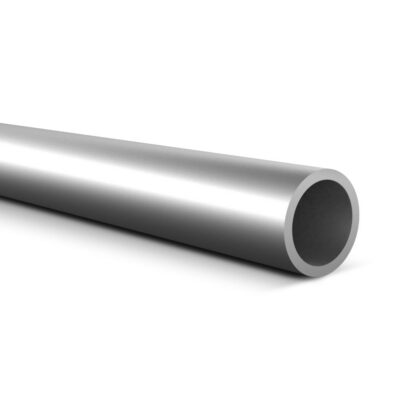
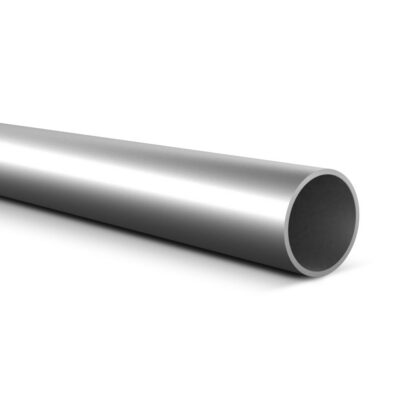
Seamless pipes and hollow bars
Seamless pipes and hollow bars are tubular components manufactured without welded joints, used where higher strength, tightness, and resistance to corrosive factors or high temperatures are required. The store’s offer includes exclusively products made of stainless steel, acid-resistant steel, and heat-resistant steel, in the form of pipes, precision tubes, and hollow bars.
What are seamless pipes and hollow bars?
Seamless pipes are tubes manufactured through processes such as forming and drawing or rolling, which do not contain a longitudinal welded seam. As a result, they possess a more homogeneous structure, better mechanical parameters, and a lower tendency for defects at connection points. Hollow bars are thicker, precision-engineered tubes with larger internal and external diameters, often used for turning and further machining into finished parts.
What steels are our seamless pipes and hollow bars made of?
Our offer includes pipes and hollow bars made from the following steel groups:
- Stainless steel (austenitic)– the most commonly used grades: 304 (EN 1.4301 / AISI 304) and 316L (EN 1.4404 / AISI 316L). They are characterized by good corrosion resistance and ease of processing.
- Acid-resistant steel– usually grades with increased molybdenum and chromium content (e.g., 316/316L variants or special grades for aggressive environments). Designed for chemical installations and processes involving aggressive agents.
- Heat-resistant steel– grades designed for operation at elevated temperatures, such as the AISI 310/310S-based families. Used in boiler, furnace, and other high-temperature applications.
- Special steels– duplex (e.g., 2205 / EN 1.4462 / UNS S32205) combining higher strength with good corrosion resistance, suitable where greater load-bearing capacity and corrosion resistance are needed.
In the description of each product, we provide the exact grade and designations (EN / AISI / UNS where applicable) to facilitate material selection for a specific application.
Applications – where are seamless pipes and hollow bars used?
Seamless pipes and hollow bars are widely used in many industries, including:
- Power industry– steam installations, boiler systems, heat exchangers.
- Gas and petrochemical industry– high-pressure pipelines, transmission installations, process equipment.
- Chemical and food industry– installations with aggressive media, hygienic process lines (where surface smoothness and cleanliness are vital).
- Construction and HVAC– heating, cooling, and air conditioning systems requiring durable tubular elements.
- Automotive and machinery– structural elements, shafts, bushings for further machining.
- Offshore and shipbuilding– marine installations and structures exposed to seawater corrosion (with appropriately selected steel grade).
- Workshops, repairs, and DIY– precision hollow bars and pipes for repairs, prototypes, and garage structures.
How to choose the right seamless pipes and hollow bars?
When selecting, it is worth paying attention to several key parameters:
- Material– match the steel grade to the working environment (corrosiveness, temperature, presence of chlorides or acids).
- Working pressure and temperature– the choice of wall thickness and material class depends on these factors.
- Dimensions and tolerances– nominal outer diameter (OD), inner diameter (ID), wall thickness; tolerances affect the possibility of further processing.
- Surface finish– options such as pickled, ground, or polished, depending on hygienic or aesthetic requirements.
- Standards and certificates– check compliance with standards (EN, ASTM, PN) and material documentation (3.1/3.2 certificate, certificate of conformity), if required.
- Machinability– some grades are better suited for bending, welding, or turning; for complex operations, consult the selection with the supplier.
Why choose seamless pipes?
Seamless pipes offer several significant advantages compared to welded pipes:
- Better material homogeneity and higher mechanical strength.
- Lower susceptibility to local defects and corrosion along joints.
- Greater reliability in high-pressure and high-temperature applications.
- Simplified final processing (turning, milling) in the case of precision hollow bars.
A disadvantage may be the higher price compared to welded pipes; however, for many applications, the longer service life and operational safety compensate for the higher initial cost.
Who are seamless pipes and hollow bars for?
Our pipes and hollow bars are intended for:
- designers and engineers of industrial installations,
- power and petrochemical plants,
- contracting companies in the HVAC, construction, and shipbuilding industries,
- mechanical workshops and machinery manufacturers,
- wholesalers and individual customers looking for durable solutions.
Summary
Seamless pipes and hollow bars made of stainless, acid-resistant, and heat-resistant steel are the solution for demanding applications – from industrial and power installations, through chemical and food processes, to offshore structures and machine parts. When choosing, consider the material, working conditions (temperature, pressure, environment), and standards. In case of doubt, our specialists will help you select the appropriate grade and dimensions for your specific application.
Pipes, tubes & Hollow bars by steel grade
Pick a grade to see only pipes, tubes & hollow bars in that material – with the full list of sizes and a description of the steel. The number next to each grade is the count of items in stock.
Acid-resistant
Austenitic with molybdenum – resistant to pitting and crevice corrosion; for chemicals, processing and chloride environments.
Austenitic stainless
Chromium-nickel without molybdenum – the standard choice for structures, food service and interiors.
Heat-resistant
Higher chromium and silicon – retain strength and scaling resistance at high temperatures.
Duplex
Austenitic-ferritic structure – twice the yield strength with good stress corrosion resistance.