
Seamless Tees
- 1.4541, 321
Stainless steel seamless equal tee DN40 Diameter 48,3 x 4mm in grade 1.4541 / 321
in stock23,85 € (19,39 € excl. VAT)Add to basket - 1.4571, 316Ti
Stainless steel seamless equal tee DN50 Diameter 57 x 3,2mm in grade 1.4571 / 316Ti
in stock40,17 € (32,66 € excl. VAT)Add to basket - 1.4541, 321
Stainless steel seamless equal tee DN65 Diameter 76,1 x 2,9mm in grade 1.4541 / 321
in stock38,38 € (31,20 € excl. VAT)Add to basket - 1.4571, 316Ti
Stainless steel seamless equal tee DN65 Diameter 76,1 x 2,9mm in grade 1.4571 / 316Ti
in stock46,71 € (37,98 € excl. VAT)Add to basket - 1.4301, 1.4307…
Stainless steel seamless reducing tee DN65 Ø 76,1 x 2,9mm / DN25 33,7 x 2,6mm in grade 1.4301 / 304 / 1.4307 / 304L
in delivery29,19 € (23,73 € excl. VAT)Ask about delivery - 1.4301, 1.4307…
Stainless steel seamless reducing tee DN65 Ø 76,1 x 2,9mm / DN25 33,7 x 2,77mm in grade 1.4301 / 304 / 1.4307 / 304L
in delivery29,19 € (23,73 € excl. VAT)Ask about delivery - 1.4401, 1.4404…
Stainless steel seamless equal tee DN32 Diameter 42,4 x 2,6mm in grade 1.4401 / 1.4404 / 316 / 316L
in delivery20,93 € (17,02 € excl. VAT)Ask about delivery - 1.4401, 1.4404…
Stainless steel seamless equal tee DN32 Diameter 42,4 x 2,77mm in grade 1.4401 / 1.4404 / 316 / 316L
in delivery20,93 € (17,02 € excl. VAT)Ask about delivery - 1.4401, 1.4404…
Stainless steel seamless equal tee DN32 Diameter 42,4 x 3,56mm in grade 1.4401 / 1.4404 / 316 / 316L
in delivery24,23 € (19,70 € excl. VAT)Ask about delivery - 1.4401, 1.4404…
Stainless steel seamless equal tee DN32 Diameter 42,4 x 3,6mm in grade 1.4401 / 1.4404 / 316 / 316L
in delivery24,23 € (19,70 € excl. VAT)Ask about delivery - 1.4401, 1.4404…
Stainless steel seamless equal tee DN40 Diameter 48,3 x 2,6mm in grade 1.4401 / 1.4404 / 316 / 316L
in delivery24,23 € (19,70 € excl. VAT)Ask about delivery - 1.4401, 1.4404…
Stainless steel seamless equal tee DN40 Diameter 48,3 x 2,77mm in grade 1.4401 / 1.4404 / 316 / 316L
in delivery24,23 € (19,70 € excl. VAT)Ask about delivery - 1.4401, 1.4404…
Stainless steel seamless equal tee DN40 Diameter 48,3 x 3,68mm in grade 1.4401 / 1.4404 / 316 / 316L
in delivery27,99 € (22,76 € excl. VAT)Ask about delivery - 1.4301, 1.4307…
Stainless steel seamless equal tee DN50 Diameter 60,3 x 2,77mm in grade 1.4301 / 304 / 1.4307 / 304L
in delivery20,71 € (16,84 € excl. VAT)Ask about delivery - 1.4401, 1.4404…
Stainless steel seamless equal tee DN50 Diameter 60,3 x 2,77mm in grade 1.4401 / 1.4404 / 316 / 316L
in delivery38,13 € (31,00 € excl. VAT)Ask about delivery - 1.4301, 1.4307…
Stainless steel seamless equal tee DN50 Diameter 60,3 x 2,9mm in grade 1.4301 / 304 / 1.4307 / 304L
in delivery20,71 € (16,84 € excl. VAT)Ask about delivery - 1.4401, 1.4404…
Stainless steel seamless equal tee DN50 Diameter 60,3 x 2,9mm in grade 1.4401 / 1.4404 / 316 / 316L
in delivery41,66 € (33,87 € excl. VAT)Ask about delivery - 1.4301, 1.4307…
Stainless steel seamless equal tee DN50 Diameter 60,3 x 3,91mm in grade 1.4301 / 304 / 1.4307 / 304L
in delivery26,58 € (21,61 € excl. VAT)Ask about delivery - 1.4301, 1.4307…
Stainless steel seamless equal tee DN50 Diameter 60,3 x 4mm in grade 1.4301 / 304 / 1.4307 / 304L
in delivery26,58 € (21,61 € excl. VAT)Ask about delivery - 1.4301, 1.4307…
Stainless steel seamless reducing tee DN50 Ø 60,3 x 2,77mm / DN40 48,3 x 2,77mm in grade 1.4301 / 304 / 1.4307 / 304L
in delivery24,72 € (20,10 € excl. VAT)Ask about delivery - 1.4301, 1.4307…
Stainless steel seamless reducing tee DN50 Ø 60,3 x 2,9mm / DN40 48,3 x 2,6mm in grade 1.4301 / 304 / 1.4307 / 304L
in delivery28,25 € (22,97 € excl. VAT)Ask about delivery - 1.4301, 1.4307…
Stainless steel seamless reducing tee DN50 Ø 60,3 x 5,6mm / DN25 33,7 x 4,5mm in grade 1.4301 / 1.4307 / 304 / 304L
in delivery34,62 € (28,15 € excl. VAT)Ask about delivery - 1.4301, 1.4307…
Stainless steel seamless equal tee DN65 Diameter 76,1 x 2,9mm in grade 1.4301 / 304 / 1.4307 / 304L
in delivery32,41 € (26,35 € excl. VAT)Ask about delivery - 1.4404, 316L
Stainless steel seamless equal tee DN65 Diameter 76,1 x 2,9mm in grade 1.4404 / 316L
in delivery36,99 € (30,07 € excl. VAT)Ask about delivery
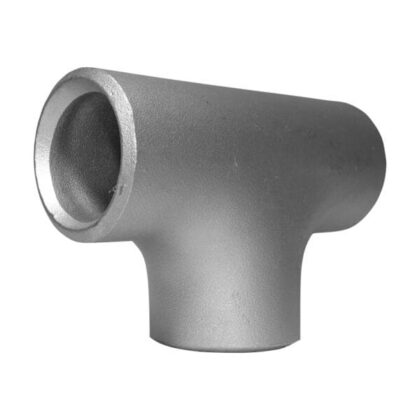
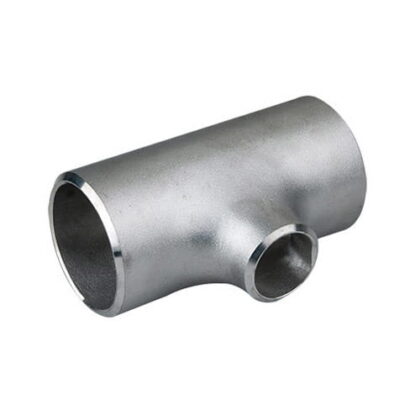
Seamless tees
When we think of pipelines, we often just imagine long, straight pipes stretching for kilometers. However, the true magic of engineering happens where these paths must branch out or change course. This is exactly when seamless tees come into play – the discreet heroes of transmission systems. Although they may look like ordinary pieces of steel at first glance, their construction determines whether the entire installation will stand the test of time or fail at the most inconvenient moment.
Seamless tees are characterized by the fact that their body is made from a single piece of material, without any visible joints or welds. This is a key feature that makes them far more robust than their welded counterparts. No seam means no weak points, which is fundamental in the world of high pressures and aggressive chemicals. It can be compared to a casting – a uniform structure always wins over joined elements, especially when the safety and longevity of the system are at stake.
An interesting fact is that the process of creating such elements requires immense precision and advanced hot or cold forming technologies. Thanks to this, the interior of the tee is perfectly smooth. Why is this so important? Imagine a river flowing through a bed full of stones and irregularities – the water foams, slows down, and silt settles in the hollows. It is similar in a pipeline. A smooth surface inside a seamless tee ensures that the medium flows freely, blockages do not form, and the risk of corrosion in nooks and crannies drops almost to zero.
Where we most often encounter seamless reducing tees
If you have ever wondered how beer in large breweries always flows under sterile conditions, the answer lies in these precise fitting elements. Seamless reducing tees are the standard there because they meet stringent hygiene norms. In the food and pharmaceutical industries, even the smallest weld could be a breeding ground for bacteria. There is no room for compromise here, which is why seamless stainless steel is chosen – it is easy to clean and disinfect.
But the food industry is just the tip of the iceberg. Sectors such as petrochemistry, offshore, and thermal power generation rely on these components every day. In HVAC installations, which take care of our thermal comfort in offices and homes, these tees allow for the efficient distribution of water or refrigerant flow while simultaneously changing the pipe diameter. This allows for maintaining the correct pressure throughout the facility, even if the pipeline has to “turn” in a tight technical shaft.
Even in smaller projects, such as home workshops or modern sanitary systems in single-family housing, we are increasingly reaching for seamless reducing tees. Why? Because nobody likes repairing a leaking pipe hidden behind a wall. Investing in quality materials during the construction phase means peace of mind for years. It is a bit like buying shoes – you can choose cheaper ones, but solid, “seamless” ones will survive any weather and long distances.
Stainless and acid-resistant steel as a foundation for durability
When choosing the right tee, the material it is made of is crucial. At stalesia.com, we focus on materials of the highest quality. The most popular is, of course, stainless steel, widely known as inox. The 1.4301 symbol (or AISI 304) is a true classic that handles most typical industrial applications. It is corrosion-resistant, aesthetic, and extremely durable. It is the “all-around” choice for those who need reliability at a reasonable price.
However, sometimes life presents us with tougher tasks. If the installation is to come into contact with brine, acids, or other aggressive substances, acid-resistant steel comes into action – for example, grade AISI 316L (1.4404). The addition of molybdenum makes such a seamless tee an impenetrable shield against chemicals. Interestingly, it is even used in jewelry and medicine, which only confirms its neutrality and safety for the surroundings.
Let’s not forget about extreme conditions. Heat-resistant steel (e.g., AISI 310S) is a material for special tasks that is not afraid of temperatures where other metals would start to “flow.” It is irreplaceable in steam lines and high-temperature processes. In turn, ferritic steel, such as AISI 430, finds its niche where specific magnetic properties are important. The choice is vast, but each of these materials has one goal: to ensure the failure-free operation of your installation.
What to look for when buying seamless tees
Buying the right element is not just a matter of dimensions, although these are obviously key. When purchasing seamless tees, it is worth pausing for a moment at the designations. In our store, you will find both European (EN) and American (AISI) standards, which makes matching parts to existing projects much easier. Does the size fit? Does the connection tolerance fall within the norm? These are questions worth asking right at the beginning.
The working pressure class is also an important aspect. A seamless reducing tee must be able to carry the weight of the medium flowing through it without losing its geometry. If you are building a sanitary system, pay attention to the internal surface finish. The smoother, the better for flow and hygiene. These are small details that, on the scale of an entire investment, generate significant savings by limiting the need for frequent inspections or pipe cleaning.
If you feel lost in the maze of designations like 1.4404 versus 1.4301, do not worry – you are not alone. The installation industry can be complicated, but that is exactly what we are here for. Selecting the right component is often a matter of experience and knowledge of the specifics of a particular medium. Remember that a well-chosen tee is not just a piece of pipe; it is primarily a guarantee of safety for the people working on the installation and for the natural environment.
Are you currently planning a modernization of your transmission network or building a new system from scratch? We will be happy to help you choose the ideal seamless tees that meet all the technical requirements of your project. Write to us or call – together we will make your pipeline run like a Swiss watch. Perhaps we can also check other fitting elements that will suit your order?
Steel grades
Each grade has its own page with chemical composition, equivalent designations and the full list of products in stock.
Acid-resistant
Austenitic with molybdenum – resistant to pitting and crevice corrosion; for chemicals, processing and chloride environments.
Austenitic stainless
Chromium-nickel without molybdenum – the standard choice for structures, food service and interiors.
Heat-resistant
Higher chromium and silicon – retain strength and scaling resistance at high temperatures.
Ferritic
Chromium without nickel – cheaper, magnetic, good where atmospheric corrosion resistance matters.