
Steel grade
0H17T
2 items in stock
Products in this grade
- 0H17T
Stainless steel seamless tube DN90 Ø 95mm x 7mm in grade 0H17T (equivalent 1.4510 / AISI 430Ti)
in stock1264,39 € (1027,96 € excl. VAT) - 0H17T
Stainless steel seamless tube DN90 Ø 101,6mm x 5mm in grade 0H17T (equivalent 1.4510 / AISI 430Ti)
in stock983,41 € (799,52 € excl. VAT)
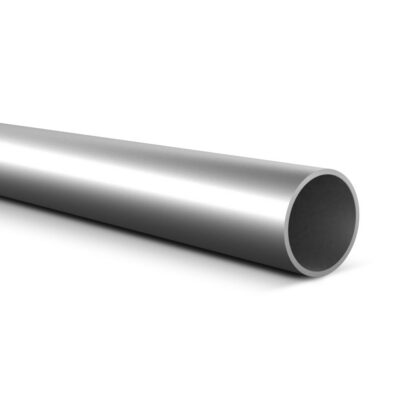
Steel 0H17T – material profile
Equivalent designations
- 1.4510
- X3CrTi17
- AISI 430Ti
- AISI 439
Ferritic and superferritic stainless steels are a family of alloys that combine simple chemistry with high corrosion resistance in many industrial applications. Among them, grades such as 1.4510 (X3CrTi17), 0H17T, AISI 430Ti and AISI 439 play a special role in applications requiring thermal stability, oxidation resistance and low susceptibility to intergranular corrosion. The text below presents definitions, historical background, chemical composition, manufacturing processes, mechanical properties and examples of applications, as well as operational challenges and development directions for these materials.
Understanding ferritic and superferritic stainless steels – basic concepts
Definition of ferritic and superferritic steels
Ferritic steels are a group of stainless steels whose microstructure at room temperature is based on ferrite – a single-phase, ferromagnetic form of iron with a body-centred cubic (BCC) lattice. They are characterised by:
- relatively low carbon content,
- high chromium content (typically 11–18% for classical ferritics),
- low or no nickel content,
- good thermal conductivity and a lower coefficient of thermal expansion than austenitic steels.
Superferritic steels are an extension of this group – they have higher chromium content (typically 20–30%) and additional alloying elements (e.g. molybdenum, nitrogen, niobium) that significantly increase local corrosion resistance (pitting and crevice) and improve resistance in aggressive environments. Superferritics are designed to provide competitive resistance compared with austenitic steels but with lower nickel content.
Differences between ferritic, austenitic and superferritic steels
- Structure and chemistry: Austenitic steels contain high levels of nickel and chromium, which stabilise the γ (austenite) structure, non-ferritic and non-magnetic; ferritic steels are based on the α structure and typically do not contain nickel; superferritics are ferritics with increased alloying additions.
- Corrosion resistance: Austenitics, especially with molybdenum additions (e.g. 316), have good pitting resistance in chloride-bearing environments. Superferritics achieve similar levels of resistance by means of higher chromium content and other additions, without the need for nickel.
- Mechanical and thermal properties: Ferritics usually have better thermal conductivity and a lower coefficient of thermal expansion than austenitics. They are also less ductile in the annealed condition and are more prone to embrittlement with ageing (e.g. around 475°C).
- Weldability and formability: Austenitics are easier to form cold and to weld in many applications; ferritics require control of welding parameters to avoid grain growth and embrittlement issues.
Chemical composition of key grades: 1.4510 X3CrTi17, 0H17T, AISI 430Ti and AISI 439
Below is a characterisation of the composition and its influence on properties for the listed grades. Note that specific percentage ranges may vary slightly depending on the standard and manufacturer; given values are typical ranges.
Elemental analysis of steel 1.4510 (X3CrTi17)
- Chromium (Cr): about 16–18% – the primary element responsible for surface passivation and resistance to general corrosion and oxidation.
- Carbon (C): very low, typically ~0.03% (the designation X3 indicates approximately 0.03% C) – low carbon reduces the risk of chromium carbide formation and thus sensitisation.
- Titanium (Ti): a stabilising addition, typically 0.15–0.60% – ties up carbon by forming titanium carbides, preventing chromium carbide precipitation at grain boundaries.
- Manganese (Mn), Silicon (Si): trace to ~1% – influence forming behaviour and oxidation resistance during melting.
- Phosphorus, sulphur (P, S): very low contents, controlled to a minimum.
X3CrTi17 (1.4510) is a titanium-stabilised ferritic steel. Thanks to this, it shows good resistance to intergranular corrosion after heat treatment and welding, and a stable microstructure in thermal applications.
Composition of 0H17T steel and its effect on mechanical properties
The grade designated 0H17T (in Cyrillic/older notation: 0Х17Т or 0H17T) indicates a ferritic steel with very low carbon (0), about 17% chromium (17) and a titanium addition (T). Typical composition:
- Cr: ~16–18%
- C: practically 0–0.03% (very low)
- Ti: 0.15–0.6%
- Mn, Si: trace
Low carbon content and titanium stabilisation affect:
- Resistance to intergranular corrosion – eliminates sensitisation associated with chromium carbide precipitation at grain boundaries.
- Mechanical stability after welding – minimises degradation of mechanical properties in the heat-affected zone.
- Strength – typical for ferritics, with potential for significant improvement by cold work strengthening.
Comparison of AISI 430Ti and AISI 439 – differences and similarities in chemical composition
- AISI 430Ti:
– Cr: about 16–18%
– Ti: typically 0.4–0.7% – stabilises carbon
– C: low, usually up to 0.08% (in some variants lower)
– Remainder: Fe + trace Mn, Si, P, S
AISI 430Ti is a titanium-bearing variant of AISI 430. It is used where corrosion resistance and stability after heat treatment/welding are required, e.g. furnace components, external architectural elements.
- AISI 439:
– Cr: typically 17–19%
– Ti and/or Nb: small stabilising additions (e.g. Ti ~0.2–0.5% or Nb)
– C: very low (usually <0.03–0.04%) – in some variants lower than 430Ti
– Other additions: sometimes small amounts of Mo to improve pitting resistance; generally formulated for high-temperature resistance
Practical differences:
- AISI 439 is designed for better performance in high-temperature and oxidising conditions (e.g. exhaust systems, boiler installations), and may therefore contain additional stabilisers and modifiers.
- AISI 430Ti is widely used in applications where good weldability and post-processing stability are required, but extreme high-temperature resistance is not essential.
Production processes for ferritic and superferritic steels – technologies and processing
Production of ferritic stainless steels uses standard steelmaking technologies but with additional composition and process controls that are critical for final properties.
Melting and rolling methods
- Electric arc furnace (EAF) melting: the basic method for stainless steel production. Allows flexibility in raw material choice and recycling of stainless scrap.
- Refining processes: Argon Oxygen Decarburisation (AOD) and Vacuum Oxygen Decarburisation (VOD) are used to control carbon levels and remove impurities. For steels with very low C and Ti additions, control is critical to avoid excess carbon and undesired titanium reactions.
- Continuous casting: enables production of billets and slabs with homogeneous structure.
- Hot and cold rolling: hot rolling shapes semi-finished products; cold rolling provides final thickness and improves surface finish. Inter-pass annealing (recrystallisation) and annealing treatments are applied depending on requirements.
- Surface treatments: annealing in a neutral atmosphere, passivation, pickling and polishing – particularly important for decorative and food applications.
Heat treatment and its significance for microstructural stability
- Recrystallisation annealing: typical annealing at 700–950°C aimed at removing cold work strengthening and restoring grain continuity. For titanium-stabilised steels, temperatures are chosen so as not to dissolve Ti carbides.
- Stabilisation: grades with Ti or Nb additions are designed so that after annealing and cooling a portion of the carbon is bound in Ti/Nb carbides, stabilising grain boundaries.
- Avoiding the temperature range favourable for σ phase formation: on prolonged exposure to 600–900°C certain ferritics can form σ (sigma) phase, which reduces ductility and corrosion resistance. Control of time and temperature of heat treatment and alloy composition is critical.
- Tempering and normalising anneals: used where restoration of grain continuity is required after mechanical or thermal processing.
Physical and mechanical properties – how ferritic steel meets industrial requirements
Ferritic steels offer a set of properties that make them preferred in specific technical applications.
Corrosion resistance in various environments
- General corrosion and oxidation: due to high chromium content ferritics show good resistance to general corrosion and atmospheric oxidation. Stabilised grades (Ti, Nb) retain their properties after welding and at elevated temperatures.
- Crevice and pitting corrosion: classic ferritics (Cr ~17%) have moderate pitting resistance in chloride environments; in aggressive applications superferritics or additions of molybdenum/nitrogen are used.
- Intergranular corrosion: thanks to titanium stabilisation or very low carbon content near “0”, the risk of intergranular corrosion is reduced.
- High-temperature resistance: grades such as AISI 439 are designed for elevated-temperature applications where oxidation resistance and colour stability are important.
Mechanical strength and ductility
- Strength: ferritics have moderate mechanical strength; they can be strengthened by cold working.
- Ductility: generally lower than austenitics but sufficient for many shapes and forms, especially after appropriate annealing.
- Behaviour after welding: stabilised alloys (Ti, Nb) retain continuity of mechanical properties across welds, making them beneficial for welded structures.
High-temperature resistance and thermal expansion
- Coefficient of thermal expansion: lower than that of austenitic steels – important when joining with other materials where differential expansion causes thermal stresses.
- Resistance to prolonged elevated temperatures: depends on composition – AISI 439 and other improved grades show good stability up to several hundred degrees Celsius, but attention must be paid to σ phase formation and ageing phenomena in the 400–500°C range (so-called 475°C embrittlement).
Applications of ferritic and superferritic stainless steels in industry
Practical uses of these grades are numerous and stem from the combination of corrosion resistance, thermal stability and material cost (lower nickel content).
Automotive and energy sector
- Exhaust system components: AISI 439 and other stabilised ferritics are widely used in exhaust pipes, manifolds and heat shields – their oxidation resistance and tolerance of cyclic temperatures make them ideal.
- Boiler and heat exchanger components: where oxidation and corrosion resistance at moderate temperatures are required.
- Energy installation parts: pipes, shields, ventilation elements.
Chemical and food industries
- Tanks, pipelines, process equipment: in neutral and mildly aggressive environments where there is no high risk of pitting corrosion from chloride ions.
- Catering equipment and food installations: decorative and functional surfaces exposed to thermal processing and cleaning.
Construction and architectural elements
- Facades, panels, decorative elements: ferritics offer an aesthetic appearance and weather resistance.
- Interior fittings: where corrosion resistance in moderate conditions is required.
Influence of titanium additions in 430Ti and 0H17T steels on durability and material resistance
Titanium additions in ferritic steels play a key role in maintaining long-term resistance and microstructural stability.
Role of titanium in carbide stabilisation
- Titanium binds carbon: forms TiC or less soluble TiC/TiN phases which prevent the formation of chromium carbides (Cr23C6) along grain boundaries.
- Reduction of sensitisation: as a result, welding or thermal exposure does not lead to chromium depletion at grain boundaries, reducing the risk of intergranular corrosion.
- Weld stability: in the heat-affected zone of welds, titanium contributes to preserving corrosion resistance and mechanical properties.
Prevention of ageing and intergranular corrosion
- Ageing (475°C embrittlement): titanium does not always fully prevent the embrittlement of ferritics that involves precipitation of fine chromium-rich particles around 400–500°C; however, appropriate composition and heat treatment minimise its effect.
- Intergranular corrosion: due to carbide stabilisation by titanium, the risk is significantly reduced, which is why alloys such as 430Ti and 0H17T are widely used in welded applications.
Comparison of AISI 439 and 1.4510 – specific applications and technological advantages
Analysis of high-temperature resistance properties
- AISI 439: designed for service at elevated temperatures and for cyclic heating/cooling. It has superior oxidative and long-term temperature resistance compared with standard ferritics. With appropriate additions (stabilisers and optionally small amounts of Mo/Nb) it exhibits increased resistance to damage from elevated temperature.
- 1.4510 (X3CrTi17): performs well in service temperatures but has a more typical application range than 439. Thanks to titanium it is particularly beneficial where welds resistant to sensitisation are required.
Differences in microstructure and their practical significance
- Grain size and stability: AISI 439 may have a microstructure tailored to maintain stability at higher temperatures, reducing the tendency to form brittle phases after prolonged heating.
- Intermetallic phases: differences in alloying content affect the risk of forming brittle phases (e.g. sigma). Control of composition and heat treatment is key to minimising this effect.
- Practical consequences: in automotive and energy applications with thermal cycles and local overheating, AISI 439 offers an advantage. In welded structures and installations at moderate temperatures, 1.4510 provides a favourable balance of properties and cost.
Standards and certificates for ferritic and superferritic stainless steels
Compliance with standards and availability of technical documentation are crucial in material selection and quality control.
International quality standards
- EN (European Norm): EN 10088 (series) governs stainless steel materials – includes designations such as 1.4510 and formats like X3CrTi17.
- ASTM / AISI: in Anglo-Saxon countries AISI/ASTM specifications and names (e.g. AISI 430Ti, AISI 439) and UNS equivalents are commonly used.
- GOST: Russian and Eastern European standards (e.g. 0H17T) often appear in documentation and product specifications.
- NACE: standards concerning corrosion resistance in industrial environments, especially important in the oil and chemical industries.
Technical documentation and its role in material selection
- Material certificates (compliance certificates): confirm chemical composition, mechanical test results and production parameters.
- Manufacturer data sheets: provide information on corrosion resistance, service temperature ranges, welding guidelines and heat treatment instructions.
- NDT and quality control: ultrasonic, radiographic, hardness tests and welded joint samples verify conformity with application requirements.
Common operational challenges and issues associated with ferritic and superferritic steels
Despite many advantages, ferritics also have limitations and issues that should be considered in design and operation.
Stress corrosion cracking and its prevention
- Stress corrosion cracking (SCC): ferritics are generally less susceptible to SCC in chloride environments than austenitics, but risk exists under specific conditions (e.g. presence of corrosive agents and stress). Prevention includes:
– reducing residual stresses (appropriate annealing and control of processing),
– surface protection and selection of a suitable grade,
– control of the service environment.
Intergranular cracking – causes and control methods
- Intergranular corrosion: most often associated with local precipitation of chromium carbides at grain boundaries. Prevention:
– use of stabilised grades (Ti, Nb) or steels with very low C,
– control of welding processes (low heat input, appropriate procedures),
– stabilising anneals.
Processing issues and ways to optimise processes
- Weldability: ferritics have specific requirements – excessive heat input risks grain growth and degradation of mechanical properties; controlled welding parameters and, if needed, intermediate cooling zones are recommended.
- Forging and bending: require consideration of lower ductility than austenitics; post-process annealing may be necessary.
- Ageing phenomenon (475°C): avoid prolonged exposure in this temperature range or use alloys whose compositions limit α’ precipitation (e.g. via appropriate alloying and heat treatment).
Future of ferritic and superferritic stainless steels – trends and technological innovations
The steel industry continues to evolve – development of new alloys and processes responds to increasing demands regarding cost, resources and environmental protection.
Development of new alloys and improved properties
- New superferritics: designed to raise resistance to pitting and crevice corrosion while limiting nickel content. Additions of molybdenum, nitrogen or niobium increase PREN (pitting resistance equivalent) and improve stability.
- Microstructure optimisation: controlled heat treatment and composition modifications reduce tendency to form brittle σ phase and improve ductility.
- Hybrid material solutions: coatings and composites protecting ferritic surfaces from aggressive environments.
Sustainability and recycling in the steel industry
- Scrap recycling: ferritics, thanks to their simpler chemistry (lower nickel content), are economically and environmentally attractive to recycle. Optimisation of EAF and AOD processes improves raw material utilisation efficiency.
- Reducing carbon footprint: development of steelmaking processes with lower CO2 emissions, use of hybrid energy sources and efficient heat recovery in stainless steel production.
- Design for durability: selecting materials that last longer, requiring fewer replacements and repairs – a key direction for sustainable development.
Key sources and reference materials for steel industry specialists
Below is a set of typical knowledge sources that specialists should consider when selecting materials and designing products from ferritic and superferritic steels:
- EN 10088 (series) – classification of stainless steels.
- ASTM / AISI – material specifications and codes.
- Manufacturer data sheets (e.g. Outokumpu, Thyssenkrupp, Aperam) – detailed data on composition, corrosion resistance and welding guidelines.
- ASM Handbook (Metals and Alloys) – compendium of material properties and processing technologies.
- NACE publications and materials on corrosion protection (e.g. methods for SCC control and pitting testing).
- Specialist literature on ferritic ageing, σ phase and stabilisation with titanium/niobium.
Ferritic and superferritic steels – from 1.4510 (X3CrTi17) through 0H17T and AISI 430Ti to AISI 439 – are materials with particular strengths: stability after processing, good oxidation resistance and a favourable cost-to-performance ratio in applications where nickel presence is undesirable or uneconomic. Their correct application, however, requires understanding the nuances of composition, process control, attention to heat treatment and knowledge of operational limitations – especially regarding ageing and the risk of forming brittle phases. With continual development of alloys and production processes, ferritics will remain important where durability, predictability of properties and cost-effectiveness are required.