
Steel grade
1.4435
1 item in stock
Products in this grade
- 1.4435
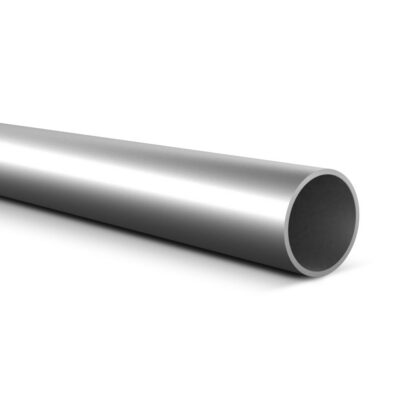
Stainless steel seamless tube DN10 Ø 15mm x 1,5mm in grade 1.4435
in stock57,57 € (46,80 € excl. VAT)
Steel 1.4435 – material profile
Equivalent designations
- X2CrNiMo18-14-3
- AISI 316L
Basic information about acid‑resistant and stainless steels
Definition of stainless and acid‑resistant steels
Stainless steels are a group of iron alloys distinguished by high corrosion resistance due to a passive oxide layer on the surface, formed mainly by chromium. The term “acid‑resistant” refers to a subset of stainless steels that show increased resistance to aggressive chemical environments – particularly acids and chloride ions. In practice the boundary between “stainless” and “acid‑resistant” can be blurred; alloy composition and service conditions are the decisive factors.
Main groups of stainless steels: austenitic, ferritic, martensitic
Stainless steels are primarily classified by their crystal structure:
- Austenitic – face‑centred cubic (FCC) lattice. The most common group, non‑magnetic, with high ductility and resistance to brittle fracture. Examples: 304, 316, 316L, 1.4435.
- Ferritic– body‑centred cubic (BCC) lattice. Typically nickel‑free, with good oxidation resistance, lower strength and less tendency to plastic deformation than austenitics.
- Martensitic– can be hardened by a martensitic transformation; used where high strength and hardness are required at the expense of somewhat lower corrosion resistance.
Additionally there are duplex (ferritic‑austenitic) steels combining advantages of both structures, and tool or special grades resistant to high temperatures.
Importance of corrosion resistance in industry
Corrosion resistance translates directly into safety, longevity and operating costs of installations. In the chemical, food, pharmaceutical and petrochemical industries the choice of a suitable steel grade determines the service life of heat exchangers, reactors, tanks and pipeline systems. A properly chosen steel reduces maintenance downtime, minimises the risk of product contamination and lowers repair and replacement costs.
Characteristics of austenitic steels – the place of 1.4435 in classification
Microcrystalline structure of austenitic steels
Austenitic stainless steels are characterised by an FCC crystal lattice, stabilised mainly by nickel and additions of nitrogen. This atomic arrangement provides high ductility and toughness even at low temperatures. The austenitic structure is stable and does not transform easily during cooling – therefore austenitic steels are not hardened by phase transformation but are strengthened by heat treatment (solution annealing) and by plastic deformation (work‑hardening).
Mechanical and physical properties of austenitic steels
Key features include:
- High ductility and elongation, facilitating forming and bending.
- Good impact toughness and low susceptibility to brittle fracture at low temperatures.
- Non‑magnetic in the fully austenitic condition (magnetism may appear if ferrite or martensite forms due to plastic deformation).
- Enhanced corrosion resistance that can be modified by additions of molybdenum and nitrogen.
- Thermal conductivity and electrical conductivity lower than those of common carbon steels.
Role of nickel and molybdenum additions in the alloy
Nickel stabilises austenite and increases ductility and toughness; it also influences resistance to corrosion in oxidising environments. Molybdenum is critical for resistance to corrosion in the presence of chloride ions – it improves pitting resistance and overall resistance to acids. Nitrogen increases strength and effectively improves pitting resistance at a relatively low cost increase.
1.4435 X2CrNiMo18-14-3 is an austenitic variant with increased nickel and molybdenum content compared with standard 304/316, which results in higher resistance to localised corrosion and better mechanical properties in demanding environments.
Detailed analysis of the 1.4435 X2CrNiMo18-14-3 alloy
Chemical composition and its influence on material properties
The designation X2CrNiMo18-14-3 indicates an approximate composition: about 18% chromium, 14% nickel and 3% molybdenum, with very low carbon content (the “X2” suggests low C, typically ≤0.02%). Typical percentage ranges for 1.4435 are:
- C ≤ 0.02% – minimises the risk of carbide precipitation and intergranular corrosion,
- Cr ≈ 17.5–19.5% – forms a stable passive layer,
- Ni ≈ 13–15% – stabilises austenite and improves ductility,
- Mo ≈ 2.5–3.5% – increases pitting resistance,
- Mn ≤ 2% and Si ≤ 1% – auxiliary elements for melting and processing,
- N in small amounts – improves strength and PREN.
Effects of composition on properties:
- Elevated Ni and Mo content leads to a marked increase in resistance to electrochemical and localised corrosion in chloride‑containing environments.
- Low carbon content prevents chromium carbide precipitation after heat treatment or high‑temperature exposure, minimising intergranular corrosion.
- Nitrogen, if present, raises strength and contributes to better passive stability.
Significance of standard designations (EN, AISI, DIN)
Standard designations serve three main purposes: they identify chemical composition, specify mechanical properties and facilitate comparison of grades across different standards systems. 1.4435 is the number used in the European EN/DIN system, while AISI 316L and its UNS equivalent (S31603) are widely used in Anglo‑Saxon markets. In practice 1.4435 is an enhanced version of 316L with higher Ni and Mo contents, which slightly shifts the catalogue parameters. For purchasers it is important to specify delivery standards precisely (e.g. EN 10088, ASTM A240, UNS) and the required quality certificates.
Production process and heat treatment
The production of high‑quality austenitic steels proceeds through several key stages:
- Melting in electric arc furnaces (EAF) followed by AOD refining: the AOD process removes excess carbon and impurities, controlling oxygen and nitrogen contents.
- Vacuum degassing and precise composition adjustment by alloy additions.
- Continuous casting, forging or hot rolling to obtain semifinished products.
- Deoxidising and homogenising annealing and final rolling with control of structure and properties.
- Heat treatment: typical solution annealing of 1.4435 at around 1040–1100°C, followed by rapid cooling (water or air cooling) to retain austenite and avoid carbide precipitation.
Surfaces are often pickled and passivated, and components for sanitary applications are additionally mechanically polished.
Comparison of 1.4435 X2CrNiMo18-14-3 with AISI 316L – similarities and differences
Exact chemical composition and tolerances
Fundamentally 316L (AISI) and 1.4435 share the same basis: a low‑carbon alloy based on chromium, nickel and molybdenum. Typical compositional differences:
- 316L: Cr ≈ 16–18%, Ni ≈ 10–14%, Mo ≈ 2–3%, C ≤ 0.03%
- 1.4435: Cr ≈ 17.5–19.5%, Ni ≈ 13–15%, Mo ≈ 2.5–3.5%, C ≤ 0.02%
Although these differences may appear small, they affect corrosion and mechanical properties. In practice 1.4435 has a higher threshold for pitting resistance due to its greater Mo and Ni content.
Comparison of mechanical properties and corrosion resistance
Mechanical properties:
- Both grades exhibit good elongation and toughness. 1.4435 may show a somewhat higher yield strength at similar tensile strength, particularly where additional nitrogen is present.
Corrosion resistance:
- 1.4435 demonstrates better resistance to localised corrosion (pitting, crevice) than standard 316L due to higher Mo and Ni.
- In aggressive chloride environments the temperature and chloride concentration determine suitability; 1.4435 shifts the safe operating limit towards more severe conditions.
Typical applications of both steel grades
- 316L: widely used in the food, pharmaceutical and medical industries, for fittings, heat exchangers and chemical installations of moderate aggressiveness.
- 1.4435: applied where increased resistance to pitting and crevice corrosion is required – installations in chloride‑containing environments, marine applications, more aggressive chemical processes, components of pumps and exchangers operating in harsher conditions.
Practical applications of 1.4435 and AISI 316L in industry
Chemical and petrochemical industry
Steels with enhanced corrosion resistance are used in reactors, distillation columns, heat exchangers and pipelines. 1.4435 is suitable for processes containing chlorides and other relatively aggressive corrosive agents, where standard 316L might be insufficient. In petrochemical plants it is used in components exposed to local concentrations of corrosives, and where high temperatures and mechanical stresses occur.
Food and pharmaceutical industries
Both 316L and 1.4435 are used where cleanliness, ease of cleaning and corrosion resistance are required. 316L is widely used for food processing equipment, fermenters, pipelines and CIP systems. 1.4435 is selected where processes involve aggressive cleaning agents, high salt concentrations or special media requiring greater protection against localised corrosion.
Use in machinery and structures
Both steel variants are used in industrial machinery, fittings, pump parts and impellers. 1.4435 is appropriate where resistance to corrosive wear and retention of strength under prolonged exposure to aggressive media are important. In architectural structures exposed to marine or chemical conditions, choosing 1.4435 increases surface longevity and reduces the risk of pitting corrosion.
Corrosion resistance of 1.4435 and the influence of service environment
Corrosion resistance in acidic environments
In acidic environments it is important to distinguish oxidising from reducing media. Molybdenum‑containing steels such as 1.4435 show better resistance to organic acids and some inorganic acids than ordinary 304. However, strong oxidising acids or concentrated hydrochloric acid may require specialised alloys with higher resistance.
Effect of temperature and chloride content
Temperature and the presence of chloride ions are two key factors that accelerate pitting and crevice corrosion. As temperature increases pitting resistance decreases; for 1.4435 the critical temperatures are higher than for 316L, meaning improved performance in hot chloride environments. In practice, however, at very high temperatures or very high chloride concentrations even more resistant alloys or coatings may be required.
Methods for testing corrosion resistance
Common laboratory and industrial methods include:
- Pitting and crevice tests (e.g. ASTM G48, ISO 3651‑2) – assessment of time to pitting in specified chloride solutions.
- Intergranular corrosion tests (e.g. ASTM A262) – evaluation of susceptibility to intergranular corrosion after exposure to carbide‑precipitating conditions.
- Electrochemical testing (polarisation, LPR tests) – determination of potentials and corrosion rates.
- Practical tests: atmospheric exposure tests, tests under service conditions, pressure testing and long‑term studies.
The choice of method depends on the specifics of the service environment and the expected failure mechanism.
Machining and weldability of 1.4435 – challenges and recommendations
Recommended machining methods
Austenitic steels tend to work‑harden during machining and to adhere to tools. Practical recommendations:
- Use sharp cutting tools made of wear‑resistant materials (carbides, DLC/TiN coatings) and minimise tool overhang.
- Optimise cutting speeds and feeds – generally lower speeds and higher feeds than for carbon steels.
- Use coolants and emulsions with good lubricating properties to reduce tool and workpiece heating.
- Avoid excessive surface overheating which could change structure or create difficulties for subsequent welding.
Specifics of welding austenitic steels
Austenitic stainless steels are generally easy to weld, but several rules should be observed:
- Low carbon content (typical for 1.4435 and 316L) reduces the risk of chromium carbide precipitation and intergranular corrosion, so stabilisation or post‑weld annealing is not always required.
- Use suitable filler metals (wires and electrodes) with composition close to the base material to avoid weakening the heat‑affected zone.
- Control heat input and limit interpass temperature to prevent formation of undesirable phases and excessive grain growth.
- TIG/MIG procedures with shielding gas are common practice. In some sensitive applications filler metals with slightly higher nickel and molybdenum contents are recommended.
Potential problems and ways to prevent them
- Sensitisation – risk of chromium carbide precipitation between ~450–850°C, leading to intergranular corrosion. Prevention: low C (L grade), stabilisation (Ti, Nb) or solution annealing.
- Distortion and surface discolouration – pickling and passivation are required after welding.
- Service in chloride‑rich environments – use higher‑grade alloys, regular inspection and maintenance.
- Work‑hardening – during bending and cold forming larger bend radii and gradual processing are advised.
Standards and certifications for 1.4435 and AISI 316L
Overview of European and American standards
Key standards and designations:
- EN 10088 – a set of standards for stainless steels in Europe (composition, properties).
- DIN / Werkstoffnummer: 1.4435 – designation used in German and European documentation.
- AISI/ASTM: 316L – common designation in the American system; corresponds to UNS S31603 in UNS catalogues.
- ASTM A240, A276, A312 – examples of standards for flat products, bars and stainless steel pipes.
- ISO 3651, ASTM G48, ASTM A262 – standards for corrosion and pitting tests.
Knowing the appropriate standard is critical when purchasing and accepting material, since delivery conditions and testing requirements are specified by particular standards.
Quality and material control requirements
Typical requirements include:
- Material certificates: EN 10204 3.1 or 3.2 confirming chemical composition and mechanical test results.
- Non‑destructive testing: dye penetrant, ultrasonic or radiographic testing depending on application criticality.
- Control of surface finish and dimensional tolerances in accordance with technical documentation.
- Reports of corrosion and trial tests where the specification requires them.
Importance of certification in industry
Certificates and conformity with standards are not merely formalities – they guarantee process safety, acceptance of components into installations, regulatory compliance and insurance conditions. In sectors such as pharmaceuticals or petrochemicals lack of required certification can preclude material use.
Economic and environmental aspects of using 1.4435
Production and distribution costs
Alloying elements, particularly nickel and molybdenum, are expensive and subject to market volatility. Steels with elevated contents of these elements (such as 1.4435) are more costly than 304 or standard 316L. Purchase price must be considered in the context of expected service life and maintenance costs.
Longevity and operating costs
Higher initial cost can be offset by longer component life and lower service and downtime costs. In installations where a corrosion‑related failure causes high losses, investing in 1.4435 is often economically justified.
Recycling and environmental impact
Stainless steels have a high recycling rate; scrap is a valuable raw material and recycling processes reduce demand for primary resources. Less frequent part replacement and longer life reduce the carbon footprint of components made from 1.4435. At the same time production and processing of steels containing significant nickel and molybdenum require higher energy input, which should be considered in the environmental balance.
Future and trends in the development of acid‑resistant steels 1.4435 and AISI 316L
Innovations in alloy composition
Trends are moving in several directions:
- Reducing nickel content (for cost and availability reasons) by substituting with nitrogen or duplex steels.
- Increasing nitrogen content to improve strength while maintaining corrosion resistance.
- Modifications to enhance resistance to stress corrosion cracking (SCC) and to corrosion in chloride environments.
Modern production technologies
New metallurgical processes such as improved vacuum refining, precise AOD procedures and control of microstructure during rolling and casting enable alloys with more predictable properties and smaller composition variability.
Additionally, the development of additive manufacturing (3D printing) opens new possibilities for shaping components from complex alloys, although this requires optimisation of process parameters for microstructure and porosity control.
Potential new applications
As chemical and renewable energy technologies advance, steels such as 1.4435 may find applications in desalination plants, fuel cells, CO2 capture and storage equipment, or in more extreme industrial environments. The development of composite materials and coatings may also expand the usefulness of austenitic alloys.
Summary of key features and applications of 1.4435 X2CrNiMo18-14-3 and AISI 316L
1.4435 (X2CrNiMo18-14-3) and AISI 316L are close relatives in the austenitic stainless steel family, differing primarily in alloying elements – notably the higher nickel and molybdenum content in 1.4435. These differences result in better resistance to pitting and crevice corrosion and sometimes higher strength in 1.4435, making this grade an attractive choice in more aggressive environments. The choice between them depends on service conditions, regulatory requirements and an economic calculation that includes durability and operating costs.