
Steel grade
1.4541
575 items in stock
Products in this grade
- 1.4541, 1.4878…
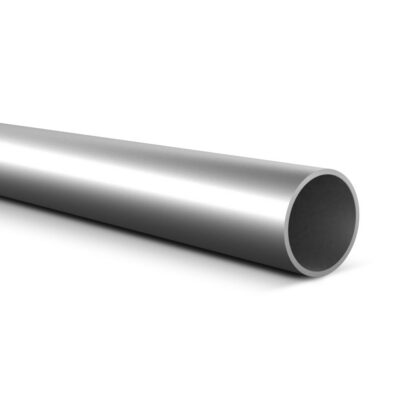
Stainless steel seamless tube DN8 Ø 14mm x 2,5mm in grade 1.4541 / 1.4878 / TP321 / TP321H
in stock107,62 € (87,50 € excl. VAT) - 1.4541
Stainless steel seamless tube DN10 Ø 16mm x 1mm in grade 1.4541
in stock105,63 € (85,88 € excl. VAT) - 1.4541, 1.4878…
Stainless steel seamless tube DN20 Ø 26,9mm x 2mm in grade 1.4541 / 1.4878 / 321 / 321H
in stock124,19 € (100,97 € excl. VAT) - 1.4541, 1.4878…
Stainless steel seamless tube DN20 Ø 26,9mm x 3,2mm in grade 1.4541 / 1.4878 / 321 / 321H
in stock105,85 € (86,06 € excl. VAT) - 1.4541
Stainless steel seamless tube DN20 Ø 28mm x 1mm in grade 1.4541
in stock105,20 € (85,53 € excl. VAT) - 1.4541, 1.4878…
Stainless steel seamless tube DN25 Ø 33,7mm x 3,2mm in grade 1.4541 / 1.4878 / 321 / 321H
in stock104,24 € (84,75 € excl. VAT) - 1.4541, 1.4878…
Stainless steel seamless tube DN40 Ø 51mm x 4mm in grade 1.4541 / 1.4878 / 321 / 321H
in stock100,69 € (81,86 € excl. VAT) - 1.4541, 1.4878…
Stainless steel seamless tube DN50 Ø 60,3mm x 2,77mm in grade 1.4541 / 1.4878 / 321 / 321H
in stock102,62 € (83,43 € excl. VAT) - 1.4541, 1.4878…
Stainless steel seamless tube DN50 Ø 60,3mm x 2,9mm in grade 1.4541 / 1.4878 / 321 / 321H
in stock107,47 € (87,37 € excl. VAT) - 1.4541, 1.4878…
Stainless steel seamless tube DN65 Ø 70mm x 3mm in grade 1.4541 / 1.4878 / 321 / 321H
in stock205,32 € (166,93 € excl. VAT) - 1.4541, 1.4878…
Stainless steel seamless tube DN65 Ø 76,1mm x 3,6mm in grade 1.4541 / 1.4878 / 321 / 321H
in stock292,76 € (238,02 € excl. VAT) - 1.4541, 1.4878…
Stainless steel seamless tube DN65 Ø 76,1mm x 4,5mm in grade 1.4541 / 1.4878 / 321 / 321H
in stock320,17 € (260,30 € excl. VAT) - 1.4541, 1.4878…
Stainless steel seamless tube DN65 Ø 76,1mm x 4mm in grade 1.4541 / 1.4878 / 321 / 321H
in stock324,29 € (263,65 € excl. VAT) - 1.4541, 1.4878…
Stainless steel seamless tube DN100 Ø 108mm x 4mm in grade 1.4541 / 1.4878 / 321 / 321H
in stock125,44 € (101,98 € excl. VAT) - 1.4541, 1.4878…
Stainless steel seamless tube DN100 Ø 114,3mm x 4,5mm in grade 1.4541 / 1.4878 / 321 / 321H
in stock112,79 € (91,70 € excl. VAT) - 1.4541, 1.4878
Stainless steel seamless tube DN100 Ø 114,3mm x 6,02mm in grade 1.4541 / 1.4878
in stock108,84 € (88,49 € excl. VAT) - 1.4541, 1.4878…
Stainless steel seamless tube DN100 Ø 114,3mm x 6,3mm in grade 1.4541 / 1.4878 / 321
in stock115,24 € (93,69 € excl. VAT) - 1.4541, 321
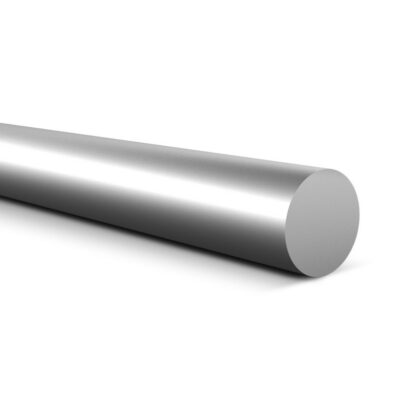
Stainless steel round bar Diameter 130mm in grade 1.4541 / 321
in stock199,20 € (161,95 € excl. VAT) - 1.4541, 1.4878…
Stainless steel seamless tube DN150 Ø 168,3mm x 4,5mm in grade 1.4541 / 1.4878 / 321 / 321H
in stock138,99 € (113,00 € excl. VAT) - 1.4541, 321
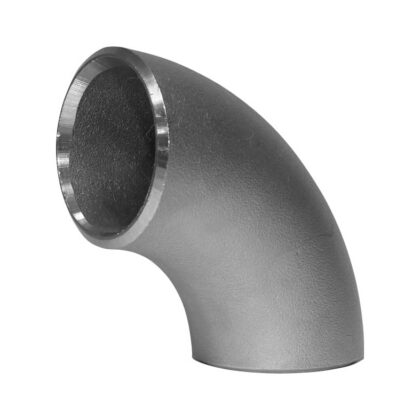
Stainless steel seamless elbow 90° 1,5D (Type 3) DN200 Ø 219,1 x 6,3mm in grade 1.4541 / 321
in stock457,98 € (372,34 € excl. VAT)Add to basket - 1.4541
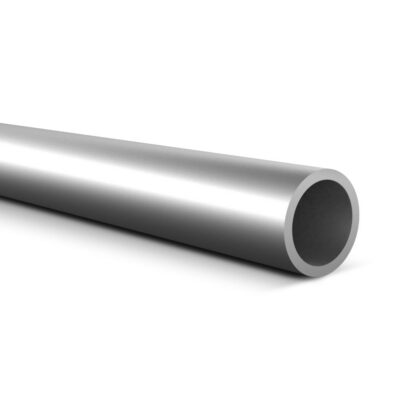
Stainless steel seamless tube hollow bar DN250 Ø 244,5mm x 40mm in grade 1.4541
in stock6181,45 € (5025,57 € excl. VAT) - 1.4541
Stainless steel seamless tube hollow bar DN500 Ø 457,2mm x 45,24mm in grade 1.4541
in stock16296,55 € (13249,23 € excl. VAT) - 1.4541, 1.4878…
Stainless steel seamless tube DN6 Ø 11mm x 2mm in grade 1.4541 / 1.4878 / 321 / 321H
in stock106,85 € (86,87 € excl. VAT) - 1.4541, 1.4878…
Stainless steel seamless tube DN6 Ø 13,5mm x 2,3mm in grade 1.4541 / 1.4878 / TP321 / TP321H
in stock108,36 € (88,10 € excl. VAT)
Steel 1.4541 – material profile
Equivalent designations
- 08X18H10T 3
- 08CR18NI10TI 2
- X6CrNiTi18-10
The steel designated 1.4541, also known as X6CrNiTi18-10, is one of the classic representatives of chemically stabilised austenitic stainless steels. Its role in industry stems from the combination of good corrosion resistance, structural stability over a wide temperature range and excellent weldability and ductility. In the guide below we present definitions, historical background, chemical details, protective mechanisms, production technologies, comparisons with other grades, as well as practical applications and maintenance principles.
The role of acid-resistant and stainless austenitic steels in industry
Definition and basic properties of acid-resistant steels
Acid-resistant steel is a type of steel alloy with added chromium (and often other alloying elements) that forms on the surface a thin, durable layer of chromium oxide – passivation – protecting the metal from further corrosion. In practice the term “acid-resistant” is often used interchangeably with “stainless”, although technically it denotes particular resistance to acidic environments. The basic characteristics of these steels are:
- Exceptional resistance to oxidation and general corrosion thanks to the passive layer.
- Good ductility and toughness, especially in austenitic steels.
- No susceptibility to hardening by ordinary heat treatment– they are not hardenable by conventional quenching.
- Resistance to high temperatures, depending on alloy composition.
- Sensitivity to local forms of corrosion (e.g. pitting in the presence of chlorides) – dependent on the presence of additions such as molybdenum.
These properties make acid-resistant steels the foundation of industrial installations, process equipment and components exposed to corrosive agents.
What are austenitic stainless steels and their significance
Austenitic steels are a subgroup of stainless steels in which the crystal structure at normal conditions is austenitic (a face-centred cubic – FCC – lattice). The main features of austenitic steels:
- High chromium and nickel content (typically ~17–20% Cr, ~8–12% Ni), which stabilise the austenitic structure at room temperature.
- High relative ductility and impact toughness, also at low temperatures.
- Lack of ferromagnetism in the annealed state (weak ferromagnetism may appear after heavy plastic deformation).
- Excellent weldability and formability: bending, stamping and rolling.
- Universal application: from chemical industry through food and pharmaceutical sectors to medical devices and architecture.
Austenitic steels represent a compromise between corrosion resistance, mechanical properties and manufacturability – they are versatile, easy to produce and widely available.
Fundamentals of the chemistry of 1.4541 X6CrNiTi18-10
Chemical composition and its influence on material properties
The designation X6CrNiTi18-10 tells much about the character of the alloy: X6 – low carbon content (about 0.06% by mass), Cr 18 – about 18% chromium, Ni 10 – about 10% nickel, Ti – a titanium addition serving as stabiliser. A typical chemical composition (indicative values, may vary slightly according to standards and manufacturer) is as follows (in % by mass):
- C: ≤ 0.06 (low carbon content, limiting the formation of chromium carbides),
- Cr: ~17.5–19.5,
- Ni: ~8.5–11.0,
- Mn: ≤ 2.0,
- Si: ≤ 1.0,
- P: ≤ 0.045,
- S: ≤ 0.015,
- Ti: ~5 × C up to 0.70 (additional titanium amount related to carbon content),
- Fe: balance.
Influence of the individual elements:
- Chromium (Cr)– the basic element providing corrosion resistance (minimum ~11–12% required to form a passive layer). Higher concentration improves general and oxidation resistance.
- Nickel (Ni)– stabilises austenite, increases ductility and resistance to brittle fracture; it improves formability.
- Carbon (C)– at higher concentrations promotes the formation of chromium carbides precipitated at grain boundaries, leading to intergranular corrosion. That is why X6 denotes a low carbon level.
- Titanium (Ti)– ties up carbon as titanium carbides (TiC) or nitrides, which limits precipitation of chromium carbides; it stabilises the structure during prolonged heating or welding.
- Manganese and silicon– affect technological properties and strength.
- Trace elements (P, S)– the lower, the better for resistance and ductility.
This combination makes 1.4541 a steel resistant to transient high-temperature influences and welding processes, where without stabilisation “sensitisation” and weakening of corrosion resistance could occur.
The significance of the titanium addition in the steel structure
The titanium addition is key to the character and behaviour of 1.4541. It acts as a carbon stabiliser. The mechanism is simple but decisive in its effects: titanium strongly binds carbon, forming TiC carbides that, instead of precipitating at grain boundaries, precipitate within grains or as small, stable phases. This prevents the formation of chromium carbides (Cr23C6) at grain boundaries during exposure in the temperature range favourable to their creation (approx. 450–850°C). The effect is as follows:
- Reduction of the risk of intergranular corrosion– grain boundaries are not depleted of chromium; chromium remains in the matrix.
- Stability of mechanical properties after welding and exposure to intermediate temperatures.
- Operational safety in installations where heating and cooling cycles occur.
Metaphor: if carbon is the “glue” or “teeth” that can concentrate chromium at grain boundaries, titanium acts like a “guard” taking those teeth elsewhere so the boundaries remain clean and resistant.
Production and processing of 1.4541 X6CrNiTi18-10 steel
Methods of producing austenitic steels
Production of 1.4541 proceeds similarly to other austenitic stainless steels, with several important stages and requirements for composition control:
- Melting in electric or induction furnaces using scrap steel and alloying additions. The process controls the content of C, Cr, Ni and Ti.
- Refining and impurity removal by vacuum degassing (VD), ingot metallurgy refinement or electro-slag/other refining processes, to reduce oxygen, sulphur and nitrogen.
- Rolling and drawing to obtain sheets, strips, pipes, wires and bars. Hot working to homogenise structure.
- Solution annealing (solution heat treatment)– typical for 1.4541: heating to about 1020–1120°C, holding and rapid cooling (e.g. water or air quenching), which dissolves any carbides and restores a homogeneous austenitic matrix.
- Quality control: composition measurement, mechanical tests and metallographic examinations.
All stages require strict control, particularly the dosing of titanium relative to carbon to preserve stabilising properties.
Techniques to improve mechanical properties and corrosion resistance
Although austenitic steels are not heat-treated to increase hardness, there are several methods to improve mechanical and corrosion properties:
- Cold plastic working (e.g. cold rolling) – increases strength by work hardening while reducing ductility. Typical applications: rods, sheets with increased strength.
- Solution annealing– removes internal stresses and restores corrosion resistance after plastic working or welding.
- Surface passivation– chemical or electrochemical cleaning and induction of a stable chromium oxide layer (e.g. by nitrate or citric acid baths).
- Protective coatings– in specialised environments ceramic or organic coatings are used, especially where aggressive chloride ions are present.
- Composition optimisation– in some applications alloys with molybdenum (e.g. 1.4435 / 316L) are chosen for better resistance to pitting in the presence of chlorides.
Thanks to the combination of these methods, 1.4541 can be adapted to a wide spectrum of operational requirements.
Corrosion resistance mechanisms in austenitic 1.4541 steel
Passivity and its importance for acid resistance
Passivity is the ability to form and maintain a thin, self-healing layer of chromium oxide on the steel surface. This layer protects the material from further chemical reaction. Maintaining the passive layer requires sufficient chromium content in the alloy and appropriate environmental conditions (oxygen present in the medium, absence of excessive contaminants). For 1.4541 the mechanism is as follows:
- On contact with molecular oxygen chromium rapidly oxidises, forming a Cr2O3 layer a few nanometres thick.
- When the passive layer is damaged it can self-repair in the presence of oxygen.
- In aggressive environments (e.g. high chloride concentrations) the passive layer is prone to local breakdown (pitting), which is why molybdenum-containing steels are preferred in such conditions.
Good technological practices – e.g. cleaning, passivation and avoidance of iron contamination – increase the durability of passivation.
Protection against intergranular corrosion thanks to alloying additions
Intergranular corrosion is a phenomenon involving oxidation and degradation of grain boundaries, often associated with precipitation of chromium carbides at grain boundaries in temperature ranges occurring during welding or long-term exposure to heat. Carbon reacts with chromium, forming Cr23C6 carbides at grain boundaries, which locally depletes chromium and leads to local loss of corrosion resistance. Titanium addition in 1.4541 counteracts this as follows:
- Titanium preferentially binds carbon, forming TiC instead of Cr23C6.
- As a result, grain boundaries remain rich in chromium and the material retains the continuity of the passive layer.
- Stabilisation is particularly important in welded components and parts exposed to cyclic heating.
Thanks to this protection 1.4541 is often used where welding is part of the production process and where joints cannot be subjected to full solution annealing.
Comparison of 1.4541 X6CrNiTi18-10 with other austenitic steels
Characteristics of similar stainless steel grades
To assess the position of 1.4541 it is worth comparing it with several commonly used grades:
- 1.4301 (X5CrNi18-10, AISI 304)– the most common austenitic steel; it has a similar composition (18% Cr, 8–10% Ni) but without titanium stabilisation. 1.4541 has the advantage where sensitisation after welding or prolonged heating occurs.
- 1.4571 (X6CrNiMoTi17-12-2, AISI 316Ti)– the 316 analogue, contains Mo for better resistance to pitting in the presence of chlorides and Ti for stabilisation. Better resistance in aggressive chloride environments than 1.4541.
- 1.4404 / 1.4401 (AISI 316L / 316)– with reduced carbon content (L), with molybdenum, better properties against localised corrosion. Often chosen where chlorides are present.
- Duplex (e.g. 1.4462)– two-phase alloys with a mixture of austenite and ferrite; better mechanical properties and higher resistance to stress corrosion cracking in chloride environments, but more complex to produce.
Each grade has its advantages: 1.4541 stands out for post-weld stability and high-temperature applications, 316 – in chloride-containing environments, and duplex – when higher strength and SCC resistance are needed.
Advantages and limitations of the material compared with other steels
Advantages of 1.4541:
- Stabilisation against intergranular corrosion thanks to Ti.
- Good general and oxidation resistance across a wide temperature range.
- Easy weldability and relatively simple processing.
- Versatility of applications– from chemical industry to food sector and architecture.
Limitations:
- Weaker resistance to pitting in the presence of chlorides compared with molybdenum-bearing grades (e.g. 316).
- Higher cost compared with the simplest grades (304), which may limit use where stabilisation is not necessary.
- Possible obsolescence in ultra-aggressive environments– in such cases Mo-alloys or duplexes are better.
Material selection is therefore a compromise between environmental requirements, costs and the technological needs of the production process.
Practical application areas of 1.4541 X6CrNiTi18-10 steel
1.4541 has found wide application where post-weld stability is desired and corrosion resistance is required under high-temperature conditions or periodic heating. Below are examples of specific application areas.
Chemical and petrochemical industry
- Pipelines and valves handling vapours and liquids of moderate corrosive character.
- Heat exchangers and process chambers, where heating and cooling cycles occur.
- Reactor and tank components in processes requiring welding and prolonged heating.
In these applications titanium stabilisation minimises the risk of intergranular corrosion in welded areas and places of elevated temperature.
Food and pharmaceutical industries
- Processing machines and equipment, pipelines and tanks where cleanliness and resistance to typical cleaning agents are required.
- Structural elements in food production– good surface quality and the possibility of passivation.
Use in such industries stems from hygienic properties, ease of cleaning and the possibility of surface passivation guaranteeing long-term corrosion resistance.
Construction and architecture using stainless steel
- Façade elements, handrails and architectural details exposed to weathering and pollution.
- Accessories in industrial constructions– particularly where temperatures vary.
This steel combines aesthetic qualities (good surface finish, minimal patina) with durability and ease of maintenance, making it attractive in architectural projects.
Additional applications: parts of exhaust systems in automotive or aerospace (where resistance to high temperatures and oxidation is required), rods, bolts and nuts in specific structures, as well as laboratory equipment components.
Standards and certifications for quality of acid-resistant 1.4541 steel
European and international standards
Materials used in industry must meet a set of standards that specify chemical composition, mechanical properties and permissible dimensions. For 1.4541 key standards include:
- EN 10088– the series of standards for stainless steel products.
- DIN– German standards often equivalent to EN.
- AISI/ASTM– American counterparts (AISI 321 corresponds to 1.4541 in most applications).
- ISO– international guidelines on testing and classification.
Technical documentation for materials will reference standards for sheets, pipes, bars and formed elements.
Quality and material control tests
To ensure conformity with standards and operational safety, a range of tests is applied:
- Chemical composition analysis (spectrometry) – confirming compliance with specification.
- Mechanical tests– measurement of yield strength, tensile strength and elongation.
- Metallographic examinations– assessment of microstructure, presence of inclusions and phase distribution.
- Corrosion resistance tests:
– ASTM A262 (practices for detecting susceptibility to intergranular attack),
– ASTM G48 (pitting tests),
– other environmental tests simulating specific working conditions.
- Weldability control– tests of welded joints and assessment of their properties.
Material certificates (e.g. 3.1 certificate according to EN 10204) confirm conformity with the order and standards.
Machining and welding of 1.4541 X6CrNiTi18-10 steel
Principles and methods of welding austenitic steels
Welding 1.4541 is relatively straightforward but requires adherence to certain rules:
- Welding methods: TIG (GTAW), MIG/MAG (GMAW), arc welding, plasma welding – all are used in practice.
- Choice of filler wire/electrode: wires with a similar composition (e.g. 321 or 308/308L) are often used depending on corrosion resistance requirements. In applications where full stabilisation is important, filler materials compatible with 1.4541 are used.
- No need for pre- and post-heating: generally preheating is not required. Thanks to the presence of Ti the material is less susceptible to sensitisation, so solution annealing after welding is not necessary in most cases.
- Avoidance of iron contamination: it is particularly important to clean tools and surfaces to prevent contaminants that could initiate local corrosion.
- Control of distortions: as austenitic steel has a high thermal expansion coefficient, weld joint design and welding technology must take thermal distortion into account.
Practical tip: in critical applications joint tests and microscopic examinations are performed to ensure the titanium stabilisation fulfils its role.
The effect of heat treatment on structure and strength
Heat treatment can significantly affect properties of 1.4541:
- Solution annealing– heating to 1020–1120°C and rapid cooling restores full austenitic structure, removes carbides and improves corrosion resistance.
- Overheating above allowable temperatures and prolonged exposure in the 450–850°C range can lead to precipitations and possible microstructural changes, although titanium limits this effect.
- Cold working improves strength (work hardening) but reduces ductility; after intensive forming it is advisable to perform solution annealing to restore ductility and corrosion resistance if necessary.
A well-designed thermal and technological process ensures that 1.4541 retains the desired mechanical and corrosion properties.
Maintenance and long-term operation of components made from 1.4541 steel
Recommendations for cleaning and surface care
Proper maintenance prolongs service life and appearance of elements:
- Regular washing with water and detergent removes salt deposits, organic contaminants and industrial dust.
- Avoid aggressive chlorine-containing agents and abrasive cleaners that can damage the passive layer.
- Chemical passivation (nitrate or citric acid baths) is used for surfaces after processing or welding to restore a continuous Cr2O3 layer.
- Removal of iron contamination– using brushes made of stainless materials or mechanical extraction methods to prevent rusting of contaminated spots.
- Documentation and cleaning schedules in industrial conditions reduce the risk of contact and localised corrosion.
Common sense: the cleaner and less contaminated the environment, the longer the maintenance-free period.
Identifying and preventing corrosion during service
Monitoring and quick reaction to corrosion symptoms are key to long life:
- Visual inspections– pitting, discoloration, dull patches may indicate local passive layer damage.
- Penetrant and ultrasonic tests– used where surface inspection may not detect subtle damage.
- Control of the working environment– limiting exposure to chloride ions, excessively alkaline or acidic cleaning agents.
- Prompt removal of corrosion spots– mechanical or chemical removal of corrosion foci and re-passivation.
- Replacement planning and documentation of service history– particularly important in critical industrial installations.
Prevention is cheaper than repair – simple maintenance procedures significantly reduce operating costs.
Outlook and innovations in acid-resistant austenitic steels
Modern production and alloying technologies
The steel industry is not standing still. Development directions for steels like 1.4541 include:
- Precise micro-alloying control– optimisation of amounts of Ti, N or other elements to increase strength and resistance without significant cost rises.
- Addition of nitrogen (N)– strengthens austenite and can improve pitting resistance without increasing nickel content.
- Low-emission and recycling processes– melting technologies using recycled feedstock and minimising CO2 impact.
- Surface modifications– plasma techniques, sputtering and nanostructured coatings increasing wear and local corrosion resistance.
- 3D printing (additive manufacturing)– production of complex geometry parts with controlled microstructure and local alloying.
Technological development focuses both on improving performance parameters and on sustainable production processes.
Trends in applications and new market requirements
The market sets new demands that shape materials development:
- Greater emphasis on durability and lifecycle cost– investors prefer materials more expensive initially but cheaper over the lifecycle.
- Increasing role of renewable energy applications– installations where corrosion resistance and longevity are critical.
- Need to adapt to aggressive marine environments– although here molybdenum alloys or duplexes are more often chosen.
- Rising requirements for certification and sustainability– material documentation, traceability of origin and lifecycle environmental impact becoming purchasing criteria.
Thanks to its stabilisation and versatility, 1.4541 remains an important material, but competition from new specialised alloys is growing.
Summary of properties and applications of 1.4541 X6CrNiTi18-10
Steel 1.4541 (X6CrNiTi18-10) is a proven and versatile material whose strength lies in simplicity and stability: the combination of about 18% chromium, ~10% nickel and a titanium addition produces an alloy resistant to intergranular corrosion, behaving well during welding and practical across a wide range of applications. Due to titanium stabilisation it is particularly valuable where cyclic heating, welding and long-term resistance are required. Its limitation remains lower resistance to pitting in chloride-rich environments compared with molybdenum-bearing counterparts. In practice 1.4541 is used in chemical, petrochemical, food, pharmaceutical industries and in architecture, offering a good compromise between durability, machinability and cost. Its future depends on further composition optimisation, production technology and growing market demands – but as a classic and proven grade it remains an important item in the stainless steel catalogue.