
Steel grade
1.4835
2 items in stock
Products in this grade
- 1.4835, heat-resistant
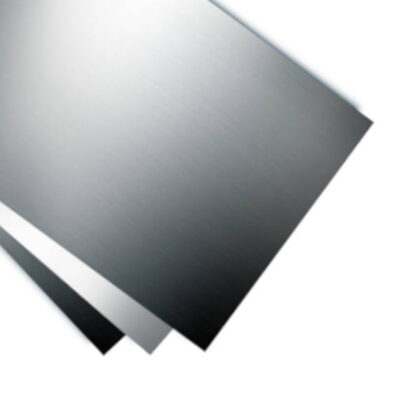
Stainless steel heat-resistant sheet 2 X 1500 X 2500mm in grade 1.4835
in delivery493,21 € (400,98 € excl. VAT)Ask about delivery - 1.4835, heat-resistant
Stainless steel heat-resistant sheet 2 X 1500 X 3000mm in grade 1.4835
in delivery589,20 € (479,02 € excl. VAT)Ask about delivery
Steel 1.4835 – material profile
Equivalent designations
- Alloy
- 330
- 253MA
- X9CrNiSiNCe21-11-2
Introduction to heat‑resistant steels: key properties and applications
Definition and basic features of heat‑resistant steels
Heat‑resistant steels are a group of alloys designed to retain microstructural stability, resistance to oxidation and appropriate mechanical properties under elevated temperatures. In practice the term covers both austenitic and nickel alloys as well as heat‑resistant alloyed combinations of iron, chromium, nickel, silicon and other alloying additions. The most important features of these materials are:
- resistance to oxidation and formation of a durable, protective oxide layer,
- low tendency to brittle fracture as a result of high temperature exposure,
- microstructural stability (e.g. absence of martensitic transformation or excessive precipitation of brittle phases),
- resistance to corrosive environments typical for high‑temperature processes (e.g. oxide sintering, carburisation, sulfidation),
- acceptable strength and creep resistance at service temperatures.
Heat‑resistant steels are not “indestructible”, but are designed to extend the service life of components operating at temperatures from several hundred degrees Celsius to over a thousand, depending on the specific grade.
Importance of high‑temperature resistance in industry
High‑temperature resistance is crucial in sectors where thermal processes determine efficiency and safety: power generation, process chemicals, metallurgy, the food industry and aerospace. Components such as heat exchangers, radiant tubes, combustion chambers, furnace parts and gas turbines are exposed simultaneously to temperature, mechanical stresses and aggressive atmospheres. Choosing a material with inadequate properties leads to accelerated degradation – loss of tightness, spalling, creep cracking and catastrophic failures. Therefore the development of grades such as Alloy 330 and 253MA focuses on a compromise between strength, corrosion resistance and cost‑effectiveness.
Characteristics of Alloy 330 – composition and mechanical properties
Alloy 330 is a nickel‑chromium‑iron alloy specifically designed for elevated temperature service, combining good oxidation resistance with favourable mechanical properties. In industrial applications it is known for resistance to carburisation and the sintering effects of aggressive furnace atmospheres.
Chemical analysis of Alloy 330: what is in the alloy?
Alloy 330 is primarily a nickel‑chromium alloy with a significant iron content. Typical composition is characterised by the following dominant elements (indicative values):
- nickel (Ni): high content, providing austenitic stability and corrosion resistance,
- chromium (Cr): present at around a dozen percent, responsible for forming the oxide layer and oxidation resistance,
- iron (Fe): the base of the alloy together with nickel,
- small additions of silicon (Si), manganese (Mn), carbon (C) and sometimes titanium or aluminium as stabilisers or to improve oxidation resistance.
In practice the Alloy 330 composition is optimised to balance chemical resistance and mechanical properties without the excessive material cost typical of pure nickel alloys.
Physical and mechanical properties of Alloy 330
Alloy 330 retains good strength over a wide temperature range. Characteristic mechanical features are:
- structural stability at elevated temperatures; the material retains an austenitic structure, which reduces the risk of brittle phase transformations,
- reasonable tensile strength and ductility, facilitating machining and forming,
- relatively good creep resistance at operating temperatures typical for industrial furnaces and firing components.
It is worth emphasising that actual strength values depend on delivery condition, heat treatment and microstructure, so engineers select operating conditions and safety margins in accordance with standards and the specifics of the process.
Corrosion resistance and environmental influence on Alloy 330
Alloy 330 shows good resistance to general oxidation and the formation of protective oxide layers in oxidising atmospheres. The alloy also exhibits reasonable resistance to carburisation and sulfidation at moderate temperatures. In aggressive environments rich in sulphur or hydrogen chloride its resistance may be limited, and under thermal cycling there may be issues with thermomechanical cracking. Therefore designing components from Alloy 330 requires consideration of the process atmosphere composition, heating and cooling cycles and stress conditions.
Specifics of 253MA steel – innovative composition and applications
253MA is one of the better‑known austenitic grades designed for high‑temperature service, often used as a cheaper alternative to nickel alloys while maintaining high oxidation resistance. Designations such as X9CrNiSiNCe21-11-2 and the number 1.4835 are associated with it and describe its possible standard variants.
Chemical composition and microstructure of 253MA
253MA is a high‑chromium austenitic steel with nickel additions and significant weight fractions of silicon and nitrogen, and often small amounts of rare earth metals (e.g. cerium – Ce) to improve oxide scale adhesion. Characteristic constituents:
- chromium (Cr): about 20–22% – responsible for oxidation protection,
- nickel (Ni): about 10–12% – stabilises austenite and increases ductility,
- silicon (Si): an addition that enhances the rate of formation of a protective oxide layer,
- nitrogen (N): increases strength and austenite stability,
- rare earth additions (e.g. Ce) and small amounts of niobium or titanium – improve surface properties and phase stability.
The microstructure of 253MA remains austenitic, which minimises susceptibility to brittle transformations and allows retention of ductility even after long‑term high‑temperature exposure.
Outstanding thermal and mechanical properties
253MA stands out by combining several desirable features:
- very good oxidation resistance at operating temperatures ranging from several hundred degrees up to over 1 000°C depending on conditions (continuous vs. intermittent service),
- relatively low tendency to temperature‑induced deformation and reasonable creep resistance,
- good external corrosion resistance and tolerance of large temperature excursions thanks to a stable austenitic structure and alloying additions that enhance oxide formation and adhesion.
Thanks to these properties 253MA is frequently used where temperature requirements are high but economics demand limiting nickel content.
Typical application areas for 253MA
Practical applications of 253MA include heating and structural elements exposed to high temperature and oxidation:
- radiant tubes and industrial furnace chambers,
- muffles and furnace elements for heat treatment,
- components in the chemical industry exposed to hot, oxidising atmospheres,
- boiler parts and flue gas pipes and other components in the power sector.
Additionally, due to good weldability and formability, this steel is attractive to designers creating cost‑effective alternatives to more expensive nickel alloys.
Analysis of X9CrNiSiNCe21-11-2 steel – characteristics and unique features
The designation X9CrNiSiNCe21-11-2 contains important information about the chemical composition and intended use of the steel. Such nomenclature signals a high chromium and nickel content, presence of silicon, nitrogen and small additions of cerium and other microelements intended to improve oxidation resistance and surface behaviour.
Alloying elements and their influence on the properties of X9CrNiSiNCe21-11-2
Each element in the alloy serves a specific function:
- chromium (Cr): forms a protective, adherent oxide layer, key to protecting against further oxidation,
- nickel (Ni): stabilises austenite and increases resistance to high‑temperature corrosion,
- silicon (Si): accelerates formation of the oxide layer and strengthens resistance to sintering,
- nitrogen (N): improves strength and structural stability while limiting undesirable carbide formation,
- cerium (Ce) and other trace rare earths: increase scale adhesion, reduce spallation and improve scale behaviour during thermal cycles.
Thanks to this composition the steel retains good resistance to prolonged high‑temperature exposure in environments where oxidation and aggressive flue gas effects occur.
Applications in rapidly‑acting high‑temperature environments
This grade is used where components are exposed to rapid temperature changes, fast heating and cooling cycles and aggressive gas atmospheres:
- radiant tubes in furnaces where direct exposure to flames and combustion products requires quick formation and renewal of a protective scale,
- components of exhaust systems and diffusion channels,
- parts of surface treatment furnaces where working chambers are frequently opened and closed,
- elements of industrial burners and heating devices.
The main advantage of X9CrNiSiNCe21-11-2 is the ability to maintain continuous oxidative protection even under cyclic operation.
Standard steel 1.4835 – properties and industrial significance
The number 1.4835 in the EN system is often associated with steel grades designed for high‑temperature service and similar in properties to 253MA. In practice this designation is used in technical documentation and material catalogues.
Chemical composition and characteristics of 1.4835
Steel designated 1.4835 is characterised by a composition similar to 253MA / X9CrNiSiNCe21-11-2:
- high chromium content (~20–22%),
- moderate nickel content (~10–12%),
- additions of silicon and nitrogen,
- trace additions such as Ce/Nb to improve structural stability and surface properties.
Such composition results in an austenitic microstructure with good oxidation resistance and favourable thermal stability.
Mechanisms of resistance to oxidation and thermal effects
The oxidation resistance of 1.4835 arises from several interacting mechanisms:
- rapid formation of protective chromium and silicon oxide layers which slow further diffusion of oxygen into the alloy,
- stabilisation of the austenitic microstructure by nickel and nitrogen, reducing the risk of isotropic cracking,
- additions of cerium and other rare earths improve adhesion and integrity of the oxide scale, important under cyclic heating and cooling.
In practice the use of 1.4835 leads to extended life of exposed components while maintaining a relatively favourable price compared with nickel alloys.
Comparison of mechanical and thermal properties – Alloy 330 vs 253MA vs X9CrNiSiNCe21-11-2 vs 1.4835
Comparing these grades shows the fundamental difference between nickel alloys (Alloy 330) and high‑chromium austenitic steels (253MA / X9CrNiSiNCe21-11-2 / 1.4835). Each has strengths and weaknesses depending on service conditions.
Analysis of tensile strength, impact toughness and embrittlement
- Alloy 330: as an alloy with higher nickel content it typically offers better ductility and resistance to brittle fracture across a wide temperature range. Mechanical strength at elevated temperatures is good, especially where carburising and sintering atmospheres act.
- 253MA / X9CrNiSiNCe21-11-2 / 1.4835: these steels have a very favourable ratio of oxidation resistance to material cost. Tensile strength and impact resistance remain good at operating temperatures, although under extreme thermal and mechanical loads the nickel alloy may retain greater creep resistance and long‑term deformation resistance.
In practice the choice between them depends on priorities: if high chemical resistance and minimal carburisation are crucial – Alloy 330 may be better; if the main criterion is protection against oxidation up to about 1 000–1 150°C at a reasonable cost, 253MA and its standard equivalents are very competitive.
Comparison of oxidation resistance at high temperatures
- Alloy 330: good oxidation resistance, particularly in partially oxidising atmospheres; additionally it shows better resistance to carburisation and sulfidation compared with standard austenitic steels.
- 253MA and equivalents (X9CrNiSiNCe21-11-2, 1.4835): designed conversely – the priority is rapid and durable formation of a stable, protective oxide scale. Thanks to silicon, cerium and nitrogen the scales are more adherent and resistant to cracking during cyclic thermal loading.
In “dry” oxidising atmospheres 253MA often performs as well as or better than higher‑nickel alloys, especially under cyclic operation. In environments containing sulphur or carbon, Alloy 330 typically exhibits greater resistance.
Methods of processing and welding heat‑resistant steels Alloy 330 and related grades
Processing and welding of heat‑resistant materials requires consideration of their reaction to heating, cooling and the potential formation of undesirable phases.
Recommended welding techniques and their impact on structure
- TIG / GTAW (tungsten inert gas / gas tungsten arc welding): recommended for precise joints in 253MA and Alloy 330. It provides good control of the thermal input, minimises inclusion risk and ensures good weld quality.
- MIG / MAG: used for greater thicknesses, requiring selection of appropriate welding wires and parameters. Heat control and use of low‑carbon or stabilised filler wires may be required for some grades.
- Electrochemical and laser welding: for precision applications with a smaller heat‑affected zone. These techniques limit extended heat‑affected zones and potential precipitation of undesirable phases.
- Selection of filler materials: when welding 253MA use of matching fillers or manufacturer‑recommended materials is advisable to maintain continuity of thermal properties. In specific cases nickel or austenitic fillers with increased silicon and nitrogen are used.
Impact of welding on structure: uncontrolled heating can lead to grain growth, carbide precipitation or intermetallic phase formation, which in turn reduces resistance to cracking and creep. Controlling cooling rate and temperature intervals is critical.
Factors determining optimal heat treatment
- stabilisation of austenite by selecting appropriate annealing temperatures,
- avoiding prolonged exposure to temperatures that promote precipitation of brittle phases,
- possible stress‑relief annealing after welding to remove residual stresses,
- cleaning and surface control before welding, removing contaminants and oxides that can degrade weld quality.
Correct heat treatment extends component life and reduces the risk of failures resulting from thermal stresses.
Typical applications of heat‑resistant steels in chemical, power and aerospace industries
Heat‑resistant steels find broad use where high temperatures, aggressive atmospheres and durability requirements coincide.
Boiler and heat‑exchanger components
- flue tubes, furnace elements and inlet ducts exposed to high‑temperature flue gases,
- tube walls, headers and components that must withstand prolonged thermal loading and potential corrosive attack,
- 253MA and its equivalents are often used in heat‑exchanger structural parts where low tendency to oxidise thin layers is advantageous.
Engine and gas turbine components
- parts with lower mechanical requirements but exposed to high temperature, such as housings or exhaust ducts, can be made from heat‑resistant steels,
- Alloy 330 or similar nickel alloys are used where higher creep resistance and aggressive action of combustion products are required.
Protection against corrosion in aggressive environments
- industrial furnaces, muffles, firing baskets, furnace retort edge elements,
- installation components in the chemical industry exposed to mixtures of oxidising gases, especially where temperature excursions occur.
In practice designers combine materials: nickel alloys in critical locations, 253MA where good oxidative protection at lower cost is needed.
Factors affecting durability and operation of Alloy 330 and related grades
The durability of components made from heat‑resistant materials depends on many environmental, structural and material interactions.
Effect of temperature conditions on microstructure
- prolonged exposure to high but steady temperatures can lead to grain growth, which reduces strength and resistance to cracking,
- cyclic heating and cooling encourages thermal stresses and possible delamination of oxide layers,
- in certain temperature ranges (depending on composition) undesirable intermetallic phases or carbides may precipitate, lowering ductility and fracture resistance.
Control of operation and application of appropriate temperature limits are key to maintaining durability.
Degradation and wear mechanisms over time
- oxidation and scale spallation: fragmentation of the protective oxide layer can lead to rapidly advancing corrosion,
- carburisation and sulfidation: depending on process gases, absorption of carbon or sulphur can weaken the material structure,
- creep: long‑term operation under load at high temperature causes permanent deformation,
- erosion and mechanical corrosion: particulate action or hot fluids can cause rapid surface wear.
Material condition diagnostics, control of thermal cycles and surface protection are fundamental elements of a maintenance strategy.
Modern trends in development and modification of Alloy 330, 253MA and 1.4835 grades
Development of heat‑resistant materials focuses on increasing resistance while reducing cost and environmental impact of production.
Innovations in chemical composition to raise resistance
- optimisation of silicon and nitrogen content to accelerate formation of a protective oxide layer and increase strength,
- use of micro‑additions of rare earths (e.g. cerium) to improve adhesion and integrity of the oxide scale,
- modifications aimed at reducing nickel or replacing it with other alloying elements where economically and technologically feasible,
- research into minimising formation of brittle phases during long‑term exposure by controlling stabilising additions.
These actions lead to grades with better cyclic resistance and extended life at similar cost.
Use of coatings and surface techniques
- thermal coatings (e.g. ceramics, metallic overlays) – used where the base material must be protected from direct contact with an aggressive atmosphere,
- aluminide coatings and pack cementation – form an alumina layer, an excellent barrier against oxidation and sulfidation,
- plasma and HVOF spraying – rapidly apply a thick protective layer resistant to erosion and oxidation,
- PVD/CVD technologies and integrated coatings – for high‑value components where maximum surface protection is required.
In practice a combination of the right alloy and coating technology gives the best results: it reduces operating costs and extends inspection intervals.
Summary and key guidance for selecting heat‑resistant steel in engineering practice
- prioritise operational requirements: it is critical to determine dominant threats – oxidation, carburisation, sulfidation, creep or cyclic thermal loading. Material selection must match these priorities,
- Alloy 330: recommended where broad resistance properties are required combined with good resistance to carburisation and creep. Suitable choice in locations with aggressive atmospheres containing hydrocarbons or sulphur,
- 253MA / X9CrNiSiNCe21-11-2 / 1.4835: an excellent economic choice where the main threat is oxidation and cyclic temperature action. Highly suitable for furnace and heat‑exchanger elements exposed to surface oxidation,
- design and welding: use appropriate filler materials, control heat input and follow correct heat‑treatment procedures to preserve material properties,
- operating profile and maintenance: monitoring oxide scale condition, controlling thermal cycles and applying protective coatings increase component life,
- economics: with limited budget consider 253MA as a compromise between cost and resistance, whereas in critical applications it is worth investing in nickel alloys such as Alloy 330.
Selection of a specific grade should be based on a comprehensive analysis of operating conditions, available alternatives and life‑cycle costs. Proper understanding of degradation mechanisms and application of appropriate processing and surface‑protection techniques can significantly extend equipment serviceability and reduce downtime costs.