
Steel grade
321H
170 items in stock
Products in this grade
- 1.4541, 1.4878…
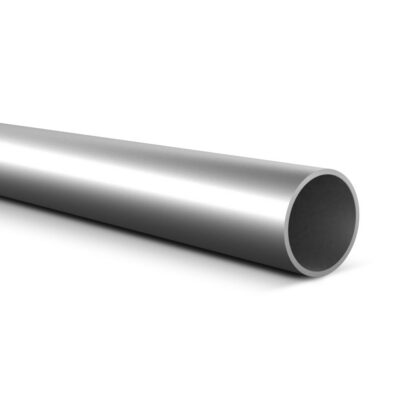
Stainless steel seamless tube DN40 Ø 48,3mm x 2,6mm in grade 1.4541 / 1.4878 / 321 / 321H
in stock18,37 € (14,93 € excl. VAT) - 1.4541, 1.4878…
Stainless steel seamless tube DN40 Ø 54mm x 2mm in grade 1.4541 / 1.4878 / 321 / 321H
in stock16,48 € (13,40 € excl. VAT) - 1.4541, 1.4878…
Stainless steel seamless tube DN50 Ø 60,3mm x 3,2mm in grade 1.4541 / 1.4878 / 321 / 321H
in stock13,99 € (11,37 € excl. VAT) - 1.4541, 1.4878…
Stainless steel seamless tube DN50 Ø 60,3mm x 3,2mm in grade 1.4541 / 1.4878 / 321 / 321H
in stock13,98 € (11,37 € excl. VAT) - 1.4541, 1.4878…
Stainless steel seamless tube DN15 Ø 21,3mm x 3,2mm in grade 1.4541 / 1.4878 / 321 / 321H
in stock10,92 € (8,88 € excl. VAT) - 1.4541, 1.4878…
Stainless steel seamless tube DN20 Ø 26,9mm x 2,6mm in grade 1.4541 / 1.4878 / 321 / 321H
in stock10,79 € (8,77 € excl. VAT) - 1.4541, 1.4878…
Stainless steel seamless tube DN20 Ø 26,9mm x 2,6mm in grade 1.4541 / 1.4878 / 321 / 321H
in stock10,79 € (8,77 € excl. VAT) - 1.4541, 1.4878…
Stainless steel seamless tube DN65 Ø 76,1mm x 3,6mm in grade 1.4541 / 1.4878 / 321 / 321H
in stock18,67 € (15,18 € excl. VAT) - 1.4541, 1.4878…
Stainless steel seamless tube Ø 6mm x 1mm in grade 1.4541 / 1.4878 / 321 / 321H
in deliveryPrice range: 3,76 € through 56,36 €Ask about delivery - 1.4541, 1.4878…
Stainless steel seamless tube Ø 6mm x 1mm in grade 1.4541 / 1.4878 / 321 / 321H
in deliveryPrice range: 3,76 € through 56,36 €Ask about delivery - 1.4541, 1.4878…
Stainless steel seamless tube Ø 9,53mm x 0,89mm in grade 1.4541 / 1.4878 / 321 / 321H
in deliveryPrice range: 4,61 € through 69,12 €Ask about delivery - 1.4541, 1.4878…
Stainless steel seamless tube DN6 Ø 10mm x 1,5mm in grade 1.4541 / 1.4878 / 321 / 321H
in deliveryPrice range: 5,66 € through 84,96 €Ask about delivery - 1.4541, 1.4878…
Stainless steel seamless tube DN6 Ø 10mm x 1mm in grade 1.4541 / 1.4878 / 321 / 321H
in deliveryPrice range: 5,19 € through 77,77 €Ask about delivery - 1.4541, 1.4878…
Stainless steel seamless tube DN6 Ø 10mm x 2mm in grade 1.4541 / 1.4878 / 321 / 321H
in deliveryPrice range: 6,33 € through 94,98 €Ask about delivery - 1.4541, 1.4878…
Stainless steel seamless tube DN6 Ø 11mm x 2mm in grade 1.4541 / 1.4878 / 321 / 321H
in deliveryPrice range: 7,12 € through 106,85 €Ask about delivery - 1.4541, 1.4878…
Stainless steel seamless tube DN6 Ø 12mm x 1,5mm in grade 1.4541 / 1.4878 / 321 / 321H
in deliveryPrice range: 6,08 € through 91,20 €Ask about delivery - 1.4541, 1.4878…
Stainless steel seamless tube DN6 Ø 12mm x 1,5mm in grade 1.4541 / 1.4878 / 321 / 321H
in deliveryPrice range: 6,08 € through 91,20 €Ask about delivery - 1.4541, 1.4878…
Stainless steel seamless tube DN6 Ø 12mm x 2mm in grade 1.4541 / 1.4878 / 321 / 321H
in deliveryPrice range: 7,03 € through 105,48 €Ask about delivery - 1.4541, 1.4878…
Stainless steel seamless tube DN10 Ø 15mm x 2mm in grade 1.4541 / 1.4878 / 321 / 321H
in deliveryPrice range: 7,31 € through 109,56 €Ask about delivery - 1.4541, 1.4878…
Stainless steel seamless tube DN10 Ø 16mm x 2mm in grade 1.4541 / 1.4878 / 321 / 321H
in deliveryPrice range: 8,22 € through 123,29 €Ask about delivery - 1.4541, 1.4878…
Stainless steel seamless tube DN10 Ø 17,2mm x 2,9mm in grade 1.4541 / 1.4878 / 321 / 321H
in deliveryPrice range: 11,35 € through 170,27 €Ask about delivery - 1.4541, 1.4878…
Stainless steel seamless tube DN10 Ø 18mm x 1,5mm in grade 1.4541 / 1.4878 / 321 / 321H
in deliveryPrice range: 8,32 € through 124,82 €Ask about delivery - 1.4541, 1.4878…
Stainless steel seamless tube DN15 Ø 21,3mm x 2,6mm in grade 1.4541 / 1.4878 / 321 / 321H
in deliveryPrice range: 9,37 € through 140,49 €Ask about delivery - 1.4541, 1.4878…
Stainless steel seamless tube DN15 Ø 21,3mm x 3,2mm in grade 1.4541 / 1.4878 / 321 / 321H
in deliveryPrice range: 10,92 € through 163,72 €Ask about delivery
Steel 321H – material profile
Equivalent designations
- 1.4878 188
- TP321H 16
- UNS S32109
- X8CrNiTi18-10
AISI 321H (UNS S32109, European X8CrNiTi18-10, material number 1.4878) is a heat‑resistant steel with a stabilised austenitic microstructure whose key feature is the addition of titanium. This grade combines oxidation and corrosion resistance at elevated temperatures with improved microstructural stability during prolonged heating. The article below explains definitions, historical context, chemical composition, production and processing methods, mechanical properties as well as practical applications and quality‑control methods, drawing a complete picture of a material often referred to as the “workhorse” of installations operating at high temperatures.
Unique properties of AISI 321H – the foundations of heat resistance
Definition and importance of heat‑resistant steels
Heat‑resistant steels are a group of iron alloys designed to operate under elevated temperature conditions, where the key requirements are: resistance to oxidation, mechanical stability at high temperatures, creep resistance and minimal microstructural changes during prolonged heating. In practice this means materials used in boilers, furnaces, turbines and heat exchangers, where temperature and aggressive environments determine component life. AISI 321H fits this category as a titanium‑stabilised austenitic steel, making it less susceptible to intergranular corrosion than its unstabilised counterparts.
The role of titanium in the AISI 321H structure
The addition of titanium acts as a carbon stabiliser. At temperatures associated with welding and prolonged heating, chromium carbides that would normally precipitate at grain boundaries and cause intergranular corrosion react with titanium to form titanium carbides instead of chromium carbides. This shifts the problem and protects the chromium matrix, maintaining the passive oxide layer. In practice this results in:
- a reduced risk of intergranular corrosion after exposure to sensitisation ranges (approx. 450–850°C);
- greater repeatability of properties after thermal processes, including welding;
- retention of oxidation resistance and mechanical stability during long‑term service.
Oxidation and corrosion resistance at high temperatures
AISI 321H exhibits good oxidation resistance thanks to its chromium content (about 17–19%), which forms a protective passive oxide layer on the surface. Under appropriate operating conditions the steel preserves the integrity of this layer for temperatures of the order of several hundred degrees Celsius for extended periods, and for short, intermittent service it can be used at even higher temperatures. In aggressive environments (e.g. presence of sulphur, chlorine compounds) resistance may be limited, requiring selection of appropriate alloys or protective coatings.
Full chemical composition of AISI 321H UNS S32109 X8CrNiTi18-10 1.4878
Content of principal elements: Fe, Cr, Ni
The basic matrix of AISI 321H is iron (Fe), and its austenitic character is provided by the combination of chromium and nickel. Typical composition ranges (indicative, depending on manufacturer and standard) are:
- Chromium (Cr): about 17–19%
- Nickel (Ni): about 9–12%
- Carbon (C): higher than standard 321, typically 0.04–0.10% (hence “H” – high carbon)
- Iron (Fe): balance
Chromium is responsible for oxidation resistance and formation of the passive layer. Nickel stabilises the austenitic structure, improves ductility and corrosion resistance in reducing environments. The higher carbon content in 321H increases strength at elevated temperatures, especially under long‑term loading.
Significance of the titanium (Ti) addition and its effect on properties
Titanium is the key element that distinguishes 321H from many other grades. Typical Ti content is in the range 0.5–0.8% (depending on the degree of stabilisation required by the manufacturer). Titanium functions include:
- binding carbon as titanium carbides, preventing the formation of chromium carbides,
- stabilising grain boundaries and minimising grain growth during heat treatment,
- limiting sensitisation and intergranular corrosion,
- improving oxidation resistance through a stable microstructure.
For engineering practice it is crucial that titanium is present in an amount sufficient to bind excess carbon; too little Ti may be inadequate, while a significant excess can impair weldability and machinability.
Other elements and their role in stabilising the material
The alloy also contains other elements that influence properties:
- Manganese (Mn): typically up to 2%, improves strength and workability.
- Silicon (Si): typically up to 1%, used as a deoxidiser and contributes to oxidation resistance at high temperatures.
- Phosphorus (P) and sulphur (S): trace amounts, controlled by standards (P ≤ 0.045%, S ≤ 0.015%), affect brittleness and machinability; low values are desirable.
- Nitrogen (N): small amounts are intentionally added in some variants to stabilise austenite and increase strength.
- Other impurities and trace elements: controlled as part of material quality, they can affect behaviour during processing and at high temperatures.
Producing high‑quality 321H requires strict control of these constituents, because even small deviations shape both corrosion resistance and mechanical properties.
History and standardisation of grade 321H in international standards
Origin of the AISI and UNS designations
The AISI (American Iron and Steel Institute) designation has historically been used to identify steel grades in the USA. The AISI system for stainless and heat‑resistant steels operates alongside the UNS (Unified Numbering System), which assigns unique numbers to metallic materials combining chemical designation and typical application. For 321H the UNS number is S32109. Thanks to these systems engineers and suppliers can precisely identify the material regardless of country of manufacture.
The European equivalent X8CrNiTi18-10 and designation 1.4878
In Europe designations follow German (DIN) and European (EN) systems. The equivalent of AISI 321H in the German system is X8CrNiTi18-10, while the material number (Werkstoffnummer) is 1.4878. These designations reflect the chemical composition: “X” – alloy steel, “8” – approximate carbon content class, “CrNiTi18-10” indicates the presence of about 18% chromium and 10% nickel and titanium stabilisation.
Use of standards in production and quality control
International standards (ASTM, EN, ISO) define criteria for chemical composition, mechanical properties, test methods and technical approvals for grades such as 321H. In practice these standards:
- set permissible ranges of chemical constituents,
- define requirements for mechanical testing (e.g. strength, elongation),
- impose test procedures (e.g. creep tests, corrosion resistance tests),
- facilitate material certification and acceptance in international projects.
This ensures specifications can be interpreted identically by manufacturers, suppliers and end users.
Manufacturing and processing of 321H steel – from raw material to finished product
Alloying technologies and quality control of constituents
Production of 321H starts with selection of raw materials and metallurgical process. Typical technologies include:
- electric furnace and vacuum melting processes or converter processes with controlled additions to ensure low impurity levels,
- argon oxygen decarburisation (AOD) and deoxidation to achieve desired element concentrations and control gaseous impurities,
- precise dosing of titanium, carbon and other alloying elements to obtain a stable microstructure.
Quality control includes optical emission spectroscopy (OES) for composition analysis, metallographic examinations, dissolved gas analysis and mechanical testing after each critical operation.
Heat‑treatment methods – annealing and hardening
Heat treatment of 321H aims to stabilise the microstructure and remove stresses after plastic working or welding. Typical processes:
- stabilising anneal: usually performed at about 920–980°C with subsequent cooling, which allows dissolution of excess carbides and stabilisation by titanium,
- normalising is not typical for austenitic steels; instead procedures compatible with austenite are used,
- avoidance of prolonged exposure in the 450–850°C range without stabilising treatment to prevent sensitisation.
It is important that in many applications full annealing is avoided because titanium provides protection against chromium carbide precipitation, and rapid cooling after thermal processes can preserve favourable properties.
Effect of mechanical processing on final properties
Mechanical processing (rolling, bending, drawing, turning) affects microstructure, hardness and stress distribution. AISI 321H retains good ductility and toughness, but:
- intensive deformation may require stress‑relief annealing to avoid crack formation during service at elevated temperatures,
- machining requires appropriate tooling and parameters, as austenitic steels tend to gall and work‑harden the tool,
- during rolling and forming control of grain size is key to maintaining high creep resistance.
In practice mechanical processing of 321H is well documented by manufacturers and should be carried out in accordance with standards and process recommendations.
Fundamental mechanical and physical properties of AISI 321H
Tensile strength and yield strength
Mechanical properties of 321H depend on condition and chemical composition, especially carbon content. For materials supplied as rolled sheets and pipes indicative ranges are:
- tensile strength (Rm): typically in the range of several hundred MPa, varying with processing and thickness,
- yield strength (Rp0.2): stable but lower than Rm; resistance to yielding at operating temperatures is an important design criterion.
Exact values are provided on material certificates and in standards; designers use charts of strength versus temperature because increasing temperature significantly reduces load‑bearing capacity.
Hardness and wear resistance
Austenitic steels, including 321H, are not high‑hardness materials in the as‑supplied condition; hardness typically falls within ranges characteristic of austenitic stainless steels. Wear resistance is moderate and depends on operating conditions. In applications with intensive wear, coatings, surface hardening or alternative materials are used.
Thermal properties – expansion and thermal conductivity
Thermal properties important for design include:
- coefficient of thermal expansion: austenitic steels have relatively high expansion, which must be considered for thermal expansion in piping systems and structures,
- thermal conductivity: low compared with ferrous carbon alloys, affecting temperature gradients during heating and cooling,
- modulus of elasticity: decreases with temperature, affecting behaviour of structural elements under thermal loading.
When designing installations with 321H these parameters should be taken into account to avoid deformation and thermal stresses.
Behaviour of AISI 321H in high‑temperature environments
Creep resistance and performance under operational temperatures
Creep resistance is one of the criteria for selecting heat‑resistant steels for long‑term high‑temperature service. 321H, owing to higher carbon content and titanium stabilisation, exhibits better long‑term strength under load than standard 321. Nevertheless, at extremely high temperatures and high stresses its performance is inferior to specialised nickel alloys or chromium‑molybdenum steels.
In practical applications 321H is used where operating temperatures reach several hundred degrees Celsius and loads do not exceed limits that would require more expensive specialised alloys.
Microstructural stability during prolonged heating
Carbon stabilisation by titanium limits microstructural changes that lead to sensitisation. As a result the microstructure remains more uniform during prolonged heating, which translates to:
- reduced risk of local mechanical weakening,
- retention of resistance to intergranular corrosion,
- predictable behaviour during thermal cycles.
Despite these advantages, long‑term exposure above design temperature ranges can cause grain growth and changes in mechanical properties, so control of temperature and exposure time remains crucial.
Resistance to intergranular corrosion
Intergranular corrosion is a major concern when operating austenitic steels. In 321H this risk is significantly reduced thanks to titanium, which binds carbon and prevents precipitation of chromium carbides at grain boundaries. In practice this allows safe use at temperatures where other steels might become sensitised. However, with improper heat treatment or incorrect composition selection the possibility of intergranular corrosion is not completely eliminated.
Typical applications of AISI 321H across industries
Oil and gas industry – pipes and joints
In the oil and gas industry 321H is used where resistance to high temperatures and good weldability are required. Typical applications include:
- pipelines and joints operating in elevated temperature zones,
- elements of transmission installations requiring corrosion resistance in the presence of thermal factors,
- fittings that demand both ductility and creep resistance.
This steel is often chosen as a compromise between cost and operational requirements.
Power generation – boiler and turbine components
In power generation 321H is employed in boiler structures, steam lines and heat exchanger components. Its advantages include:
- oxidation resistance at boiler operating temperatures,
- microstructural stability in welded areas,
- adequate long‑term strength during service.
In locations with extreme loading and very high temperatures specialised alloys are used, but 321H is a proven choice in many standard solutions.
Chemical industry – process equipment and heat exchangers
AISI 321H is used in process equipment, piping and heat exchangers, particularly where cyclic heating and the presence of aggressive media at moderate concentrations occur. Thanks to resistance to sensitisation and good weldability, the steel is valued in the manufacture of tanks, heat exchangers and plant components where chemical resistance must be combined with heat resistance.
Comparison of AISI 321H with related heat‑resistant steel grades
Differences compared with AISI 304 and 316 – composition and properties
AISI 304 and 316 are widely used austenitic steels; comparison with 321H reveals several important differences:
- 321H contains titanium, which makes it carbon‑stabilised and less prone to intergranular corrosion than 304, which is not stabilised,
- 316 contains molybdenum, providing better corrosion resistance in chloride environments than 321H, but 321H withstands certain thermal conditions better due to titanium stabilisation,
- 321H has higher carbon content than standard 321, which improves high‑temperature strength at the expense of somewhat reduced ductility compared with 304 and 316 in the as‑supplied condition.
In practice the choice among these grades depends on environmental specifics: presence of chloride ions, operating temperature and weldability requirements determine the preferred steel.
Advantages over standard 321 – the effect of titanium and carbon
Compared with standard 321, the 321H variant stands out with a higher carbon content, translating into improved strength at elevated temperatures. Titanium provides stabilisation, and the greater carbon content in 321H yields better mechanical properties under higher operating temperatures. This makes 321H preferred in applications subject to long thermal cycles.
Analyses of high‑temperature resistance versus other stainless steels
Compared with other stainless steels, 321H is an optimal choice where good properties are required in the range of several hundred degrees Celsius and where welding without risk of sensitisation is needed. However, for extreme temperatures and aggressive corrosive environments, nickel alloys or chromium‑molybdenum alloys are a better choice. For this reason 321H holds an important place in the material palette: it offers a favourable balance of properties to cost across a wide range of applications.
Quality control methods and technological tests for steel 1.4878
Microstructural examinations and spectroscopy
Microstructural control is essential to confirm titanium stabilisation and absence of unwanted chromium carbides. Typical methods are:
- optical microscopy and SEM to assess phase distribution and grain size,
- energy‑dispersive spectroscopy (EDS) for identification of phase constituents,
- X‑ray diffraction (XRD) to detect undesirable phases,
- optical emission spectroscopy (OES) for precise chemical composition analysis.
Regular microstructural testing captures potential deviations in production and prevents material defects before assembly.
Mechanical tests and creep testing
Mechanical quality tests include:
- tensile tests in accordance with EN/ASTM standards to determine Rm and Rp0.2 and elongation,
- impact tests where dynamic loading is expected,
- creep tests (e.g. ASTM E139) to determine elongation and time to failure under constant load and temperature,
- fatigue tests for components subject to cyclic high‑temperature loading.
For critical components creep tests are key because they provide information about material durability under long‑term service conditions.
Corrosion resistance checks and laboratory tests
Corrosion tests include:
- intergranular corrosion tests (e.g. ASTM A262, Method E – Strauss) to confirm stabilisation,
- pitting and crevice corrosion tests (e.g. ASTM G48) to assess resistance to localised forms of corrosion,
- environmental tests simulating service conditions (testing in chloride, sulphur environments, etc.),
- long‑term oxidation tests in controlled atmospheres.
Such tests are complemented by assessment of welds and heat‑affected zones to ensure joining processes do not compromise material resistance.
Guidelines for processing and welding AISI 321H
Recommended welding techniques and their effect on durability
Titanium‑stabilised austenitic steels generally weld well, but there are recommendations that optimise joint durability:
- use low‑carbon or suitable filler materials (e.g. filler wires and electrodes appropriate for 321/321H) to maintain compositions and prevent excessive carbonisation of the weld zone,
- control heat‑affected zone temperatures, minimise time spent in temperature ranges prone to carbide precipitation,
- avoid overheating and use controlled welding procedures with possible stress‑relief annealing where assembly requires it,
- in many cases full passivation after welding is not necessary because titanium stabilises the matrix, but standard checks for passivity and cleaning of welds are advisable.
Adhering to welding procedures in line with standards and manufacturer instructions minimises the risk of weak points.
Issues and solutions during mechanical processing
Machining and forming 321H require attention:
- using sharp tools with appropriate cutting angles and cooling minimises material galling,
- for bending a larger bend radius than for carbon steels is recommended due to austenite’s high ductility,
- for formed and welded parts anticipate possible distortion after heat treatment and consider stress‑relief annealing.
Well‑designed production processes reduce costs associated with rework and rejects.
Safe operating temperatures and usage recommendations
Recommended operating temperature ranges for 321H vary with loading and exposure time:
- long‑term use is generally safe up to about 600°C, provided loads and operating procedures are controlled,
- short‑term or intermittent cycles may reach higher temperatures, but design must account for thermal gradients and mechanical stresses,
- where extremely high temperatures and high creep strength are required, specialised alloys are preferred.
Adhering to recommended service parameters ensures long and predictable component life.
Future developments and innovations in heat‑resistant steels like 321H
New research into composition modification
Research on heat‑resistant steels focuses on optimising composition to improve corrosion resistance, extend high‑temperature life and increase production economy. For 321H research areas include:
- optimisation of titanium content and other stabilising elements to minimise costs while maintaining properties,
- addition of small amounts of nitrogen or other microalloying elements to improve strength without losing ductility,
- modifications in melting processes that reduce impurities and improve alloy homogeneity.
Research outcomes may lead to variants of 321H better tailored to specific industrial applications.
Sustainability and environmental impact of production
Growing sustainability requirements prompt producers to:
- increase the share of secondary raw materials and stainless steel recycling, which requires control of impurity levels and precise charge adjustment,
- optimise metallurgical processes for energy use and CO2 emissions,
- adopt technologies that reduce environmental impact, such as electric‑furnace production powered by renewables.
321H, as a recyclable steel, fits into circular economy strategies provided recycling is carried out with quality control.
Potential applications in modern technologies
As technologies evolve 321H may find use in new areas:
- components for energy‑intensive processing industries where thermal resistance and good weldability are required,
- applications in heat‑recovery systems and energy storage devices where durability under cyclic heating is key,
- additive manufacturing – development of powder‑based 3D printing of 321H could enable production of complex compact components with high thermal resistance.
Advancement in these areas requires further research into production processes and properties after processing using new technologies.
Summary of key features and applications of AISI 321H UNS S32109
- Stabilisation by titanium: the primary action against intergranular corrosion by binding carbon as titanium carbides.
- Chemical composition: about 17–19% Cr, 9–12% Ni, Ti ~0.5–0.8%, carbon higher than 321, typically 0.04–0.10%.
- High‑temperature resistance: good oxidation and creep resistance in operating ranges typical for the power and process industries; long‑term use up to about 600°C, and depending on conditions, higher.
- Applications: pipelines and joints in the oil and gas industry, boiler components, heat exchangers and process equipment in the chemical industry.
- Processing and welding: good weldability when following procedures that limit time spent in temperature ranges susceptible to sensitisation; recommended compatible filler materials and process control.
- Quality control: spectroscopy, microstructural examinations, creep and corrosion resistance tests as the basic set of tests permitting use in critical applications.
- Development prospects: composition modifications, increased recycling and applications in next‑generation technologies including additive manufacturing.
AISI 321H (UNS S32109, X8CrNiTi18-10, 1.4878) remains a proven solution where a durable combination of corrosion resistance and high‑temperature stability is required at economical material cost. Its position is built on years of practical experience, established standards and a wide spectrum of industrial applications.