
Electropolishing is one of the most complex electrochemical steel processing techniques. The main purpose of applying such a process is to obtain a smoothed surface formed by the reaction products.
In addition to the primary goal of smoothing the surface, the product undergoes deep anodic passivation. As a result, the product is thoroughly protected against corrosion. The process is also used in the production of modern pipes whose surfaces are smoothed in this way.
Electropolishing increases the lifespan of installations, which, in cases where very expensive materials are used (acid-resistant pipes, duplex), also has a positive economic impact.
Electropolishing of stainless steel takes place in a galvanic bath, where the product is connected to the positive electrode, i.e., the anode. As a result of this action, the irregularities on the metal surface are covered with a thin layer of higher resistivity than the electrolyte. The process results in dissolution of the metal and a reduction in the roughness difference between the peaks and valleys of the elements. As a result, the surface is smoothed.
The action of electropolishing does not negatively affect the macroscopic surface structure or any small details of the product. On a microscopic scale, the surface of the electropolished metal becomes polished and significantly smoothed.
Internally electropolished pipes are used where the highest surface cleanliness is required. This is particularly important in the food industry, pharmaceuticals, the chemical industry, and the nuclear industry.
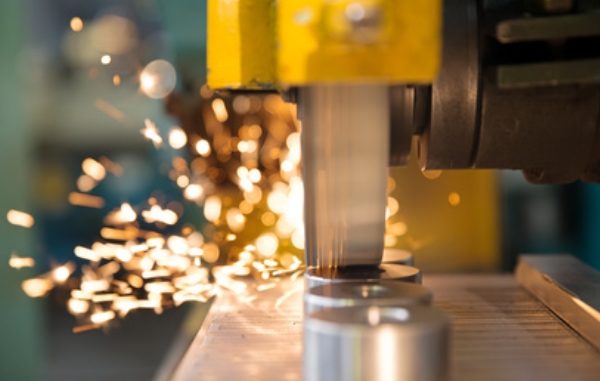
Grinding, unlike electropolishing, is a surface finishing process that uses abrasive tools to achieve low roughness. Another type of processing is polishing. Its purpose is to remove from the surface of the worked piece the rough layer remaining after grinding. The polishing process is extremely labor-intensive, so it is used only in situations where a very low surface roughness of the final product is required.
Unlike electrochemical techniques, traditional grinding and polishing require the use of abrasive and mechanical means. In electropolishing, the surface of the pipe is smoothed by an electric current passing through it. The main effect of electropolishing is a highly smooth, clean, and shiny surface.
It is worth adding that the chemical resistance of a material treated with this technique increases by up to 20 times. Achieving such properties by traditional mechanical grinding is impossible.
Electrochemical machining (ECM) is a material processing method in which metal is removed from the workpiece by an electrochemical reaction. The process involves passing an electric current through an electrolyte (chemical solution) between the workpiece and the machining tool, causing controlled material removal.
Electrochemical machining is used for precision processing, especially for difficult-to-machine materials such as stainless steel, titanium, nickel alloys, etc. Compared to traditional grinding, electrochemical machining offers greater control over the machining process and higher precision, enabling better surface quality and shapes.
In addition to these two methods of steel processing (electropolishing and grinding) there are also other polishing methods:
- Electrochemical polishing (EP)
A method of removing irregularities from a metal surface using an electrochemical chemical reaction. This process uses an electrolyte that conducts electric current between the electrode and the surface being polished. With the proper concentration and composition of the electrolyte and appropriate temperature and voltage, a controlled electrochemical reaction occurs on the metal surface that removes a layer of metal and simultaneously smooths the surface. This process is used to polish stainless steel, aluminum, copper, brass, and other metals.
- Electrolytic polishing (ELP)
It involves using similar electrochemical processes as in electrochemical polishing, but differs from it in technical details. In electrolytic polishing, an electrolyte with a high content of sulfuric acid or hydroxide salts is used, which flows between the electrodes. During the process, oxygen is released, leading to the formation of a thin, uniform layer of metal oxide, which allows for obtaining a smooth, high-gloss surface. Electrolytic polishing is used in the jewelry industry, the manufacture of metal parts for electronic devices, and in the automotive, aviation, and aerospace industries.