
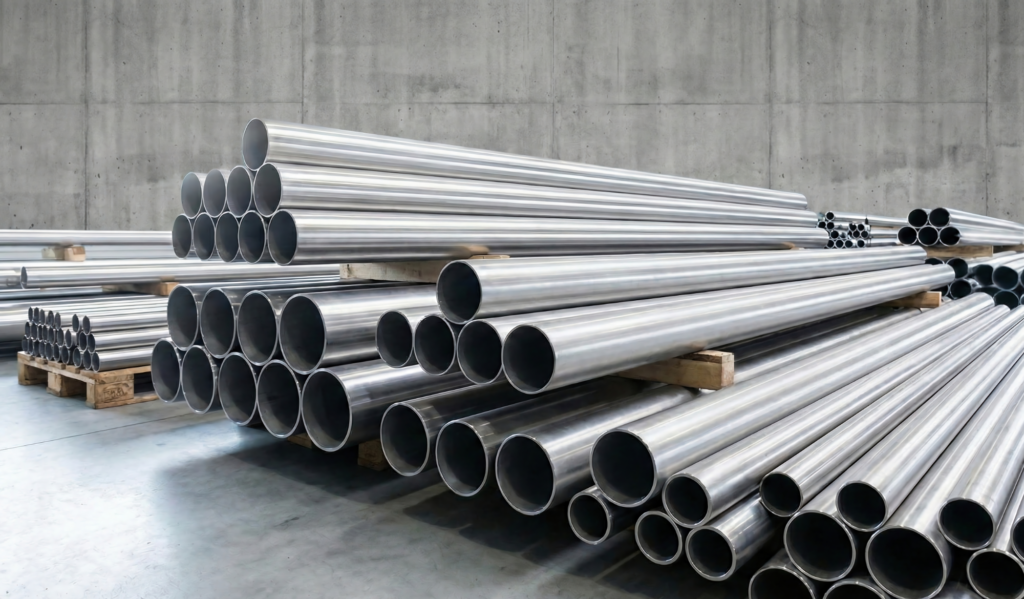
In the world of metallurgy and engineering there are materials for special tasks. One of them is heat-resistant stainless steel. While standard stainless copes perfectly well with water and moisture, heat-resistant steel comes into play where temperatures go beyond what ordinary metals can withstand.
What exactly characterises this material, and what keeps it from surrendering to the destructive action of fire? Read on.
What is heat-resistant steel?
Heat-resistant steel is a type of alloy steel designed to retain its mechanical properties and its resistance to gas corrosion at extremely high temperatures – usually above 500°C and, in some cases, up to 1150°C.
The key to its success is a protective oxide layer. A thin, tight film of oxides forms on the surface of the metal and cuts off oxygen from the deeper layers of the steel, preventing it from oxidising – in other words, from being destroyed.
What is it made of?
What sets heat-resistant steel apart from other steels is its chemical composition. The most important additions are:
- Chromium (Cr): the basic element responsible for forming the protective Cr2O3 oxide layer.
- Silicon (Si) and aluminium (Al): make the oxide layer tighter, which allows the steel to work at even higher temperatures.
- Nickel (Ni): improves the ductility of the steel and its creep strength – its resistance to deformation under long-term load.
What makes heat-resistant steel stand out?
Resistance to gas corrosion (scaling)
At high temperature, ordinary steel becomes covered with scale, which flakes off, exposes a fresh layer of metal and leads to rapid degradation. Heat-resistant steel forms a durable coating that stays in place even through repeated temperature cycles.
Heat resistance vs high-temperature strength
Don’t confuse heat resistance with high-temperature strength!
Heat resistance is chemical resistance to gases at high temperature.
High-temperature strength is the ability of a material to retain its stiffness and mechanical strength (resistance to creep). Heat-resistant steels combine both properties.
Structural stability
High temperatures often cause changes in the internal structure of metals that make them brittle. Specialised heat-resistant steels are designed so that their crystal structure stays stable over thousands of hours of service.
Summary
Heat-resistant stainless steel is a triumph of materials engineering. Modern power generation and aviation could not exist without it. When choosing a specific grade, always consider not only the maximum service temperature but also the composition of the atmosphere – for example the presence of sulphur – in which the component will work.