
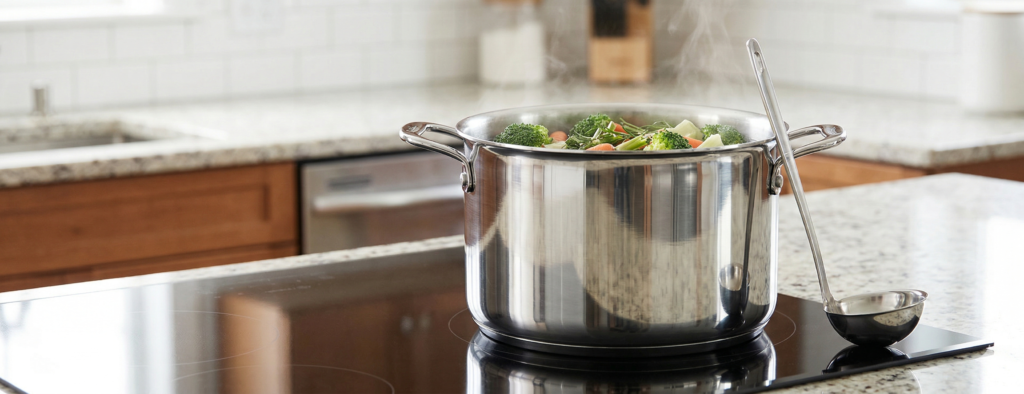
Surely, more than once, while standing over a steaming pot of your favourite soup, you have wondered whether the shiny metal from which your cookware is made is completely safe. Stainless steel has accompanied us in the kitchen for generations and has become such an obvious element of equipment that we rarely devote much time to reflecting on it. Yet, when it comes to the health of ourselves and our loved ones, it is worth taking a closer look at the subject. Is inox steel truly the best choice, or merely an attractive decoration that conceals some secrets?
In the gastronomy and food industry, there is no room for compromise, which is why professional food-grade fittings reign supreme there. The choice of this material is not a matter of chance or aesthetics, although the latter cannot be denied. It is primarily about unique physicochemical properties that ensure the metal does not react with food. Listen, this is not so obvious – many other materials, under the influence of high temperatures or acids contained in fruits, can “impart” an unpleasant taste to the dish or, worse, harmful compounds.
Why Professional Food-Grade Fittings Are Based on Stainless Steel
If you have ever had the chance to look behind the scenes of a decent restaurant, you have surely been struck by the shine emanating from every corner. Everything, from countertops, through sinks, to the smallest pipes, is made of metal. Why is this so? The answer lies in hygiene. Steel has such a smooth structure that bacteria and other microorganisms simply have nowhere to cling. There are no pores as in wood or microcracks as in old plastic. This makes cleaning incredibly simple, and the risk of food poisoning practically zero.
It is worth knowing that in such places, specialised acid-resistant steel is often used, which must cope with exceptionally aggressive substances. In domestic conditions, we rarely use detergents or acids as strong as those in large processing plants, but it is reassuring to know that our pots are cousins of professional installations. This is a material that does not absorb odours – you can cook an aromatic stew in the morning and, after washing the dish, prepare a delicate vanilla cream without worry.
Using steel in contact with food is a standard developed over decades of testing. It is no coincidence that stainless steel sheets are the basic construction material in factories producing dairy products or meat preserves. It is the foundation of safety on which we can rely every day when preparing breakfast for children or a festive dinner for friends.
The Myth of Nickel and Chromium Release – What Is Really the Case
One of the most frequently repeated myths that can cause dizziness is the alleged leaching of heavy metals into food. Should we be afraid of this? Well, the matter is somewhat more complex, but rest assured – for most of us, there is no danger. Indeed, stainless steel contains chromium and nickel, as these elements are responsible for its corrosion resistance, but they are “trapped” in the metal’s structure thanks to a process called passivation. An invisible, microscopic layer of oxides forms on the steel’s surface, separating the metal from the food.
As long as you do not scrub your pots with a wire scourer with such force as if you wanted to pierce through them, this protective barrier remains intact. Of course, there is a small group of people highly allergic to nickel who should remain vigilant. For the rest of the population, trace amounts that could theoretically migrate into dishes (especially very acidic ones, such as bigos or tomato sauce) are completely insignificant for health.
If we want absolute certainty regarding the quality of our cookware, it is worth checking the markings. The most popular in our kitchens is steel 304, often marked as 18/10. These numbers represent the content of chromium (18%) and nickel (10%). This is the gold standard that provides the ideal balance between durability and safety. Choosing cookware made from this alloy is an investment in peace of mind for years to come.
Durability That Goes Hand in Hand with Cleanliness and Aesthetics
Let’s be honest, kitchens can be unpredictable. Sometimes something falls, sometimes a pot is left on the heat a few minutes too long. Metallurgical products intended for contact with food are designed to withstand such “attacks” without batting an eye. Steel does not crack under sudden temperature changes, does not deform as easily as aluminium, and above all, does not rust, which is crucial in the humid kitchen environment.
You have probably noticed that modern kitchens increasingly resemble professional ones. Countertops, cabinet fronts, or panels above the stove where stainless steel sheets are used are not just a matter of fashion for the industrial style. It is simply an incredibly practical solution. Such a surface does not absorb stains from beetroot juice or red wine, which can be a real nightmare for marble or wood.
Another aspect is longevity. Stainless steel accessories are often items that will outlive our kitchen. Instead of buying a new frying pan with peeling coating every two years, it is better to invest once and for all in steel. This is not only a saving of money but also a nod towards the planet – the less we throw away, the better.
How to Care for Steel Cookware to Last for Decades
Although steel is a tough contender, it is worth knowing a few tricks that will make it look like new even after ten years. The biggest enemy of the shiny surface is salt, specifically adding it to cold water. This can lead to the formation of small, light spots, so-called pitting. Salt should always be added to boiling water – a simple rule that makes a huge difference to the metal’s condition.
If rainbow discoloration appears on the bottom of the pot, do not panic. This is not a sign of toxicity or a material defect. It is merely an optical phenomenon resulting from overheating of the oxide layer. Simply wipe the vessel with a cloth soaked in vinegar or lemon juice, and it will regain its original appearance within seconds. For daily washing, a regular dishwashing liquid and a soft sponge work best. Avoid chlorine-based bleaches, as stainless steel pipes and utensils are very sensitive to them – chlorine can weaken the protective layer of the steel.
It is also worth remembering that steel loves dryness. After washing, it is advisable to dry pots thoroughly with a soft cloth. This will prevent unsightly hard water stains, and your kitchen will always look as if it has just been decorated by an interior designer. These small steps make using steel tools a pure pleasure.
As you can see, stainless steel is not only a safe but an ideal companion for culinary adventures. It is hygienic, durable, and with proper care, practically indestructible. Whether you are installing new stainless steel pipes for your water system or simply purchasing a new set of cutlery, you can be certain of one thing – it is a choice your body (and wallet) will thank you for.