
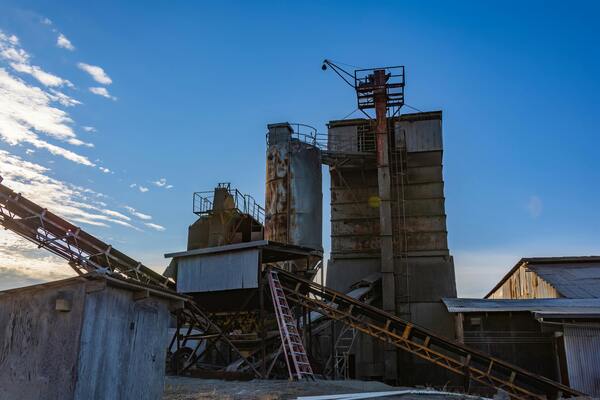
Selecting the right steel for service in a C4 corrosive environment (according to ISO 9223) is crucial. Will stainless steel be sufficient, or is a special protective coating required? Atmospheric corrosive conditions are classified in accordance with PN-EN ISO 12944-2 and PN-EN ISO 12500. In addition, the corrosivity of the atmosphere is assessed on the basis of the deposition rate of pollutants such as SO2 and Cl-, and on measurements of industrial dust fall, in accordance with PN-ISO 9225 and PN-ISO 9223, as well as PN-67/Z-04010. A class C4 corrosive environment is characterised by high corrosivity. Examples of such areas include industrial areas and coastal areas with moderate salinity, as well as chemical plants, swimming pools, and ship and boat repair yards.
Stainless steel fasteners are classified in accordance with PN-EN ISO 3506, and corrosion-resistant stainless steel grades are covered by PN-EN 10088-1-5. On the basis of these standards, Table 1 was drawn up, showing the recommended stainless steel grades depending on the atmospheric conditions.
The decision to use stainless steel in a given environment depends on where the components are located — inside or outside the structure. Surface maintenance of stainless steel components, in the form of regular cleaning, affects their durability and trouble-free service.
In the corrosive environment discussed here, stainless steels do not require additional protective coatings. The key is to select the material correctly in terms of corrosion resistance, taking into account resistance to pitting and crevice corrosion, which is related to the molybdenum and chromium content.
| Environment category according to PN-EN ISO 12500 | Stainless grades according to PN-EN 10088 and PN-EN ISO 3506 | Recommendations |
|---|---|---|
| C1 – very low C2 – low | 1.4301, 1.4307, 1.4541 (Cr-Ni steels) (A1, A2, A3 steels according to ISO 3506) | Stainless steels without molybdenum may be used, provided that adequate surface maintenance is ensured |
| C3 – medium | 1.4301, 1.4307, 1.4541 (Cr-Ni steels) (A1, A2, A3 steels according to ISO 3506) 1.4404, 1.4571, 1.4362 (Cr-Ni-Mo steels) (A4, A5 steels according to ISO 3506) | For environments with higher humidity, stainless steels containing molybdenum must be used |
| C4 – high | 1.4404, 1.4571, 1.4362 (Cr-Ni-Mo steels) (A4, A5 steels according to ISO 3506) | Use only grades containing molybdenum |
| C5 – very high | 1.4404, 1.4571, 1.4362 (Cr-Ni-Mo steels) (A4, A5 steels according to ISO 3506) 1.4439, 1.4539, 1.4547, 1.4462 (high-alloy Cr-Ni-Mo steels) | Use only high-alloy grades containing molybdenum |
Selecting the right stainless steel for service in a C4 corrosive environment is crucial, and the decision to use it depends on where the components are located and on regular surface maintenance. For a class C4 environment, steel grades containing molybdenum are recommended to ensure adequate corrosion resistance.
We invite you to visit the Stalesia online shop – your trusted supplier of stainless steel products.