
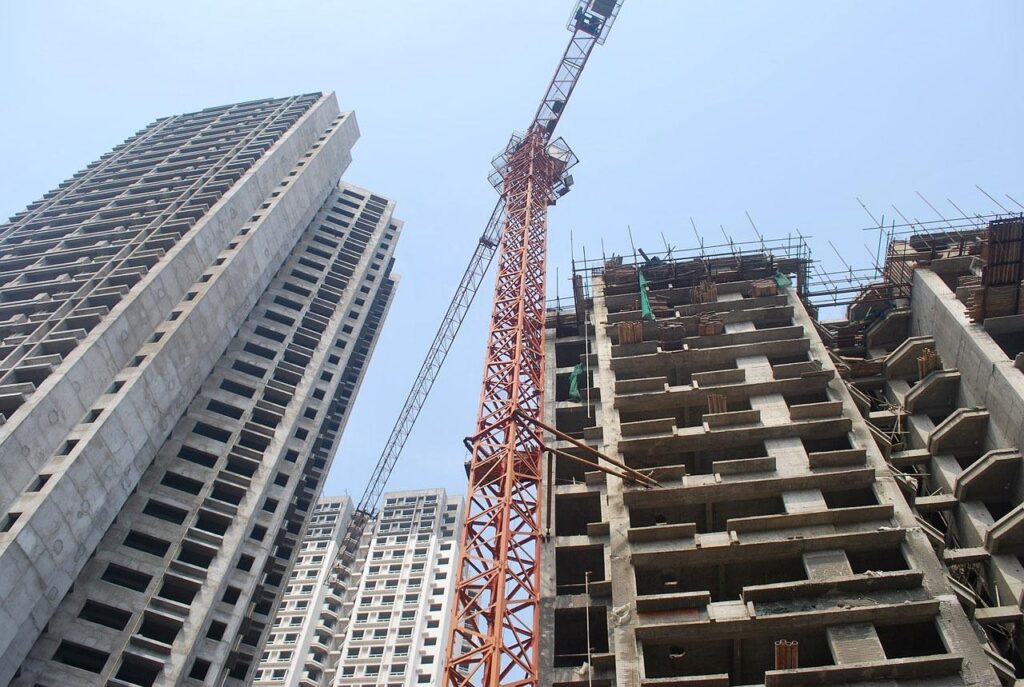
If we were to go back in time one hundred years and show the builders of that era photographs of today’s Manhattan, Dubai, or even Warsaw’s “Mordor”, they would likely rub their eyes in astonishment. Architecture has undergone an incredible journey from heavy, stone edifices to light, almost levitating structures that defy gravity. At the very heart of this revolution, modestly yet with extraordinary confidence, stands stainless steel. It is stainless steel that has caused our cities to cease being grey and dull, and instead begin to shine in the sunlight, reflecting the sky and clouds on their façades. Listen, this is not merely a matter of “pretty pictures” in interior design magazines. It is a technological leap that has enabled us to build higher, bolder, and above all – for eternity.
Today’s “steel jungle” is not a pejorative term for a concrete desert. Rather, it is a tribute to a material that has combined fire and water: incredible durability with subtle elegance. Steel products, once hidden deep beneath layers of plaster and bricks, now come to the forefront, becoming the main ornament of the world’s most prestigious buildings. Architects have fallen in love with steel because it grants them freedom their predecessors could only dream of. It can be bent, laser-cut, polished to a mirror finish, or matt-finished to resemble silk. It is a material unafraid of the passage of time and, to put it plainly, simply looks luxurious without a hint of kitsch.
Why Do Architects Love Stainless Steel? Aesthetics and Functionality
Have you ever wondered why some buildings look as good as new after twenty years, while others are marred by stains and cracks? The answer often lies in the façade materials. Decorative sheets made from stainless steel are an architect’s insurance policy for eternity. This metal has a unique ability to reflect its surroundings, making the massive volumes of buildings appear lighter and better integrated into the landscape. Instead of erecting an opaque wall, we place a mirror in which the city is reflected. This is a technique as old as time, but only steel has allowed it to be executed on such a scale without fear that the surface will dull under the influence of smog or acid rain.
The functionality of stainless steel in architecture is, however, more than just a beautiful “skin” of a building. It is primarily the technical parameters that allow savings where they are not visible. Steel has an excellent strength-to-weight ratio, meaning stainless profiles can support enormous glass panels while remaining slender and almost invisible. Thanks to this, we have all those glazed office buildings where it feels as if you are sitting outside rather than in a closed box. This is a comfort of work and life that cannot be overestimated, especially during the dark winter months when every drop of natural light is worth its weight in gold.
Let us not forget fire resistance and safety. In public utility buildings, where thousands of people pass through daily, materials must meet stringent standards. Steel does not burn, does not emit smoke, and retains its stability even at extreme temperatures. This means that supporting structures, which use large-diameter pipes, give engineers confidence that the building will withstand any crisis situation. It is the peace of mind of the designer who knows that their creation is not only beautiful but also safe for its users.
The Most Famous Buildings in the World That Would Not Exist Without Steel
When we think of steel in architecture, the Burj Khalifa in Dubai immediately comes to mind. This tallest building in the world is a true monument to stainless steel. Its façade consists of thousands of panels in which stainless steel plays the leading role. Without its resistance to the extreme temperatures of the desert sun and sandstorms, this building simply would not have survived. Steel there not only decorates but also protects the interior from overheating, acting as a gigantic shield reflecting UV rays. It is an engineering masterpiece that demonstrates that the limits of our capabilities lie where our imagination and the strength of materials end.
Another iconic example is the “Bean”, or Cloud Gate, in Chicago. This sculpture has become a symbol of the city and is made entirely from perfectly polished stainless steel sheets. Its smoothness is so perfect that not a single weld is visible. This shows how malleable and graceful steel can be in the hands of an artist. People approach it, touch it, take photos of their reflections – and what happens? Nothing! Steel endures it all without batting an eye. No other material would have allowed the creation of such a large, mirror-like form in an urban space that is so durable and resistant to vandalism or weather.
It is also worth looking at our European backyard. Modern stadiums, museums, and airports increasingly use stainless profiles to create complex roofs and roof structures. Roofs that must bear tons of snow and withstand wind pressure are designed precisely with steel in mind. Thanks to this, these buildings acquire a futuristic appearance reminiscent of science fiction films, while simultaneously being incredibly durable. It is a combination of dreams about the future with a firm footing on the ground.
Stainless Steel in Public Spaces – Benches, Shelters, and Monuments
Architecture is not only skyscrapers; it is also everything we pass by every day on our way to work or for a walk. Elements of small architecture, such as benches, rubbish bins, or bus shelters, are subjected to the toughest test – the test of time and human creativity. Here, stainless steel shows its claws. It is almost impossible to destroy, graffiti can be easily removed from it, and rain often simply cleans it rather than damaging it. Urban designers love it because once installed, an element serves for twenty years without the need for renovation.
In modern parks and squares, we increasingly see sculptures and artistic installations where stainless steel fittings are used in unconventional roles. Connectors, cables, and tubes create openwork forms that respond to wind and light. Steel in public spaces has ceased to be associated solely with coldness and austerity. When properly designed, it can be very “human” and welcoming. Imagine a shining bench that does not rust, rot, and always looks clean. This raises the standard of living in the city and makes the space around us simply more attractive.
The hygienic aspect, which we rarely consider in the context of the street, is also significant. Stainless steel is a material on which bacteria do not multiply as rapidly as on wood or plastic. In an era of increased health awareness, choosing metal for elements touched by thousands of hands daily is simply wise. It is a silent ally of our immunity, present on every street corner, in every railing by the stairs, or handrail in an underpass.
Trends in metal façades – does the future belong to stainless steel?
What awaits us in the future? Architects are increasingly bold in experimenting with the texture of metal. No longer just flat panels, but decorative 3D sheets, perforated screens that glow at night thanks to internally mounted LED diodes, or steels with variable colours depending on the angle of light incidence. Stainless steel is becoming the “intelligent skin” of a building, which can assist in ventilation or energy production. Perforated façades act like natural air conditioning, allowing air in but retaining excess heat. This is ecology that does not shout but genuinely reduces electricity bills in large office buildings.
Increasingly, in internal structures such as representative staircases in apartment buildings, large-diameter pipes are exposed as decorative elements rather than hidden in elevator shafts. The raw, technical appearance becomes synonymous with modern luxury. People want to see what their home is made of; they want to feel the solidity and authenticity of materials. Steel fits perfectly into this trend of “material honesty,” where nothing is pretended, and quality defends itself with its shine and durability.
Looking at how metal processing technology is developing, one can boldly risk stating that stainless steel will surprise us again and again. Perhaps soon we will see entire houses 3D printed from powdered steel? It sounds like a fairy tale, but considering the pace of change, it is closer than we think. One thing is certain – noble steel has permanently entered the DNA of our cities and does not intend to disappear. It is a material that will allow us to reach the sky and make our daily journey through the steel jungle simply more beautiful.