
Steel grade
AISI 410
2 items in stock
Products in this grade
- 1.4006, 1H13…
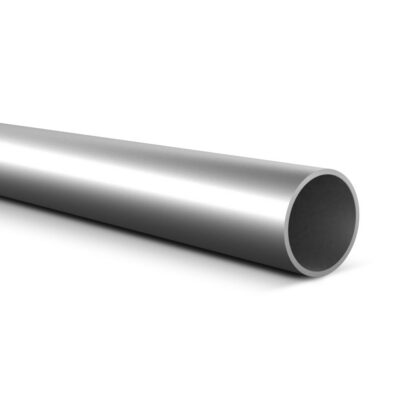
Stainless steel seamless tube DN20 Ø 25mm x 3,2mm in grade 1H13 (equivalent 1.4006 / AISI 410)
in deliveryPrice range: 143,23 € through 429,69 €Ask about delivery - 1.4006, 1H13…
Stainless steel seamless tube DN80 Ø 88,9mm x 5mm in grade 1H13 (equivalent 1.4006 / AISI 410)
in deliveryPrice range: 222,04 € through 666,12 €Ask about delivery
Steel AISI 410 – material profile
Stainless steel 1.4006, also known as X12Cr13, 1H13 or AISI 410, occupies a place of contrasts in the world of metals: seemingly simple in composition, yet offering wide possibilities for processing and applications. This guide explains the origins of martensitic and precipitation‑hardenable steels, describes the composition and microstructure details of 1.4006, explains manufacturing and processing routes and outlines typical applications and limitations. The reader will gain a clear picture of mechanical properties, corrosion resistance and practical design and processing advice for this grade.
Origins and Importance of Martensitic Stainless Steels
Definition and basic features of martensitic alloys
Martensitic steels are a group of stainless steels whose key feature is the ability of austenite to transform into martensite during rapid cooling (quenching). Martensite is a very hard, though brittle, crystalline structure formed as a result of that transformation. In martensitic stainless steels the principal element increasing corrosion resistance is chromium (Cr), typically in the range 11–18%. At such chromium levels the material maintains corrosion resistance by forming a thin, passive oxide layer on the surface.
Key features of martensitic steels:
- Ability to achieve high hardness and mechanical strength by quenching.
- Limited corrosion resistance compared with austenitic stainless steels, but superior to carbon steels due to Cr content.
- Better machinability and lower production costs compared with austenitic steels that contain nickel.
- Balanced properties achieved through a combination of alloying elements and heat treatment.
These properties make martensitic steels attractive where hardness and wear resistance are needed under moderate corrosion requirements, for example in tools, machine parts or load‑bearing components.
Comparison with other stainless steel groups (austenitic, ferritic)
To understand the specifics of martensitic steels, it is useful to compare them with other main stainless steel groups:
- Austenitic steels (e.g. AISI 304, 316): contain high percentages of nickel and chromium. They feature excellent corrosion resistance, good ductility and strength at low temperatures. They are not readily hardened by heat treatment – they work‑harden primarily by plastic deformation. Compared with martensitic steels they are more expensive and more difficult to machine.
- Ferritic steels (e.g. AISI 430): contain chromium but little or no nickel. They have a ferritic structure and offer good corrosion resistance in moderate environments, good thermal conductivity and low thermal expansion. They do not harden by quenching and are less ductile than austenitics. Compared with martensitic grades they have a lower maximum hardness.
- Martensitic steels (e.g. 1.4006/AISI 410): occupy an intermediate position – they can be significantly hardened by heat treatment, have moderate corrosion resistance and favourable cost. They perform best where surface hardness and wear resistance are required with acceptable, but not highest, corrosion resistance.
Metaphor: if an austenitic steel is a smooth, weather‑resistant armour and a ferritic steel is a flexible, breathable shirt, then a martensitic steel is like a steel sword: very hard and sharp after quenching, but requiring care to avoid corrosion.
Characteristics of Steel 1.4006 X12Cr13 1H13 AISI 410
Chemical composition and its influence on properties
Steel 1.4006 (X12Cr13, 1H13, AISI 410) is a relatively simple martensitic stainless steel whose significant constituents are:
- Chromium (Cr): approx. 12% – provides limited but meaningful corrosion resistance and the formation of a passive layer.
- Carbon (C): typically 0.08–0.15% – enables hardening and achievement of high hardness; the higher the carbon, the greater the attainable hardness but the lower the ductility and corrosion resistance.
- Manganese (Mn): trace amounts up to approx. 1% – improves hardenability and influences strength.
- Silicon (Si): trace; affects strength and casting properties.
- Remaining elements (P, S) in trace amounts – controlled so as not to degrade mechanical properties.
Effect of composition:
- 12% Cr provides sufficient passivation in less aggressive environments, but the steel is less corrosion‑resistant than grades with higher Cr and Ni additions.
- Carbon enables hardness up to ~50 HRC after appropriate quenching and tempering, making 1.4006 useful for tools and high‑wear components.
- The lack of significant alloying additions makes the steel economical, easier to process and weldable with appropriate procedures.
Microstructural types and their role in material behaviour
The microstructure of 1.4006 undergoes phase transformations depending on heat treatment:
- In the annealed condition a ferritic–pearlitic structure appears, or austenitic at higher processing temperatures.
- After quenching – with rapid cooling – martensite predominates: a hard, compact arrangement occurring in ferritic grains or as a matrix.
- Tempering after quenching leads to partial relief of stresses and increased impact toughness at the expense of some hardness. Correct selection of tempering temperature allows the desired compromise between hardness and ductility.
Microstructure influences:
- hardness and wear resistance (martensite gives high hardness),
- tendency to brittleness (untempered martensite may be brittle),
- susceptibility to corrosion (distribution of carbon and Cr affects local chromium depletion – a phenomenon that can reduce corrosion resistance).
Viewed in cross‑section, the microstructure resembles a landscape: hard “peaks” of martensite in a ferritic matrix – each feature has its role and together they determine the material’s behaviour.
Manufacturing and Processing of Steel 1.4006
Melting and casting methods
Production of 1.4006 begins with standard steelmaking processes:
- Melting in an electric arc furnace (EAF) or basic oxygen‑arc furnace for controlled composition.
- Refining and appropriate alloy additions to achieve required Cr and C levels.
- Continuous casting or forming into plates and bars by hot rolling.
Quality control includes chemical composition analyses, inclusion measurements and non‑destructive and mechanical testing. These processes ensure uniformity and repeatability of material properties.
Heat treatment – annealing, quenching and tempering
Heat treatment determines the final properties of 1.4006:
- Annealing (soft anneal): Used to obtain a soft, ductile structure prior to plastic forming; typical parameters – heating to 700–800°C and slow cooling. Removes internal stresses and facilitates forming.
- Quenching: Heating to the austenitising temperature (approx. 950–1050°C) and rapid cooling (oil, water or air depending on hardenability requirements). After quenching the steel attains high hardness and martensite forms.
- Tempering: A key stage after quenching – heating to the tempering temperature (usually 150–600°C depending on the required hardness) and controlled cooling. Tempering reduces brittleness, improves impact toughness and stabilises the structure.
Parameters are chosen according to the product’s intended use: tools require higher hardness, structural parts need better toughness.
Importance of surface treatment
Surface treatment is important for corrosion resistance and wear:
- Electropolishing and chemical passivation increase resistance by smoothing the surface and strengthening the passive layer.
- Protective coatings (e.g. ceramic, nickel) are used where extra wear resistance or protection in aggressive environments is required.
- Mechanical treatments (grinding, shot‑blasting) affect roughness and can promote localised corrosion, so passivation is often performed afterwards.
Well‑chosen surface treatment can significantly extend the service life of components made from 1.4006.
Mechanical and Physical Properties of Martensitic Steel 1.4006
Hardness, strength and impact toughness
- Hardness: After quenching and appropriate tempering 1.4006 can reach hardness values of approximately 40–50 HRC, depending on carbon content and processing parameters. In the annealed condition hardness values are lower, which eases subsequent machining.
- Strength: High tensile strength after suitable quenching, making the steel useful for components operating under mechanical loads.
- Impact toughness: Untempered martensite may have low impact toughness; tempering suitably improves it. In practice, the compromise between hardness and toughness is a design decision – the harder and less tempered the steel, the greater the risk of brittleness.
By comparison, 1.4006 can attain hardness comparable to low‑alloy tool steels, while offering the advantage of corrosion resistance.
Wear and fatigue resistance
- Wear resistance: Due to high martensitic hardness, 1.4006 resists sliding wear and abrasion well. It is often used in components subject to contact and friction, e.g. shafts, pistons or tooling parts.
- Fatigue resistance: Depends on surface finish, microstructure and residual stresses. Tempering and surface treatments (particularly smoothing and removal of inclusions) increase fatigue life. A notable point is that a marked increase in hardness without proper control may shorten fatigue life.
Practical guidance: in fatigue applications moderate hardness and good surface finish are preferred.
Thermal conductivity and thermal expansion
- Thermal conductivity: Stainless steels, including 1.4006, have lower thermal conductivity than carbon steel. This means slower heat dissipation during processing, which affects hardenability and cooling requirements.
- Thermal expansion: The coefficient of thermal expansion is moderate and similar to other stainless steels; designers should account for differences relative to steel or aluminium parts when matching joints.
Understanding these parameters helps avoid processing defects and ensures proper function of components under thermal conditions.
Corrosion Resistance and Environmental Factors
Corrosion behaviour in different environments
Steel 1.4006 shows moderate corrosion resistance due to around 12% Cr. However its behaviour depends on the environment:
- Atmospheric conditions (moderate): Good resistance in dry and moderately humid conditions, particularly if the surface is passivated.
- Fresh water: Generally resistant, but in the presence of chlorides (salt) the risk of local attack, pitting and crevice corrosion increases.
- Acidic and alkaline solutions: Resistance is limited in strongly aggressive environments (e.g. concentrated acids, hydrochloric acid, chloride solutions at elevated temperatures).
- Temperature: Corrosion resistance may deteriorate at higher temperatures, especially if the steel has been overheated without proper annealing.
Therefore 1.4006 is recommended for applications in environments of moderate corrosivity or where the surface can be protected.
Comparison of corrosion resistance with other stainless steels
- Compared with austenitic 304/316: 1.4006 has significantly lower corrosion resistance, especially in chloride‑containing environments; it is unsuitable where high corrosion resistance is required.
- Compared with ferritic steels: 1.4006 can have comparable or slightly better resistance depending on the specific ferritic composition.
- Compared with hardenable martensitic stainless steels with higher alloy content (e.g. 420, 440C): 1.4006 offers similar basic resistance but the lack of larger alloying additions makes it cheaper and easier to process.
In practice the choice of grade depends on the trade‑off between corrosion requirements, hardness, cost and availability.
Precipitation Hardening in 1H13 – Mechanisms and Effects
Principles of precipitation hardening
Precipitation hardening (age hardening) is a process consisting of dissolving certain alloying elements in the matrix at high temperature, then controlled ageing during which fine precipitates form and impede dislocation motion, resulting in increased strength and hardness.
In the context of steels designated 1H13 (a symbol suggesting precipitation hardenability) the mechanism is the formation of fine carbides or intermetallic precipitates in a ferritic or martensitic matrix. Critical factors in such steels include:
- alloy composition,
- cooling rate after heat treatment,
- ageing temperature and time.
Effect on microstructure and final properties
Precipitation hardening produces practical effects such as:
- increase in yield strength and tensile strength,
- possibility of retaining some ductility while increasing hardness,
- improved wear resistance due to fine, uniformly distributed precipitates.
In martensitic steels precipitation hardening can act complementarily to conventional quenching and tempering, offering greater control over final property parameters.
Examples of precipitation‑hardened alloys in practice
In practice precipitation hardening is used in alloys such as 17‑4PH (austenitic‑martensitic CH‑Ni‑Cr), but analogous principles are applied in certain martensitic variants with additions of Cu, Ni, Al or Ti. The designation 1H13 suggests this possibility in the context of 1.4006, where sensible matching of composition and process can yield similar effects, although classic PH steels have more complex chemistries.
Applying precipitation hardening techniques allows designing components of high strength while retaining relatively good corrosion resistance.
Industrial Applications of Steel 1.4006 X12Cr13 1H13 AISI 410
Steel 1.4006 is used where high hardness and wear resistance are required along with moderate corrosion resistance and attractive cost.
Machinery and tooling industry
- Tooling elements: knives for cutting soft materials, dies, punches, mould parts and tools requiring surface hardness.
- Machine parts: shafts, bushings, pins and components working under abrasive conditions.
- Component durability can be increased by coatings or appropriate surface treatments.
Example: a guide shaft in a packaging machine made from 1.4006, quenched and tempered, will have sufficient hardness to operate under heavy abrasive loads.
Automotive and aerospace industries
- In automotive applications: valve components, valve springs and drivetrain parts with moderate corrosion requirements.
- In aerospace: limited use due to weight and corrosion requirements, but found in auxiliary components and fittings where steel strength is more important than minimum mass.
1.4006 is competitive where cost and hardness outweigh the need for highest corrosion resistance.
Medical and dental instruments
Martensitic steels with controlled composition and processing have been used for surgical and dental instruments: scalpels, hand tools and some temporary implant components. In these applications sterilisation capability, ease of re‑sharpening and relatively high corrosion resistance matter. However, for permanent implants austenitic steels or titanium are preferred for biocompatibility.
Other specialised applications
- Food industry: limited applications in non‑contact equipment or where aggressive fluids are absent.
- Energy sector: components of conduits and fittings where temperature resistance and wear are needed.
- Woodworking and metalworking tools: due to hardness and ability to retain an edge.
In practice choice of 1.4006 depends on an analysis of service requirements and budget.
Comparison of 1.4006 with Related Grades – Advantages and Disadvantages
Analysis of mechanical and corrosion properties
Advantages of 1.4006:
- Simple and economical composition, translating to attractive price.
- Good hardenability and ability to achieve high hardness.
- Reasonable corrosion resistance in moderate conditions.
- Good machinability and re‑sharpenability of tools.
Disadvantages of 1.4006:
- Limited corrosion resistance in chloride environments and at high temperatures.
- Potential brittleness if heat treatment is not properly performed.
- Less stable structure compared with more highly alloyed PH‑grade steels.
Comparison with others:
- Versus 420/440C: 1.4006 has a simpler composition and lower attainable maximum hardness, but is cheaper.
- Versus 304/316: lower corrosion resistance, higher hardness after heat treatment and lower cost.
Production cost and availability
Raw material and production costs for 1.4006 are lower than for nickel‑containing austenitic steels, making it attractive for mass technical applications. Availability is good – this grade is widely produced and supplied in bars, plates and tubes. Cost comprises raw material, heat treatment and potential coatings – each should be included in life‑cycle cost calculations.
Choice of 1.4006 should therefore be based on comparison of functional requirements with cost and manufacturability.
Standards and Designations – What 1.4006, X12Cr13, 1H13 and AISI 410 Mean
Designation systems according to PN, DIN, ASTM and AISI
Different designation systems reflect the history of standardisation and various classification methods:
- PN/EN (European standards): 1.4006 – numerical grade designation in the PN‑EN system.
- DIN: X12Cr13 – German system describing composition: “X” denotes alloy steel, the first number refers to carbon content in hundredths of a percent (12 → ~0.12% C), “Cr13” means ~13% chromium.
- Polish symbol 1H13: in the traditional Polish designation, “H” often suggests hardenability (heat treatability), and “13” refers to chromium content.
- AISI/ASTM: AISI 410 – American identification of this grade in the AISI/ASTM system.
Different symbols describe the same or very similar chemistry; it is important to check the manufacturer’s specification in technical documentation.
Practical meaning of individual symbols
- 1.4006: facilitates identification in European standards catalogues.
- X12Cr13: gives a quick view of chemical composition – useful for designers and technologists.
- 1H13: used in Polish projects and older technical documentation.
- AISI 410: standard in international documentation, especially in the USA.
For an engineer the important point is that all these symbols refer to a grade of similar properties – final parameters depend on exact composition and heat treatment.
Design and Engineering with Martensitic Steels
Guidelines for machining and assembly
When designing with 1.4006 consider several rules:
- Account for property changes during heat treatment – components intended to operate hardened must be dimensioned for shrinkage and stresses.
- Control surface finish – smooth surfaces reduce the risk of localised corrosion and improve fatigue life.
- Protect components exposed to aggressive environments with additional coatings or passivation processes.
In mass production standardisation of heat treatment procedures is important to ensure repeatable properties.
Notes on weldability and joining
Weldability of 1.4006 is limited:
- Relatively high carbon content and tendency to form martensite lead to risk of cold cracking and hard heat‑affected zones (HAZ).
- Recommended welding procedures include preheating, control of interpass temperature, slow cooling and possible post‑weld stress‑relief annealing.
- Alternative joining methods: mechanical fastening (bolts, riveting) or adhesive bonding depending on the application.
Practical approach: where welding is unavoidable, consider low‑carbon stainless grades or appropriate welding techniques and filler materials.
Future Prospects and Innovations in Martensitic Stainless Steels
New production technologies and property enhancements
Advances in manufacturing and processing also affect martensitic steels:
- Vacuum arc remelting (VAR) and electroslag remelting (ESR) improve homogeneity and reduce inclusions, enhancing fatigue life and crack resistance.
- Advanced coating and surface technologies (PVD, CVD, carburising, plasma nitriding) greatly increase wear resistance while saving material costs.
- Controlled precipitation hardening and micro‑alloying enable improved mechanical properties without compromising corrosion resistance.
New approaches to microstructure control, including advanced thermomechanical treatments, allow design of products with specific, optimal characteristics.
Research projects and market trends
Current trends:
- Optimising compositions for cost and performance, including reducing nickel content in favour of additions such as N, Cu or Mo.
- Use of computer simulation to predict behaviour during heat treatment and service.
- Growing demand for materials with better strength‑to‑weight ratios may limit use of heavier steels in favour of aluminium and titanium alloys, but where high hardness and wear resistance are required, martensitic steels remain competitive.
Research into environmentally friendly production and steel recycling also influences process development and material selection.
Summary of Key Information on Steels 1.4006 X12Cr13 1H13 AISI 410
- 1.4006 (X12Cr13, 1H13, AISI 410) is a martensitic stainless steel with about 12% Cr and a moderate carbon content enabling quenching and attainment of high hardness.
- It offers a good compromise between hardness, strength and cost, but has limited corrosion resistance compared with austenitic steels.
- Heat treatment (quenching and appropriate tempering) and surface treatment determine final functional properties.
- The steel is used in tools, machine parts, certain automotive components and medical instruments; its selection depends on wear and corrosion requirements.
- Precipitation hardening in PH variants provides an additional means to improve mechanical properties, although classic PH steels have more complex chemistries.
- In design it is necessary to consider welding limitations and the effect of heat treatment on microstructure; proper procedures minimise the risk of cracking.
- The future for this group of steels lies in composition optimisation, improved surface techniques and manufacturing processes that will increase durability and functionality in competitive applications.