
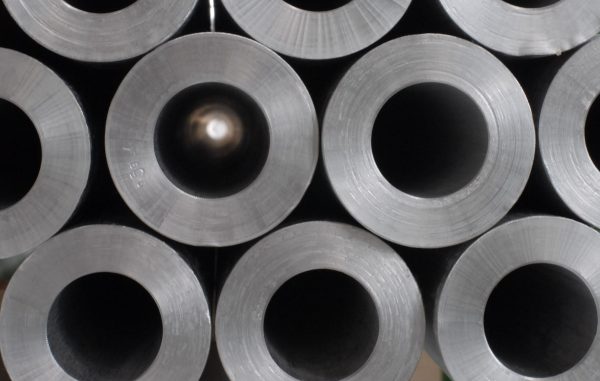
Ferritic stainless steels have good mechanical properties. They are materials with a high yield strength, easier to cut and machine, have good thermal conductivity, and exhibit greater resistance to chloride-induced stress corrosion cracking than austenitic steels. A fundamental property of this steel is also magnetism. Ferritic steel is distinguished by the absence of nickel in its chemical composition. It contains a minimum of 10.5% chromium. Other elements in the alloy include molybdenum, aluminum and titanium. Ferritic steels stabilized with niobium exhibit high resistance to deformation.
The lack of expensive nickel in ferritic steel translates into a low price. Because of this it finds wide application in industry. It is mainly used in the automotive and food industries, as well as in the oil and coking industries. In addition it is used to build certain devices in the chemical industry, for kitchen equipment and for the manufacture of household appliances.
Ferritic steels can be divided into five groups.
Group I contains up to 14% chromium, which provides protection against rust. The group includes the following steel types according to the AISI standard: 409, 410, 410L, 420. The low chromium content results in a low price for these grades. They are used in environments not exposed to water. They perform well as a material for interior finishing, are used in the manufacture of automotive exhaust systems and other vehicle components, as well as housings for consumer electronics.
Group II and the 430 steel grade is the most popular among ferritic steels. The share of this grade in world production is 48%. It contains up to 18% chromium, shows good corrosion resistance and therefore finds application in environments requiring increased corrosion resistance – e.g. in applications that come into contact with water. It is used to produce household appliances such as dishwashers or the drums in automatic washing machines.
Group III includes steels containing alloying additions such as titanium and niobium, which provide better weldability and ductility. Notable types are 430Ti, 439, 441. The steel finds similar applications as Group II: e.g. in the production of exhaust systems in cars, welded parts in automatic washing machines and dishwashers, and in the food industry for the production of tanks and transport cisterns.
Steel grades included in Group IV and Group V are characterized by chromium contents from 18% up to 30%. They also contain a molybdenum addition, which overall provides the highest corrosion resistance. The steel is used in coastal environments, as well as in the production of household appliances, components in the automotive industry, and in construction.
The most popular type among ferritic steels is EN 1.4016 (AISI 430) steel.